Career Growth Comes From Saying Yes Before You're Ready - Sofia Vandaele, IHG


 Apple Podcasts
 Spotify
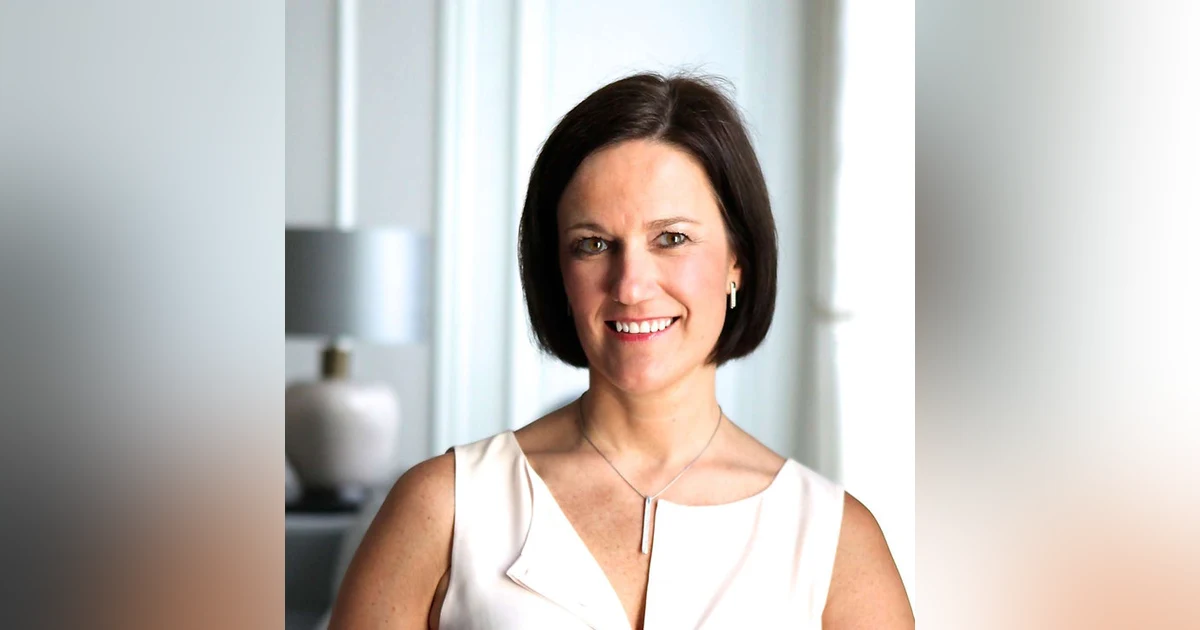
 In this episode, Sofia Vandaele, General Manager of the InterContinental New York Barclay and Regional Director for IHG Lifestyle and Luxury, shares how growing up in her parents' Belgian banquet hall shaped her view of hospitality, what working with Blackstone taught her about being a business leader, and why health challenges in COVID changed how she leads her team today.
Sofia is interviewed by Emily Goldfischer, founder of hertelier and Hospitality Daily's career correspondent. Read the companion article on Hertelier: Sofia Vandaele on her career journey.
A few more resources:
- If you're new to Hospitality Daily, start here.
- You can send me a message here with questions, comments, or guest suggestions
- If you want to get my summary and actionable insights from each episode delivered to your inbox each day, subscribe here for free.
- Follow Hospitality Daily and join the conversation on YouTube, LinkedIn, and Instagram.
- If you want to advertise on Hospitality Daily, here are the ways we can work together.
If you found this episode interesting or helpful, send it to someone on your team so you can turn the ideas into action and benefit your business and the people you serve!
Music for this show is produced by Clay Bassford of Bespoke Sound: Music Identity Design for Hospitality Brands
00:00 - Intro
01:17 - Getting Into Hospitality
03:17 - Women in Hotel Leadership
04:06 - Wanting to Be a GM
06:06 - Mentors and Sponsors
07:40 - Career Risks That Paid Off
10:23 - Working With Blackstone
16:30 - Her Leadership Style
18:19 - Self-Advocacy at Work
19:36 - Advice for the Next Generation
21:43 - Career Strategy
Emily: Hi. I'm here with Sofia Vandaele, who is the Regional Director for IHG Lifestyle and Luxury, and the General Manager of the InterContinental Barclay here in New York City. So excited to speak with you about your career journey.
Sofia: It's so great to have you with us, Emily, today.
Emily: All right, thank you. So let's get into it. We always like to start a little bit about your history and how you got into hospitality. What was your first role and what drew you to the industry?
Sofia: Well, I grew up in hospitality. My first steps were taken in the kitchen with my dad, when mom and dad had their own banquet hall and a big restaurant. So I saw hospitality and the service that comes with it from up close. I saw the personalities, the teamwork, the energy, also the pressure, and also the pride. What I do now and how I've evolved is just more of the same, but on a much bigger stage. But it all anchors around people, whether it is our guests, whether it is our staff and our colleagues, as well as the stakeholders. I am so proud that I've been able to evolve into now leading the iconic InterContinental New York Barclay here in New York.
Emily: You've worked in many cities at many established and interesting hotels. You are Belgian, and you've worked in London and Paris and New York. What were the key chapters in that journey, and how did that shape your leadership?
Sofia: There's obviously been many chapters. I grew very much from operational, boots on the ground, at the front desk as well as in the kitchen as well as in service. But I very quickly pivoted into sales and marketing, and from there I already sensed that general manager managerial duties were the jacket that fit me well. There hasn't been any very specific point in my career where I said, oh gosh, this has shaped me to who I am now, because there's been lots of people, lots of fantastic situations, encounters, and opportunities that came along my path. So the path has been very rewarding and at the same time also challenging.
Emily: When you started out, were there many female general managers to inspire you?
Sofia: Not at all. One moment that I definitely recall, Emily, is I was in Paris my very first week as a general manager when I started there, and I was part of the cocktail reception for the director. I looked around the room and I was like, okay, there are three women here and probably close to 200 men in gray and blue suits. It was a poignant moment, but at the same time, times change. Times evolve. Especially now in New York City, there's quite a number of us that inspire each other and root for each other as well. I love that.
Emily: We'll get into that a bit more, because of course we've done events with the New York City Women of Hospitality, and I feel like New York City is one of the strongest markets in terms of having a lot of female leadership. But was that always the goal? How did you know you wanted to be a GM, or did that ambition develop over time?
Sofia: It's not one or the other. It wasn't necessarily the original goal, but I do recall a conversation with my father when I said, I really want to go to hotel school. But he saw more in me and he wanted me to do better than doing the technical hotel school. I already committed when I did that to say, but then I'll do my managerial degree as well. So he kind of turned around, and probably protecting his little girl from the mayhem of the hospitality business was at the offset of that. But I persevered. I went through that, and as soon as I joined ITT Sheraton back in the days with Sheraton Brussels Hotel and Towers in the sales department, I knew that international hospitality and the international hotel arena was the right fit for me.
I knew at that moment, okay, my next step is to become a director of sales and marketing. I did that in a couple of years, and then I said, from here, I hope that I can apply all my operational knowledge from when I was a college student into a general manager role and combine that with my acumen of sales and marketing and that commercial spirit. Because as a general manager, you definitely need to have that commercial acumen. So it was a very natural transition, a very natural progression to apply my skills from operations with the acumen of commercial and sales, marketing, and revenue management, and apply that into the general manager role.
Emily: Did you have sponsors or bosses who were encouraging you to do stretch roles, or go for the next step?
Sofia: Yeah. I've been lucky, and I certainly encourage young people to look for the people that will have your back. They won't do the work for you. You still need to do the work. But having those people that are a sounding board, that are a formal or informal mentor. Early in my career, formal mentorship, especially in Europe, was not that much a thing. It was much more informal. And it's only now that I look back to say, that person really shaped me. That person pushed me and asked the right questions. I do firmly believe as leaders we should give people the chance to do the job that they aspire to get, and that we should give people the chance also to discover what they don't know, what they are capable of. I love doing that. But I've had the pleasure of working with people that did that for me as well. That pushed me.
Emily: That's definitely one of the things we've heard in a lot of our interviews with successful women like yourself. Sometimes the stretch opportunity might even be a lateral one. It's just about having someone who is helping you to think through what possible next steps could be and how that then weaves your journey into place. Is there a risk that you took along the way that you feel catapulted you to another level?
Sofia: There's a couple of moments along my path. Obviously now I'm a general manager. My baby really is the Barclay. It's a big baby, but I don't know, full grown. But I'm also now a regional director of operations, and I need to really lead people. Some of the moments that were really where I feel I took risks was to just pack up and go, as a single woman, and say, okay, I'm going to move from Brussels to London. And then I had an opportunity to move from London to New York City, and I didn't know the market. I didn't know how things operated across the ocean. I knew European hospitality. That's not the same as in the States, and then you have New York. It was risky because I also arrived when the financial crisis happened. I lived and worked through the hurricanes. I lived and worked through needing to pick up and show that resilience and do better.
When I moved back to Europe and I went to Paris, that was on the back of working for a big investment firm. I was a hotel general manager here in New York City, but the investment firm taught me to be a businesswoman way beyond being just the hotelier that I am in my heart and in my whole soul. They taught me to be a businesswoman, and that has been one of my pivotal moments to really see myself evolve as a much more seasoned, confident leader. So I moved to Paris. Had to do a reopening, repositioning, rebranding of a hotel.
Emily: Which property was that?
Sofia: That was moving from Concorde into Hilton Paris Opera. So big renovation. You lead a renovation, etc. And I had done an opening of a hotel in construction, but this was different. Plus it was with the Paris unions. And then I felt that I needed to take the risk of leaving the comfort of Europe behind and come back to New York for more. That's eight years ago, almost eight and a half years ago, that I came back to New York and I joined IHG as a company. Along the way, I feel that I took the risks, but I also felt that I've had moments where it was very rewarding and that it was a learning opportunity, because the risk needs to always come with valuable learning experiences.
Emily: Tell me a little bit more about this investment company and what was that experience? How did you learn? Was it a structured program?
Sofia: No, no. It was just literally very, very straight shooters. I worked with Blackstone Real Estate.
Emily: Blackstone. Okay.
Sofia: And they owned, at the time, the London NYC.
Emily: Yes.
Sofia: When I joined that team, I was challenged out of the framework of a brand. I left Starwood after 15 years and came into an independent hotel.
Emily: Yeah.
Sofia: An independent hotel, combined with an investment company that you work with literally direct and without asset managers in between.
Emily: Oh.
Sofia: Make the learning curve so much richer. I'm forever grateful that I had that opportunity, because then they said to me, we want you in Paris. European passport.
Emily: Yeah.
Sofia: Languages.
Emily: And you were very capable, clearly.
Sofia: Thank you. Yes. So that helped. But my story behind the scenes pretty much is a story of moments of inspiration, people of inspiration, and jobs that were inspiring. So it's really a story of inspiration.
Emily: Well, and it seems that you also kept going for that next thing. You were driven and ambitious. You keep seeing bigger roles for yourself as well.
Sofia: Yep.
Emily: And that probably is why you're now a regional.
Sofia: So I started eight years ago, and we obviously know that's about two years in, COVID happened in New York City. And then coming out of COVID with the restructure. For IHG Luxury Lifestyle and the emphasis that the company has been putting on our luxury brands, our lifestyle brands, we wanted to make sure that we integrated Kimpton Hotels with IHG in a more concerted way and a concerted effort. From the top down and bottom up, both ways, we really have collaborated to find alignments with our brands. Kimpton and InterContinental are obviously the two key brands, and Regent is important within that. Six Senses is important within that. Our Vignette Collection is part of that. The growth is there, and I really love working for IHG. They take care of people, and that's been my driving factor in my career.
Emily: Working in New York is such a major market. It's just one of these ones, of course, around the corner you've just had the Waldorf Astoria reopen. It's so dynamic. What about New York has been so pivotal for your career?
Sofia: New York has one of the elements that I said earlier. I've become more of a businesswoman over and above being hospitality core, a champion for hospitality. I was already, but then New York taught me really to be the businesswoman also that I have become. I love New York City also because of the diversity in its workforce. I think that inclusion aspect is for me high on the agenda. It has to be, because by default of our industry, we thrive on celebrating an Iftar dinner with our teams. That inclusive environment, that is part of the InterContinental brand standards. We live it every day with our colleagues, and we see it every day in welcoming our guests as well. And they have that diversity, but they also come with different trip personas.
I love it when, just in December, we had a guest who is here probably two out of three weeks.
Emily: Wow.
Sofia: And then in December, he came with his family, and I was talking to his kids, and I was trying to explain that this is where we take care of Dad when he is not at home. This is his place to come here. So the trip persona that he brings as a business person traveling, and then coming with the family, and you can build those connections.
Emily: That's so interesting.
Sofia: That is key for me in our industry, in our hospitality. New York for me also, and this is why I came back, has a sense of entrepreneurship. In Europe every so often, there'll be a little bit more jealousy. If somebody does well, they're like, hmm.
Emily: How did that come about? Right. Rather than in the US.
Sofia: And in New York in particular, they encourage each other to do even better, and they're proud of a colleague or a friend that does well. That entrepreneurship I love. I come out of a nest like that.
Emily: Yeah.
Sofia: I wanted to do more of that. And I also miss the energy that New York can give.
Emily: Yeah.
Sofia: It can also suck you dry.
Emily: Yeah.
Sofia: Often when I teach and I connect with colleges, I will say New York can be very exciting and very appealing. Bear in mind that New York is not for everyone, and not everyone is for New York. That's also important to realize. I had a moment right after COVID where I thought, I'm not sure. And then my boss said, you know that drive, you know that kind of challenge of like, you've got to get back into the driving seat. I'm like, okay, all right. And then you kind of find it again. But New York has meant a lot to me. It's also my most important social circle personally. So that's why I came back. But in our industry, the personal connections are everywhere.
Emily: As you think about your role as a leader today, what are things that you think about now, or how has it evolved? Your leadership style? We talked a bit about Esther Perel before we started recording. What's your thoughts on who you are as a leader?
Sofia: I've stayed true. I always say stay true to your values. As a young leader, you don't always know yet who you are. So that obviously has evolved. 30 years in the making, 35 years in my career. That intuition on who you are has evolved. That mindfulness about who you are, and just that self-awareness has evolved. But I'm still the same, very open, very genuinely caring person, but also firm with high expectations. I'm honest. I'm a straight shooter. My team knows very directly what's going on, the good, the bad, and the ugly, probably, in that saying.
But I'm also very much true to my roots of being a Belgian. Belgium is known for the country of compromise and collaboration. I'm able to apply that a lot in my leadership role, because the collaboration is key, and every so often the compromise is definitely an add-on. Regardless of what I do, for me, the most important thing is that genuine connection. I think if you don't stay open and focused on building those genuine connections, then we're going to miss out. It's the guests, it's the colleagues, it's the stakeholders. And always, always listen, learn, then lead, in that order.
Emily: Listening and curiosity is something I hear a lot from successful women like yourself. One of the things also I hear across interviews is sometimes women struggle with self-advocacy, putting themselves forward for opportunities, speaking up in meetings. Things like that. How have you managed that in your career? Not all women struggle with it, so maybe you don't, but maybe you've learned something and you have some advice.
Sofia: Belgians are known to be sometimes too nimble and don't toot their own horn enough. When I work with Belgian hotel schools or colleges, I will always encourage them to know the value that you bring to the table and be clear about that. If you bring it in the right way, if you deliver it in the right way, then you will have a voice at the table. It is about finding your self-confidence, building the strong relationships, which will then enable you to bring your ideas, your achievements, and so forth, make those more visible. I think that's definitely important. But don't forget that the results still need to be there, because if you don't bring the results, then nothing else matters.
Emily: That's interesting. Is there other advice you would have for women coming up, or anyone coming up in hospitality today?
Sofia: We spoke a little earlier, Emily, about mentorship, and back in the days it was nothing was necessarily formalized. It was both formal and informal mentorship. But there's a couple of statements that I will repeat for a long time. Hard work does pay off. Don't be fooled. Hard work is still important. I also always say that embracing change and showing adaptability is key, because otherwise you are going to get sidelined, or you're going to sit too stern into your own ways. That doesn't work.
Dare to jump. Say yes to opportunities. Often you need to be that firm hand. If somebody isn't sure, you need to be the hand that kind of pushes. And then sometimes I will say, I'll throw you in the deep end of the pool, but I'm on the sideline with a buoy, so don't worry, you'll not drown. I'll be right there. You can do this.
But they need that little bit of a push. I encourage young people to say yes to opportunities. I put a lot of time in young professionals. It's my way of giving back. It's my way of saying we need to invest in the future of our industry. If I don't do it, somebody else will. So I better do it with the best people first.
I also say to people, and this is from a mentor in the past that said this to me many times, take care of the people on your way up. You never know who you're going to meet on your way down.
Emily: That is good advice. And I love that spirit of really trying to help the next generation. It's so wonderful to see that. I feel like actually women, and just managers in general, they do want to help others succeed. If they struggled or found obstacles along the way, they're looking to figure out how to change the experience for the next generation. Which was actually why we did this survey recently with Forbes Travel Guide. And you may have received it and filled it out, but one of the themes that emerged was that many women are no longer willing to treat endurance as a career strategy. We alluded to this earlier, it is an industry that has antisocial hours and can be challenging for anyone rising up. I'm just wondering if that resonated with you and how do you think the industry can change from within?
Sofia: It has changed, I feel, because listen, dedication and hard work will always be part of the DNA of hospitality. The unsocial hours or the demands or the extra long days, it'll always be. Dedication and hard work will be important. However, I feel that the well-being component and that personal sustainability has got much more emphasis, and rightly so.
Through my personal experience in COVID, I got very, very, very sick.
Emily: I didn't know that.
Sofia: Three times over, but the first time was really, really, really bad. And it made me realize, sadly through that, that if I don't have my personal health, my physical health.
Emily: Yeah.
Sofia: Which then played into my mental health. So if I don't have those two really squared away, I can't be at my business health. I can't be my professional best.
Emily: Right.
Sofia: If I don't have those two. And probably for a long time in my career I neglected that a little too much. So I am now much more an advocate, and I hear my EC team say that we have a good balance, because we really try to put the emphasis where it's due on the well-being of our team. It's important for them to be able to contribute, to have that dedication, to have that hard work, and to deliver the results. As leaders, we need to establish the environment that makes sure that well-being has a space.
So I agree with the findings of your study.
Emily: Yeah.
Sofia: We have to. This is a marathon, not a sprint.
Emily: And also just the intensity of work, I feel, has changed. Over 35 years you've seen, we went from having an email to having a Blackberry to having now you're constantly.
Sofia: I still did my, as a sales executive, I still did my proposals via fax.
Emily: Yeah.
Sofia: So yes, that goes back a little while.
Emily: Yeah. It is a bit more relentless today. So it's good to hear that companies are thinking about how do we take better care of our people, and also how do we weave in, or celebrate the time that you need to take off, and not just be like, you need to be grinding it out.
Sofia: We do that at the Barclay, I find. And at the same time, it's also instilled from IHG as a company. That well-being component again is not just talk. There's actually thoughts behind it. There's programs behind it. Again, probably one of the other elements why I like working with IHG.
Emily: That's wonderful to hear. And along with that, now many leaders like yourself are managing across multiple generations in the workplace. How do you think the expectations around work and ambition and feedback and leadership are changing?
Sofia: They will not stop changing, Emily. Before we know it, there's already the next generation. I think what has made the change so poignant is the flux of information that comes now really rapidly and instant. As leaders, it's important to realize that motivation and communication styles need to shift from one audience to the other. You speak with your culinary team differently than with your housekeeping team, than with your sales team, or with front desk agents. You need to adapt it over the teams. You need to adapt it over the generations.
We always will start with clear expectations. We'll always make sure that feedback flows both ways. But the younger generation wants more transparency. They want regular feedback. They also want a clear sense of purpose. That in itself then comes back to what IHG, what's called Journey to Tomorrow, is to make sure that we look for that purpose, that we have a framework of feedback, and that we are transparent, and here's our goals and here's what you can contribute. Do that and what else can we do? All of those elements are built in, not just on property, not just in the mind of the leader on property, but also in collaboration with IHG. Because if you recognize to be flexible and open towards generational differences, those can become a strength of a team as well.
Emily: It's certainly something that we hear a lot about, that there are challenges by the different generations. But I think your ideas around transparency are hard to argue with. If it's laid out and it's clear, then it definitely reduces any conflict over not understanding or misunderstanding. That's wonderful. But you're a busy lady, so I'm thanking you so much for your time. And I also wonder, what do you do to switch off? What's fun for you? What do you love to do in New York?
Sofia: I love to be out and about. I do love travel. Every so often, I just need to escape from New York to make sure that I still have a bit of a breathing moment, and then come back for more energy. Dining experiences in New York are always high on the agenda, although we try to keep that in a little more. Since COVID, I've also embraced, because of back pain and stuff, a little more physical challenges. I've embraced Pilates twice a week rigorously.
Emily: Okay.
Sofia: I drop everything and I go to class, and then I'll connect again afterwards. It's in my calendar and I literally don't waver from it. Wellness in different shapes of form. Big walks in the park, but also little spa treatments that we take care.
Emily: Yeah.
Sofia: And then in the year of COVID, I also got a small puppy. Bowie is now almost five and a half. He is my best decision ever. He gets me out, come rain or shine. So he definitely keeps me grounded, and I have somebody to talk to at night.
Emily: That's wonderful. Well, thank you so much for taking the time to chat with me, and I'm super excited about you and the hotel having this hundredth anniversary. And I saw that you even have a program for dogs.
Sofia: Oh, we have Bark at the Barclay. And Bowie writes little welcome notes. Personalized welcome notes for the doggies that come to stay. Shares some of his treat little toys.
Emily: Do you ever bring him into work?
Sofia: He's in the office every single day. And actually, I will go down to, we have big financial conferences here, and the conference planners will see me and they'll go, where's Bowie? And literally we will go like, okay, let's go and sign the contract for next year. And he goes around, and it's endearing to see. And he builds those connections as well.
Emily: Yeah, he does, right?
Sofia: He knows what that product is.
Emily: That's your secret sauce. Bowie the dog. Well, thank you so much.
Sofia: Thank you, Emily. Thank you so much.
Emily: Wonderful. Thank you.