From Shake Shack to Building a Brazilian Pousada Around Connection - Brandy Cerne


 Apple Podcasts

 Spotify
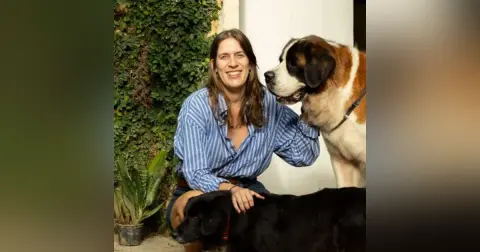
In this episode, Brandy Cerne, owner of O Portalzinho, shares how she built a property around connection between guests after years in brand marketing at Shake Shack and Sofar Sounds. You'll hear how she funded the opening, why she works on showing guests the value instead of cutting costs, and how a small team without uniforms makes the place feel like a friend's house.
Follow Brandy and O Portalzinho:
Brandy's writing on building the pousada (Brand by Brandy):
- 3 places, 3 hospitality influences, on what she took from Shake Shack, Sofar Sounds and hostels
- Pousada 101: A crash course on what this whole thing is
- O Portalzinho turns 2 months old! Here's everything I've learned so far
- O Portalzinho turns 1!
Mentioned in this episode:
- Union Square Hospitality Group and Danny Meyer's book Setting the Table
- Susan Jeffers, author of Feel the Fear and Do It Anyway
- Brett McManus of Après Inn, the Vermont innkeeper Brandy mentions: his first episode with Casey McManus and his one-year check-in
A few more resources:
- If you're new to Hospitality Daily, start here.
- You can send me a message here with questions, comments, or guest suggestions
- If you want to get my summary and actionable insights from each episode delivered to your inbox each day, subscribe here for free.
- Follow Hospitality Daily and join the conversation on YouTube, LinkedIn, and Instagram.
- If you want to advertise on Hospitality Daily, here are the ways we can work together.
If you found this episode interesting or helpful, send it to someone on your team so you can turn the ideas into action and benefit your business and the people you serve!
Music for this show is produced by Clay Bassford of Bespoke Sound: Music Identity Design for Hospitality Brands
Josiah: I'd love to start out with our listeners getting to know you a little bit. I like to wind back the clock. Was there an early memory of hospitality, experiencing hospitality in some format, that was influential to your life and your work? And if so, what was that?
Brandy: As a child, my family didn't really travel a lot, but I was really big into the Travel Channel and Rick Steves and all of those programs on TV, and I would just be there in my house in Ohio.
Brandy: But my real first interaction with hospitality was right after college. I got a job, an entry-level job, at Shake Shack in New York, and it was in the early days when they had about 12 restaurants at the time. They were still part of Union Square Hospitality Group, Danny Meyer's restaurant group.
Brandy: I kind of stumbled into it because I was looking to get into another field, and I was like, "Well, I never thought I would work for a restaurant group," but I loved my interview. And I remember reading Danny's book the week in between college graduation and starting the job, because I started two weeks after graduation.
Brandy: And I just fell in love with everything he was talking about with hospitality, and I also feel like that company really walked the walk. They didn't just talk the talk, because he's so well-known for hospitality. But it was throughout the whole company, so present, their approach to hospitality.
Brandy: And so even though I was working in marketing, specifically more on the brand side of things, you were still so in contact with that stuff. And at the time we also oversaw all of the guest services, so we were doing everything with customer emails, complaints, compliments, everything in between.
Brandy: So that was a real learning experience too, of how they approached that, because I feel like they were very generous in how they responded to people, and that was a real master class in dealing with all of that as well. So that was amazing. I was there four years through a lot of the high growth.
Brandy: We went public. I think when I left there were maybe around 100 locations. Obviously, it's much bigger now. But that was the first thing that really opened my eyes to, wow, I love this.
Josiah: That's amazing. I want to talk about some other stops in your career journey, but during your time at Shake Shack, was there a leader or a mentor or somebody you worked with that was influential on the way that you think about leadership or just operations and hospitality? Any mentor figures stand out to you from your time there?
Brandy: What was amazing there was the CEO, Randy Garutti, who was the longtime CEO. I think he only left a few years ago. He was an amazing leader. He had so much energy in the office. He would often talk about how to treat the guests and also the team.
Brandy: They had this whole idea of enlightened hospitality where, when thinking about the stakeholders, they would start with the team first and how you treat the team, and then go on to the guests and your suppliers and whatnot. I think about that stuff a lot now because I am now in my first time managing people, and so I come back to a lot of those lessons and that feeling in the office, and also the interactions with the GMs in the restaurants, things like that.
Brandy: And like I said, I really feel like they walked the walk. Sometimes you're in a company and the leadership is a little bit disconnected.
Josiah: Right. Or the brand promise doesn't really play out for everybody working there, or maybe even for all of the customers. Very interesting. I think we might need to come back to that, but it sounds like an amazing learning opportunity.
Josiah: So after a few years there, you moved to Sofar Sounds, and I wonder, for our listeners that are maybe unfamiliar, tell us a little bit about that organization and what you did there.
Brandy: Yeah. I was super, super, super into music, specifically live music, when I was living in New York in my early 20s. I would just go out every night. And so I actually started volunteering with them when I was still at Shake Shack, and also at Shake Shack they let me oversee the music side of the brand. I did all the playlists in the restaurants, things like that. So I was really interested in maybe starting to shift that way.
Brandy: And Sofar Sounds was amazing because it was this company that basically started just as a fun side project and took on a bunch of volunteers as it grew. And it quickly was then in 300 cities, but all volunteer-run. So when I started full-time was when they were starting to try to commercialize the business.
Brandy: Looking back, a lot of organizations don't start that way, completely grassroots, and then try to make a profit. So there were a lot of learning curves and bumps along the way, but it was also super fun. And they had a really interesting concept that on the surface maybe wouldn't look so connected to hospitality, but I really think it is, because they did secret shows, and they were intimate shows, so always around max 150 people.
Brandy: That would be a big one. And they were in a secret location, so you only got the address the day before, and also the artists were kept a secret. And there would be three up-and-coming artists. Occasionally they would sprinkle in someone bigger. And something I really learned there was about expectation setting, because it was a very different experience that you were walking into, and we had these ground rules about sitting on the floor and not talking during the shows and staying the whole time.
Brandy: So we were really creating this experience, and we had to set that tone from the moment people signed up to the moment they left. And I learned so much. I had a lot of fun, made a lot of friends, met my fiancé there, which is why I'm in Brazil now, because of him. So it was a blast.
Josiah: That's amazing. I spent a number of years living in New York, and I feel like my experiences overlapped a little bit with what you experienced. I went to a couple shows, and it's interesting to see the experience as somebody observing. But there's so much coordination, I imagine, which probably plays well into what you're doing now.
Josiah: So I do want to hear the story of how you got into what you're doing now, because you made a pivot from these amazing brands into doing your own thing. How did that come to be?
Brandy: Yeah. So like many other people during the pandemic, I went through a few layoffs, and I was working for myself, freelancing.
Brandy: And I was here about six years in Brazil when I realized, oh man, I'm really tired of working for myself at home, remotely, by myself. Many people, I think, go through this. And I was working mostly with brands in the U.S., so I felt very disconnected also from the end product that I was working on.
Brandy: And I was always someone who loved going to the office, who loved going to the restaurants when I was at Shake Shack or to the shows when I was at Sofar, and I had this faraway dream of opening a pousada, or a bed and breakfast. Pousada's a very Brazilian concept that's kind of like a bed and breakfast mixed with an inn mixed with a motel.
Brandy: And it was a faraway goal, but I went through a few layoffs and I was just really tired of the whole grind at home, working by myself. So the goal got moved up. And at the same time, we were living in São Paulo, which is like the New York of South America, a huge city, and we were also considering maybe moving somewhere else.
Brandy: And so we decided to move to this small beach town, Paraty, at the same time, and the goals were hand in hand. That's the long story short.
Josiah: Amazing. I want to get into some of the elements of the guest experience and how you think about running the place. But on this show, I am trying to raise awareness of the financial side of the hospitality business.
Josiah: And in our interactions before this, you said, "Hey, let's talk about this a little bit," because I think a lot of times people have these preconceptions of what it takes to do something like this. What was your path to opening up this place? What did that look like?
Brandy: Yeah. I always say I'm a completely open book with the financial side because I was so not aware of anything financial before.
Brandy: Like I said, my background is in brand strategy, brand marketing. I was on the fun, creative side. And also, I never viewed myself as an entrepreneur, ever. There are people who are like, "Oh, when I was a teenager and I was selling lemonade, I knew," and I was like, "Mm, I always wanted a boss." I was happy working in an office.
Brandy: So I like to talk about it because I think that really anyone can do it. It's just asking a lot of questions, finding out the answers, and then problem-solving and not taking no. So yeah, I was not in a position where I had all these savings, things like that, when I decided to make this career change.
Brandy: So I ended up raising friends and family investment for this, and also I am still renting the property, because I was not in a position to be able to buy, which a lot of people, I realized... I don't know, there's something with hotels or properties that people automatically assume buy, whereas restaurants or stores you often start off renting first.
Brandy: So it's something I'm still... You sometimes think, "Did I make a mistake? Is this going to be a mistake in the long run?" But you have to do what you have to do to be able to get started and open. So the investment was more for getting all the furniture, all the original business costs, the first six months' operating expenses, renovations, things like that.
Josiah: Amazing. So in our interactions before this, you talked about how one of your priorities was creating value and increasing value, not just cost cutting. Tell me a little bit about what you mean by that, because I love that generative nature and approach to running a hospitality business. How do you think about increasing value?
Brandy: Yeah. I wanted to set our price point in this middle ground, because Paraty has a lot of high-end luxury properties, and then it has a lot of just standard, comfortable places where you would probably be competing more on price. And so I wanted to be somewhere in the middle, really appealing to this maybe young couple or friends who live in Rio or São Paulo or are coming from abroad, who have the disposable income but aren't necessarily going to stay at a luxury property.
Brandy: Through that, you're always second-guessing. I think in any field you're always second-guessing pricing, right? And sometimes I found myself getting caught up in, "Oh, should we cut costs here? We're spending too much on breakfast," da, da, da. And I've really tried to change my mindset to more be like, "Oh, are we presenting the value of the ideal that we want to charge, instead of necessarily cost-cutting?"
Brandy: Because I feel like if you focus on that, you're going to create more of these surprise-and-delight moments. It's not going to be so hard to get people to pay what you want, instead of always doing discounts and trying to cut corners, which really are not going to save you that much in the long run and is more from a defensive position instead of an offensive one.
Josiah: That makes a lot of sense. I am very curious how you think about what you want that guest experience to be, because you talked about some of your career experiences. After Shake Shack, you spent a little bit of time traveling and working, volunteering in hostels for a few months. I think that was influential in how you think about the experience you wanted to provide. But what do you want your guests to experience at your property?
Brandy: Yeah. I think that we are all so hungry for social connection, and finally everyone is talking about this, right, the last few years. But I love that this whole field of social health has really started to have this... How do I want to say it? Everyone knowing what it is and talking about it and talking about the importance.
Brandy: Because I think that we are all so hungry for it, but our default is just to stay in our little bubble, especially more and more walking around with our cell phones where we can always find distraction. And so I noticed that when I used to work and stay in hostels, they're so designed for connection, and you just know that you can sit down and start talking to someone, and it's going to be accepted there because those are the norms.
Brandy: And then I kind of grew out of staying in hostels because they're for a certain type of experience. I wanted more comfort and security and cleanliness and things like that. But I noticed I would go to all these properties that were really cool, cool design, beautiful, but no one ever talked to anyone.
Brandy: At the most you would talk very quickly with the team, but everyone's in their little bubble at their little table at breakfast. And I just really wanted to marry the two concepts a bit more and try to create an atmosphere, without forcing people, it's not summer camp, to be able to talk more to us or to other people.
Brandy: So we have a few ways we do that. The property, one of the reasons I loved it, is that it has this feel of a giant house, and all the rooms are oriented around the reception. It has this beautiful garden and pool. And for breakfast, we have a big communal table, so we encourage people to sit there and try to talk with other people.
Brandy: The kitchen is also open, so they can always talk to our team. I usually try to be there asking them, "What did you do?" And then, "Oh, this person also wants to do that," or, "This person's also from France." I try to lightly connect them. My favorite is when I'm there at breakfast, I'm not talking to anyone, and they just all start talking to each other, and that's when I'm like, "Oh, it's working."
Josiah: It's so great to create that environment, right? That environment where people can connect. Your background is in design, and my understanding is you thought very deeply around every touchpoint and how it reflects the environment you're in. I wonder if you could talk a little bit about the design and some of the touches of how you created the space that makes it conducive to connection, but also just feeling like, "Hey, I'm in Brazil." How did you do that?
Brandy: Yeah. It's funny, the side of design, because I was very actively thinking about how there was this whole trend, and I feel like it's still there, of design-oriented hotels or properties, and I was like, "I don't want a design-oriented place. I want a connection-oriented place."
Brandy: But through that, I worked with a friend who's an architect to help me bring things to life, and we talked a lot about how to design for connection. And I feel like if you are designing around an idea like that, you still bring in the pretty design as well. And something I brought up to her is that I love that, for me, Brazil is so warm and full of colors, and it's so vibrant, and at the same time, I want people to feel that through the connection.
Brandy: I feel like you feel lit up when you are connected with other people. And so we decided to use a lot of colors, which is very fun and also very different, because there was also this whole trend of everything being minimalist. I feel like all the pousadas I see that are very beautiful in Brazil, I don't want to talk bad, they're very beautiful, but they're all white and beige.
Brandy: Also, I understand why, because when you're starting to buy things, it's much easier for things to go together if they're all white and beige. It's a lot harder when it's with colors. But yeah, we thought a lot about that. We thought a lot about the spaces within reception. We don't have all these little nooks and crannies and private spaces.
Brandy: There's a sofa with two chairs facing it next to a round table. So you could be in your own little area, but you also could easily turn and talk to someone if you decide to. So we thought about a lot of things like that.
Josiah: Amazing. I'm just so curious on all the different components of creating this very human-focused hospitality experience, and you're trying to orient everything around connection.
Josiah: It's interesting, the design implications. I'm curious in terms of how you run the place, too. You mentioned your team and the people. Whether it's yourself or people that are working for you, how do you think about engaging with your guests to facilitate more of this guest-to-guest or you-with-your-guest interaction?
Brandy: Yeah. So service in Brazil, I always find, is very, very good. I feel like it's one of the best countries I've been to in terms of service. But sometimes I feel like the culture is also, I don't know how to say this, seen and not heard. You serve the client, but there's a bit of a hierarchy, I would say, which I think also has to do with, not to get too large, but inequality in Brazil. There's a lot of that as well.
Brandy: And so I always said, "I don't want to feel like you're going somewhere and it's like, this is the team and this is me." I want it to feel like you're visiting a friend's house. So in all of our communication, I told the team working reception, when you're talking to someone on WhatsApp, I don't want you to be overly formal.
Brandy: Talk to them like you'd be talking to a friend. Obviously not too informal, but have this sort of warmth and casualness. And sometimes I make a mistake in WhatsApp and I'm like, "Oh my God, I didn't mean to say that. I am overwhelmed today," or something. I inject a little bit of vulnerability.
Brandy: And also with our housekeeping team, they also prepare breakfast, because breakfast here is a huge thing. You can't have a property without offering breakfast. And I told them, "I don't want you to just be there cooking and not talk to people. I want you to offer your tips.
Brandy: You live here in Paraty too. Feel free to talk to them, please. I prefer that." And so we don't have uniforms. I told them, "I would prefer you just come in your normal clothes." Housekeeping obviously has a little more of a uniform for their own comfort. But yeah, I didn't want to have this distance between the team and the guest.
Josiah: Was that hard to overcome, or was it just you saying, "This is what I want"? Did you find that took a bit of time for your team to show up that way, or how hard was that?
Brandy: No. But also, I am very purposeful about who I've hired. So generally, when I come across the right person, I try to hire them and figure out where they fit.
Brandy: We have a very small team. There's only five other people beyond me and a few freelancers. So I've been very purposeful about that. I'm curious, if we grow or if I have to hire other people in the future, maybe there will be a little bit more of that training involved. But so far, I feel like it's been more hire for the person, and then it fits in well.
Josiah: Interesting. I am curious, from your brand background and just being in the world of marketing, how do you spread the word of something special that you've created here? How do you think about that? Because I imagine guests love this experience. I saw some of the online guest reviews, and people are just so happy to stay there.
Josiah: Is that a core part of your growth strategy? Or walk me through a little bit how you think about growth and spreading the word.
Brandy: Yeah. Coming from my brand background, I see brand as a huge differentiator because I feel like it does a lot of the work for you, right? If you stand out from the crowd, it's automatically going to capture people's eyes.
Brandy: They're going to share it more. You're going to stand out. But then beyond that, I always think about marketing. Some people use the funnel. I always prefer the flywheel. And since we started, I always focused more on the amplification side of things, which is, once someone has stayed with you or bought from you, how they amplify it to others.
Brandy: So from the moment we started, we send every guest a request for a review, whether that's Booking or Google or wherever they made the reservation. And we also give them a discount, either for them to come back or to share with any friends or family. Going back to my experience at Shake Shack, that actually was a huge influence from there, because there was a point when I was doing customer service there where they were like, "Hey, anyone who writes in, we're going to send them a coupon for a free fry or a free whatever."
Brandy: And I was like, "What do you mean, everyone? Not everyone deserves it." And they're like, "No, but we've looked at the numbers, and the majority of people don't use it. Or if they do use it, they usually add something on. If it's a free fry, they'll get a burger then.
Brandy: And it makes people super happy, and you don't have to be there filtering who deserves it or not." And so I remember when I first sent the discount for these new guests, I put a time limit on it, and then I was like, why have a time limit? Let's just keep this open forever. People are not coming to Paraty that often, maybe once a year if they live in São Paulo or Rio, and I would love if they come back.
Brandy: If it's a guest that loved it here, it's worth the small discount. So we started doing all of that from the beginning, and then also, on the amplification side, it is a very photogenic place, which is really ironic, because like I said, I didn't even go into trying to do that. And so people do share it a lot on social media.
Brandy: We've had a lot of organic content creator partnerships, and all of those have been inbound, so that's worked out really great because it's people who I know are going to be interested in staying there, and we try to filter those as well.
Josiah: That's amazing. I am very curious how you think about helping your guests immerse themselves in your area, because I'm always interested in the intersection of hospitality and travel in general, or place. And I feel like place for you, you mentioned some of the design implications of this, but how do you think about helping your guests immerse themselves where you are?
Brandy: I love Paraty. I think it's an amazing place. I feel like everyone who comes to Paraty loves Paraty, because it's this small town. It has this historic center, but it also has a ton of beaches, a lot of boat-access-only islands and beaches, so you can do a boat tour. A lot of waterfalls as well, so you have this whole mix of amazing things.
Brandy: A lot of artists here, great food. So it's easy for me to get excited about Paraty for people, and we have this guide, so we send people ahead of time... Actually, we send it when they book, and then we remind them ahead of time with the guide. We just printed new guides that we're going to leave in the rooms.
Brandy: I keep joking that my goal now is to make a guidebook. I even send tips for Rio and São Paulo when people are going there and they want them. I was always the friend who has the Google Maps list with a million pins. So that part is really fun for me. I love giving recommendations.
Josiah: I feel like that's such a great part of being hospitable, just opening up an area, right? Obviously it's your home base, but I think the best hospitality leaders I talk with are thinking like you are, where it's like, "I'm going to give you a great experience on property, but also, you're here to visit the area as well, and so I'm going to show you all the best places."
Josiah: And I love the amenities, like bikes that you can borrow, stuff like that. It just helps people get out there, right?
Brandy: Yeah. People will ask us sometimes, "Oh, do you also serve lunch and dinner?" And we don't, and I'm always like, "You don't want to eat here. There are a ton of restaurants, great restaurants.
Brandy: Go here. You'll have a great time. You don't need to eat here."
Josiah: That's amazing. I'm curious, reflecting back, if you go back to when you were thinking of setting all this up, what surprised you in the journey? Because I feel like you have this amazing brand background. You thought a lot about it.
Josiah: You were immersed in the world with hostels and stuff like that. Do you feel like everything went according to plan, or were there some things that stood out as a bit surprising on the journey?
Brandy: Hmm. It's funny you ask about according to plan, because in the process of starting this, I had to do a lot of mindset work to shift into this idea of being an entrepreneur. And one of my favorite affirmations comes from this woman, Susan Jeffers, who wrote a bunch of books, and it's, "It's all happening perfectly."
Brandy: So anything that happened, any hiccup, it's all happening perfectly. And looking back, I really feel like that is the case, because you're always learning from it, and it all works out. So I would say, though, surprising... I think when you want to have high-touch hospitality, it takes a lot of energy from you and from other people.
Brandy: And so I definitely thought certain things would be leaner. I remember my idea was, "I'm going to get it open, and then I'm going to take on some more brand strategy clients again." And now I'm like, "Oh my God, when am I ever going to be able to do that?"
Josiah: I can't even picture it.
Brandy: So yeah, when you want to have this very human element, it needs a lot of human energy, and I'm still trying to figure out how to make that sustainable.
Brandy: We're just over a year open, so that's my goal for the next few months, to not have this be a grind that wears me out. How to have the right number of people on the team and whatnot.
Josiah: I mean, it's very immersive work. I am curious, where do you find yourself going to fill up your battery, to get inspiration these days?
Josiah: That's an important part, right? You can't give what you don't have. Where do you find you're getting the energy to do what you do these days?
Brandy: Yeah. It helps that I love it, so it's actually harder for me to stop working and go do other things. But I've tried to slowly add back in exercise and trying to make friends and things like that.
Brandy: But I will say it helps a lot that since we live so close to nature, if I have a two-hour window, we can easily go to a beach or a waterfall or something. I have dogs, so walk the dogs. So I feel like that has been amazing after living in... I was in New York and then São Paulo, so having that close connection to nature, ugh, that does wonders for recharging.
Josiah: I'm with you on that. Brandy, as you think about a year being open, and as you think about the years ahead, what are some of the things that excite you about the property you have, or the future as you think about hospitality and what you might be able to offer, things that you're exploring?
Brandy: Yeah. An idea I've had this week is, I had this great meeting with some other friends here in Paraty that have small businesses, all women, around my age. And Paraty is full of small businesses, which is something I love. You go to a restaurant, you meet the owner. You go back, they're there.
Brandy: I love that. But I would say what's really hard as a small business is you have all these ideas and things you want to do. I want to offer English language lessons to my team, things like that. And you have limited time and resources, and talking to them, I realized that there's a lot of things we all would like to do.
Brandy: And so I think in the long term I would love to think more about how we can support each other and pool those resources. For example, when I have an influencer stay with me, if they line up with some of these other places, also introduce them to them. That's a small example.
Brandy: But that's very top of mind for me and feels very exciting for once the business feels a little more stable and I can have more time.
Josiah: It's interesting you say that, because I am fascinated by this idea of collaborations, whether it's other business owners... I just feel like so many hospitality businesses are part of this bigger ecosystem, whether it's their community or a community of people that maybe is not about geography, but it's people who care about the same things.
Josiah: And I feel like with your background in brand strategy, do you feel like there's more opportunity in hospitality to do that, to think about collaborations? And if so, I'm curious what you've seen, maybe in some of your past roles, brand collaborations done right that hospitality professionals maybe should be thinking about. It feels like there's something here.
Brandy: Yeah, for sure. I would always love to do more brand partnerships too, because we did a lot of brand partnerships at Shake Shack. Every time they opened in a new location, a few menu items would be from another restaurant. This is something I think restaurants do particularly well.
Brandy: Restaurants are really good at staying connected with the others, and entering more the hotel property side, I've noticed it can feel a little more competitive. And so I don't love that. I do think there's something about a larger hospitality network that's maybe not just within hotels or pousadas, but also adding in the restaurants and the stores and other things like that, that could really be this rising-tide-lifts-all-boats situation.
Josiah: It feels like there's opportunity, because I think with a great collaboration, you're offering something new to your customers. You're also introducing people to your brand that might be unfamiliar, that love this other brand that you're collaborating with. It feels like a win-win.
Brandy: Yeah. And in a city like Paraty that has tourists all year long, there's no need to really be competitive, because you're always going to have high demand here.
Brandy: Also, people look for different things. I feel like our place is very specific. Sometimes potential guests reach out, and just based on the questions they ask, I think, "Hmm, I think you might be better at these other places." And so I think there is something there. We don't need to compete with each other, and the more we can work together would be great.
Josiah: It's a good mindset. I feel like we've covered so many different elements of your business, Brandy. Was there anything that you're hoping we would record about, or stories or things that you were hoping we'd touch on in our recording? If not, that's fine. I know we covered a lot, but I always want to check.
Brandy: Yeah. I don't think so. I'm curious, because I know you talk to so many people, and you talk to a lot of people in more corporate roles and things like that. I'm in a very different position, on the small business side. And actually, I think I first discovered your podcast when you had on Brett, who opened an inn in Vermont.
Josiah: Vermont, yeah.
Brandy: Yeah. So I'm curious, I know I'm putting you on the spot a little bit, but if you have any tips of things that you've noticed from other areas that you feel like apply to my situation, because I always have to sift through that stuff of what's applicable to the culture I'm in, the small business, things like that.
Josiah: Yeah. I think I'm very excited about the opportunity for collaboration. So I think with Brett in Vermont, I actually visited him last summer, and I think they do a lot to collaborate with local businesses and local restaurants. You were talking about how you're thinking about that. Honestly, I think there's so much there, and I think you mentioned it a few times in our conversation, around, hey, they do this in the world of restaurants, but not necessarily in hotels.
Josiah: I think that's also an opportunity too, because sometimes in the hotel world there's a little bit too much of, this is how hotels do things, and there could be this opportunity to be like, hey, maybe restaurants or maybe businesses in this other industry are doing things in a different way, and we could apply this into our world.
Josiah: So it depends on the environment you're operating in, the constraints of the business, things like that. But I do think there's a big opportunity to take ideas from not hotels and other industries and bring it into the world of lodging and hospitality. So I like how you're thinking about that, from a restaurant perspective and, I think, from a local collaboration perspective, because people are visiting an area.
Josiah: I think hotels have a chance to be a launchpad, a home base in that area. And this has come up especially with some of the smaller owner-operators, where they deeply embed themselves into the community, because it's like, we don't have 500 rooms and 10 restaurants, and we actually do want you to get out there and explore.
Josiah: So it sounds like that's how you're thinking, and I think that's spot on.
Brandy: Yeah. Something I didn't mention is that with the beer and wine that we sell, and then also almost all the ingredients we use at breakfast are from local providers, and that's something I get really excited about, to tell guests as well. We don't put a very high price on it, because I'm always like, "We're not going to make that much money from selling a few beers a week. So I'd rather you taste this really great beer that you probably don't know the brewery."
Brandy: But it's got me thinking, you saying this, it's got me thinking how we can promote those providers even more, after the fact. "Oh, you tried this granola here. Here's where you can buy it later." Something like that. So yeah, I love that.
Josiah: Amazing. I'll link in the show notes to a bunch of places where people can learn more about what you're building. Is there any specific place you would invite our listeners to go to? Your website, Instagram. Are those the best places to check out?
Brandy: I would say Instagram is the best, despite my misgivings about that platform. But Instagram and TikTok are so huge in Brazil. I've been meaning forever to get an email list going, because I really believe in the power of email lists, but you have limited time, and Instagram just became a thing of its own.
Josiah: Right, especially when you've created something special. It's so great to show off what you've made, and people can experience it a little bit. I think there's something about the visual power of communicating. So I'll include a link in the show notes where people can follow you and learn more.
Josiah: But Brandy, thanks so much for taking time to record and share your story.
Brandy: Oh, great. Thank you, Josiah. All your questions were so thoughtful, and I really appreciate it.