Stewarding Little River Inn as a Fifth-Generation Innkeeper - Cally Coombs

 Apple Podcasts
 Spotify
 In this episode, Cally Coombs, the fifth-generation innkeeper at Little River Inn, shares how her family's inn on California's Mendocino Coast keeps changing while remaining loved by locals and visitors alike. You'll hear why the bar stays exactly as it is while everything else is up for grabs, how a loyalty program for the rainy months brings guests back when the coast is quiet, and why giving your team real authority only works when they care enough to listen first.
Mentioned in this episode:
- Little River Inn
- Rain Chasers (the inn's program for stays from November to April)
- Little River Inn Golf & Tennis
- Little River Inn packages (including the Cioppino Dinner Package)
- Pet-friendly stays at Little River Inn
- Little River Inn dining and Ole's Whale Watch Bar
- Visit Mendocino
- Mendocino Coast Clinics (beneficiary of the Crab Cake Cook-Off)
A few more resources:
- If you're new to Hospitality Daily, start here.
- You can send me a message here with questions, comments, or guest suggestions
- If you want to get my summary and actionable insights from each episode delivered to your inbox each day, subscribe here for free.
- Follow Hospitality Daily and join the conversation on YouTube, LinkedIn, and Instagram.
- If you want to advertise on Hospitality Daily, here are the ways we can work together.
If you found this episode interesting or helpful, send it to someone on your team so you can turn the ideas into action and benefit your business and the people you serve!
Music for this show is produced by Clay Bassford of Bespoke Sound: Music Identity Design for Hospitality Brands
00:00 - Introduction
02:04 - Growing Up on Property
03:25 - The Story of Little River Inn
06:05 - What Guests Come Here For
09:09 - Leaving to Come Back
10:30 - Why Guests Return for the People
11:26 - Keep the Bar, Change Everything Else
14:08 - Locals as the Welcoming Committee
15:40 - Innkeepers Working Together
19:19 - A Loyalty Program for Rainy Months
21:39 - Secret Gardens and Pickleball
23:25 - Travel with Pets
25:04 - Lessons From a Finnish Grandfather
26:00 - Stewardship and Future-Proofing
27:43 - Giving the Team Authority
Josiah: Cally, I'm going to start out asking you a question that I ask all of my guests, and that is, is there an early memory of hospitality that you recall that was formative to you in what you're doing today?
Cally: My grandfather tricked me into thinking that work was really fun, which I still believe. When I was five, I was allowed to be a busser, but I could only pour water. They would not let me pour coffee until I turned eight.
Josiah: Wow.
Cally: Even though I never poured water on anybody, I did just fine. I literally grew up in the bar. I think the bartender was actually babysitting. They just didn't use that word. I would get dropped off at the bottom of the hill and walk up, because the bar was open. The bar was the office, so it was open all day, and I would scrape gum from underneath the table and drink Shirley Temples.
Josiah: And here you are today.
Cally: Here I am today.
Josiah: Amazing. Why do you still do this? Part of what I do on this show is I'm trying to show people why work in the world of hospitality. We were laughing off air. You're saying that you left and returned many times. Why do you do what you do today?
Cally: I just always have and always expected to do this. Maybe not a really interesting answer, but I was groomed from an early age. My grandparents went, "When you take over Little River Inn," X, Y, Z. So I'm just here.
Josiah: It's in the family.
Cally: Yeah.
Josiah: Walking over here, you were pointing out different parts of the property you lived in growing up, in the very early years. So it feels like this is so connected. I want to get into the story of this. Tell me the story of this property. We're sitting in this beautiful property overlooking the ocean, beautiful fog rolling in, trees. It's gorgeous. It's also a very large property with many different elements to it. We'll include a link in the show notes where people can learn more and hopefully visit. But what's the story of this property? How did this all get started?
Cally: The story of Little River Inn is really the story of this whole area. In the early 1850s, there was a boat that capsized close to shore with literally treasure from China on it. Most of the crew survived and went down to San Francisco. People came up here to dive the wreck and saw the redwood trees. So it changed from basically Pomo tribal people and some fur trappers to a second California gold rush.
Cally: My great-great-grandfather was 40 years old. He was a farmer in Maine. He and his buddy heard the story. I guess farming really sucked back then, because they got on a boat, went to Panama, walked across the Isthmus of Panama, did the boat version of hitchhiking up to San Francisco, got caught in a well-documented labor riot, and got everything stolen except the clothing on their backs. They knew they were headed here. They ended up at the Albion lumber mill, because they had to learn. They were farmers. They spent two years there and then came to Little River. I think back then you just put your flag in the ground and told the government that you were here, and they started the lumber company. So that was the 1850s. My grandparents turned the main home into an inn in 1939.
Josiah: Incredible. And here we are now.
Cally: And here we are now.
Josiah: Amazing. There are a lot of different elements to this property. Did that unfold over the years? There's a golf course, there's a tennis court, there are all kinds of different elements.
Cally: Little nooks and crannies. Yeah, you can tell by the style of buildings that things got built in different eras. This whole hillside that we're on now, at one point, was the local equivalent of the Sears, Roebuck order. Little cabins that you could order, except the local mill down the road was making them. So this was dotted with these little cabins. There are a couple of them still back here. But my mother put this in in the late '80s, with the conference room and these more deluxe rooms with jacuzzis and things. The main building was originally just the family. They weren't guest rooms. That's where my mom grew up. She didn't have a kitchen in the home. They went down the stairs and would order from the cook. She thought that was completely normal.
Josiah: Not a bad life.
Cally: Not a bad life. Every single building has a piece of history, but we won't go into every single one.
Josiah: Tell me a little bit about the guest experience that you aim to provide here. I drove up from San Francisco. Gorgeous drive. You come through the valley, and then there are redwoods, and you come up and see the ocean, and you drive up here, and it has this sense of, wow, this seems like such a chance to unwind a little bit and connect with nature. What do you want guests to feel on property here?
Cally: So many things. Not to say that we're all things to all people, but some people come for the social element. They're bringing us a lot of generational travel. They're celebrating anniversaries. They come every year. They want to talk to the same bartender they had last time, or the same person at the pro shop. So they really want an integrated, social, cared-for experience.
Cally: There are other people that come to this neck of the woods because it is remote. They want to go to the beach by themselves, wake up at sunrise, get room service, and write in their journal. So there's that as well. We definitely want to be protective of their peace and enjoyment, so it varies.
Josiah: How do you pick up on what a guest wants out of their trip? That's a wide range of experiences.
Cally: Oh, wow. I think that's just growing up in the business. I don't know. You just have to read people really quickly.
Josiah: The reason I ask is because I think you're right, and there is sort of an instinct. I'm wondering, maybe for people that spend some time in other industries and are interested in hospitality, what have you learned about reading people, or observing, picking up on cues?
Cally: Wow. I haven't really ever thought of it philosophically before. I will tell you, if it looks like people are having a bad time, or don't like me, just to say, I can't help trying to get a smile out of them. I'm going to do my best. If I'm your server or checking you in, whatever it is, I'm going to really try to turn that around.
Josiah: But sometimes people are just bringing the energy they are, and maybe it's meeting people in the moment.
Cally: Right.
Josiah: That makes a lot of sense. So you have a whole range of people here for different reasons. I'm also hearing there are people, it sounds like, that have been coming back year after year, and then people that are discovering the place for the first time, like myself, and it's a new experience for them. Tell me a little bit about taking care of these guests who are coming back year after year. What does that look like? Because I imagine there's a certain amount of expectations, things that I love about a property, but you're also doing a lot to evolve it. How do you balance the evolution and the...
Cally: All of those things. There's even a spectrum from what you were talking about. This is your first time here. Most of our guests we turn into repeat guests. So there are the ones that have been coming for decades. There's one that's been coming for five years. So their expectations are going to be different. Of course, they're always going to want the meal that they had last time, or that sunset, or whatever that memory was. So for me, when I'm making changes, it's negotiating how I keep up with the times and keep current and still have everything seemingly the same to all those people.
Josiah: Interesting. I want to hear a little bit more about your personal story. You mentioned leaving, coming back.
Cally: Escaping.
Josiah: Escaping. It's interesting because there are family business dynamics. It's just interesting to hear your story growing up in this business from the very earliest years. Tell me a little bit about escaping the business, the property, for a bit. What did you do, and then what brought you back?
Cally: Well, like I said, I always knew I was coming back, so I think partly that's why I really wanted to go do other things in between. I was an exchange student in Barcelona. I went to school and college in New York, lived in Telluride, New Orleans, outside Philadelphia. Am I missing anything? San Francisco, of course. Other than being a college student, the only job I've ever done is in the restaurant business.
Josiah: And where was this?
Cally: Well, everywhere.
Josiah: Everywhere.
Cally: All my jobs have always been server or bartender. Both.
Josiah: Interesting. I lived in Barcelona for a little bit, and all these places have, I feel like, a very different culture. What do you feel like you picked up from some of these other places that you brought back here?
Cally: I think just having that outside perspective. There are people that grew up here that never leave, and that's fantastic, but to do this job and to welcome people, I think you have to be very accepting and understanding that there are all kinds of different ways of doing things out there.
Josiah: It's challenging in a place that is a little more remote, I think, to hire talented people. I don't know if that's a dynamic here, but I am curious what you think about your team and the people that do well here. What are some of the things that you look for in the team that you hire and want working here at the inn?
Cally: They're an extension of the family. I think guests come here for the first time because of the view and the ocean. I think they return to Little River Inn because of the people. Being in a remote area, there's no one waiting in line to take the place of the person that you already have working with you. So it's developing that person, supporting that person, and authorizing that person too. They have the power to... Most places, the servers don't get to void whatever they want, for example. They have the power to be me and treat people how I would want them to be treated.
Josiah: Love it. I want to come back to the guest experience and how you think about evolving that, because I think the history is interesting. I think preserving elements of history while reinventing yourself is something I'm fascinated by. We can get into specific elements of this if you like, but in general, how do you think about that balance? Because it seems tricky. You mentioned guests that are coming back year after year, "I love X, Y, Z thing." And walking around the property before our recording, you were pointing out a lot of different things that you're doing here. So how do you think about what needs to stay the same, and what might be an opportunity for reinvention?
Cally: The bar definitely needs to stay the same. Maybe because I grew up in it, because it used to be the office. I don't know. I feel like that is really the heart of the entire universe here. That sounds so bad to say. Everything else is up for grabs. The rooms didn't used to have telephones or TVs, and eventually that all had to go in. And now, of course, there's Wi-Fi everywhere, and who knows what the next thing is going to be. But doing that in a, I don't know how to say the word, but in a respectful way.
Josiah: Tell me about the bar staying the same. I'm going to get into some elements that are changing. You touched on this for a moment, but I think it's interesting because as we were walking around here, there were a bunch of people there. It's the middle of the day, and it seemed central in this property, but there's also some history there too. Tell me a little bit more about why you want to keep that the same.
Cally: It might be my own sentiments about it. My grandfather kind of held court there. And like I said, it was the front desk as well. They didn't pass out keys, but if somebody really wanted a key to lock their room, you had a key that worked on all the doors, but you didn't tell them that. He made them comfortable. He was great at making stuff up on the fly. I don't think he remembered anybody for real, but he always made people feel like he remembered them. So he was the consummate front man in that way. I just have so many of those memories, and I think a lot of our guests have that as well. They really like their bartenders. They want that same person every year.
Josiah: Yeah.
Cally: My favorite thing about the bar, honestly, is that it's half locals, half tourists, and I think the bartenders are really good at getting everyone to talk, so when you visit, you don't feel like a visitor.
Josiah: I feel like that's really cool. A lot of hospitality providers have that aspiration, but honestly, in a lot of contexts, people from the community aren't coming into the property. It tends to be just people who are visiting. Tell me about what is special to you to see that, to have your neighbors, people in the community, mixing it up with your guests. What kind of environment does that create?
Cally: In some way, the locals are doing my job, right? They're the ones that are the welcoming committee. There's actually one that I call the ambassador, who will just give people verbal tours of the whole coast. It makes people really feel like they're part of the family and part of the scene, and everybody is an owner of Little River Inn. The locals think they're owners, the guests think they're owners. They have no problem telling me what I should do, and I think that's great.
Josiah: That's an interesting dynamic. I imagine it's challenging at times, but it's also sort of beautiful. It's interesting you say that, because in different parts of the world, in different interviews I've done, there's been a fair amount of times where there's a bit of an adversarial relationship between a hotel property or an inn and its neighbors. And it's interesting to hear this property is not only embraced, but you mentioned the feeling of being an owner. That feels cool, because for me, what's really special about hospitality is its ability to bring people together. That could be travelers, but I'm hearing you're bringing the community together. And for a guest, this is an amazing experience too, because then you feel even more embedded in the community.
Cally: I think that is all true.
Josiah: Tell me a little bit more about the community, because you're doing a lot here, but you also invest your time broadly in engaging with the community. Why do you do that?
Cally: I do. So many people here do. I'm not special in that regard. In these little remote, off-the-beaten-path areas like ours, there isn't government funding. There aren't the programs that you see in big cities. We have to invent everything and take care of each other here locally. That's just the way it works.
Josiah: What's an example of that? What's something that requires working together that's bigger than what any one innkeeper could do by themselves?
Cally: Well, I have three main pet causes. One of them is sort of self-serving, which is Visit Mendocino, the county marketing organization. But also the sense of community working with that organization is amazing. I love when new people come and buy a little B&B or something. I get my arms around them immediately.
Josiah: I love that.
Cally: I love that.
Josiah: I feel like when someone else opens up a new spot, there's a little bit of competition, but you love it. Why?
Cally: I love being colleagues. I love hatching things up. Let me see. I should back up a little bit. You may have noticed the road that you drove in on was a little curvy, so we all share that same obstacle. If we can play together and make up reasons for people to want to make that trip, then we're ahead of the game. Whether they stay with me or stay with someone else, getting them here is the important part, and that's really fun.
Josiah: Tell me how you do that, because it's a bit of a drive, but it's worth it. The reason I'm asking is because I'm interested in how hospitality leaders can think about working together to overcome barriers. How have you thought about engaging in this?
Cally: An example from this week. The healthcare is not so great here. There is a wonderful clinic in Fort Bragg that everyone supports. We have to. That's the only thing we have. They have a big crab cake cook-off fundraiser in January. Visit Mendocino helps support that because we like to get people here in January. It's in Fort Bragg, 20 minutes down the road, so most of those people are staying in the motels in Fort Bragg. So the question is, how do we get people down here to the Mendocino area? So we got together with the organizers and the innkeepers from here, and we're reinventing an old event, the cioppino dinner. This year, if you stay with one of us, you get free tickets to the cioppino dinner that's here on Friday night, and then tickets to the crab cake cook-off on Saturday, and we'll see what other fun extras we throw in. It's a way that the whole community works together. It's an economic driver...
Josiah: Yeah.
Cally: But it's also really fun. We'll have the basketball team serve the cioppino, but it'll be the innkeepers in the back making it. So we're helping the community, we're also getting people to stay with us, and we're having fun building relationships.
Josiah: I'm glad you mentioned the word fun, because the business of hospitality can be hard. It also can be rewarding. That's one of the things I wanted to ask you, especially when you've been working in it for years. What keeps it fun? What keeps it interesting? I'm hearing there's an element of working with others in the area that is an economic driver, so that's good for the business. But you have a big smile on your face. So it sounds like it's a fun way to mix it up too, these collaborations, these projects. Does that make your own life more fun and interesting?
Cally: Absolutely. This is a hard business. If you're not having fun, go do something else. There are a lot easier ways to make money.
Josiah: I want to talk a little bit about how you think about attracting people here. My understanding is you've led a program called Rain Chasers, where you're attracting people in some months that maybe are slower, or just different months than some people think of.
Cally: Yeah, California. If it's raining, it's going to be slower, right?
Josiah: So tell me about the origins of this and what you put together.
Cally: It's kind of an interesting one. We don't have a loyalty program. People always ask, "Do you have a loyalty program?" And for one, we're never going to match Marriott or Hilton. We can't incentivize people on that level. And since 80% of our guests are already return guests, it seems like doing a loyalty program would kind of defeat the purpose. So Rain Chasers is a loyalty program during the slower months. The more you stay during the slower months, the more rewards you earn.
Josiah: Interesting. And it's also a very special time to visit. I feel like I've seen some of the communication you've had around this, where you're getting those benefits, but it also attracts people here at a time when the Mendocino Coast can be sort of mystical, those rainy times of year. It's a special time.
Cally: It absolutely is. The ocean's always a character in our book. How it looks every single day influences everything else. In the wintertime, it's so dramatic. And if it's raining and you've got the fire going, that's probably one of my favorite things in the world to do. But also there are fewer people here then, so that rejuvenation reason that people come here, that's really better done in the off-season than when all the tourists are here.
Josiah: You mentioned rejuvenation being a word you're hearing from your guests a lot. Over the years, do you feel like that is coming up more than before? Is there a sense, I don't know if it's in the culture or the ether, that people are looking to fill up their battery, or whatever analogy you want to use, now more than ever?
Cally: I think they were always doing it. I think it has better labels now.
Josiah: We're better at talking about it. I feel like it's more important than ever. You've lived in very large cities, all around the world, and you see the chaos. I imagine you get people coming up here that are fried out or just need to...
Cally: The traffic. I don't know how y'all do it out there.
Josiah: Yes. It's a little more peaceful here. I love that. Coming back to the property, what are you excited about? It feels like there are a lot of projects that you have on the go here.
Cally: So many. Also getting back to the way people are traveling differently. The generational travelers, or the boomer travelers, they still really want to eat in the big dining room in the restaurant, or this conference room that we're sitting in. They like the big events here, like the ticketed events, and we definitely participate and provide that experience. As time goes on, I feel like other generations are looking more for the secret garden experience, and little vignettes. I'm in the process of creating smaller dining spaces, smaller hangout spaces, little fire pits with Adirondack chairs that are just in the garden, and we don't really advertise them. You just have to find them. So we're doing a lot of that on property. We just put in pickleball courts. I'm personally excited about that. It is part of my longevity plan.
Josiah: Works for all ages.
Cally: It works for all ages, and it could be a drinking game.
Josiah: Yes, that's right.
Cally: The golf course has seen a huge resurgence during the pandemic. Golf nationwide was dying off until then. Now it's back with a vengeance, which is awesome, so there's a lot of energy around the golf course. We're going to start doing family and date nights. We have little loungey furniture by the driving range...
Josiah: Nice.
Cally: And glow-in-the-dark balls for the putting green, and we're kind of calling it birth control night, and family night.
Josiah: Where do you get ideas for this? It feels like you're building and innovating. Where does your inspiration come from for stuff like that, or a collaboration or a partnership?
Cally: It's all over the place. I can't name any one thing.
Josiah: There's such a range. It also sounds like, in looking at these different places, there's a range in the difficulty of a build-out or adapting your different elements. It feels like you're making changes both big and small here. What's a change that you've made over the past couple of years that has worked really well and is loved by guests now?
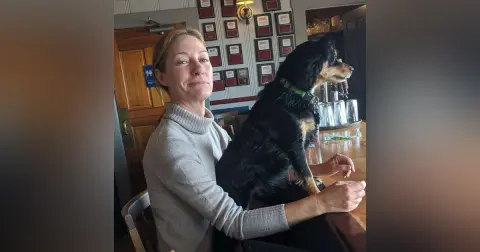
Cally: What has worked really well is leaning into pet travel, which we have been doing for decades, but more and more people love to travel with their dogs, including myself. I have a very large Bernese mountain dog, so it's important to me that we don't discriminate by size or breed. They just have to be nice and well-behaved. Although, on the flip side of that are my failed blue cabanas, the pet dining cabanas. The pet diners want to be seen with their dogs, so these little private cabanas were the wrong move. I will repurpose them somewhere else. But you just have to try, see what sticks, and move on.
Josiah: Interesting. I feel like every hotel, every inn is a little different, and you have to work with what you have. Walking around this property, and we'll include links in the show notes where people can check it out and visit, I feel like you think a lot about that. What is the environment, the physical space that you have, and how do you activate elements of it, whether it's the cabanas or bringing the picnics? People want a whole range of things, and you're pulling from what you have on property to meet them there.
Cally: Yes. And then some of it is the stuff that I want. Like, I've always wanted a sitting area that isn't the bar, with an ocean view. So creating that space in the lobby right now has been one of my long-term dreams. It's a silly little one, but...
Josiah: I think it's great. I would love to circle back to your grandfather, if we could. You mentioned him several times in our conversation, from the earliest memories to a reason why you wanted to keep the bar the way that it was. Especially for you and your story and your family's story and this place, he seems like a very central figure. What did you learn about hospitality from him?
Cally: He was just a great storyteller, which I am not, but he had the ability to turn a stranger into a friend very, very quickly.
Josiah: How would he do this?
Cally: Probably by telling stories, asking them questions, just relating to them. And he would remember people's stories, not their faces. I can remember what you drink, but he would remember their stories, and he could get back in the groove with them pretty quickly after a couple of sentences.
Josiah: Interesting. Did he also move away and come back, or did he spend his...
Cally: He was an immigrant from Finland.
Josiah: Wow. Amazing. It sounds like it was formative for you. It sounds like those earliest memories brought you back here and into the business. As you think about this property evolving in the years ahead, and the guest experience you want to provide, I'm hearing a lot of elements of stewardship. You're part of a line of people who have cared for and been a part of this property. You talk about the community feeling like owners of this in a way. How do you think about the notion of stewardship?
Cally: I'm just a caretaker here. I'm a link in the chain, I hope.
Josiah: How do you think that shapes how you do what you do?
Cally: I'm definitely always looking to future-proof, looking long term. I don't really like Band-Aid fixes. I'm really looking for my grandchildren to be custodians someday. If they don't love it and they don't want to run it, that's fine, but I hope that they will still take care of it.
Josiah: Tell me about future-proofing. What does that mean to you?
Cally: Well, I don't know if you noticed the big, gigantic solar back there. That runs the whole property.
Josiah: Wait, so all the power on property comes from the solar?
Cally: Yeah, when the sun's shining.
Josiah: Wow, incredible. And then water?
Cally: Reclaimed water. The golf course water is all reclaimed. There's an airport a couple of miles up the road, and the runoff is insane, so we own ponds below it. It fills up the ponds, and then there's this whole series of pipes that come down. So it's all reclaimed water. We're looking at rain gardens to sink water back into the ground. We're in California, right? Water is very important. We're getting a pilot grant from the state through the county to do cisterns off the roof, just collecting rainwater. But it's so weird that the regulations around doing it commercially make it hard to do, so that's a work in progress. Things like that. Electricity, water. Important things.
Josiah: Basically, the infrastructure is really important. But what also stands out to me is you mentioned that if your grandchildren want to run this, you want that to be possible. What decisions are you making now? I imagine the infrastructure is a piece of it, but are there other things about the way you run this place that create an environment where, if they want to be part of this, they can? What does that look like?
Cally: Managers, for starters. The first two generations did everything. They made all the decisions themselves and had all the power themselves, which is fine. It worked fine for decades, but I don't think that's self-sustaining. So my managers, and even their line staff, have a lot of authority, a lot of power. I don't second-guess them. They may make different decisions than I would in the moment, but that's okay. They made one. It usually works out.
Josiah: I'm thinking about this. I started my career working on the front desk, and there's an element of being on the front lines taking care of people that is beautiful, but can also be very tiring. I see some people in the industry burn out and leave because maybe they don't have some of this organizational infrastructure. They haven't thought about building out a team, so it feels like, now I've bought myself a job where I'm working 365 days a year. I'm hearing infrastructure in energy and things like this, but also in people, in organization, so that if you need to take some time off, you can. Is that part of how you think about stewardship and resilience, creating an environment that maybe your grandkids might want?
Cally: Oh, do you take some time off?
Josiah: But I'm trying to get into what would make this interesting for your grandkids beyond it being a beautiful place. I'm hearing you're thinking as a leader about the people, the process, the management. It's not only you running around having to make every decision.
Cally: Yes. That is definitely part of it. And going back to the line staff thing too, this is what I want to avoid. You have to care. The human there has to care. Just because they have the tool of being able to give away a free dinner or whatever it is, if they just default to that instead of listening to the guests... Maybe they don't want a free dinner. Maybe they just want you to say, "I'm sorry." Right? Or maybe they want to talk to me. Whatever it is, it's really important. It's all about caring.
Josiah: That's hospitality. It really is. Because otherwise, without the care, whether it's comping something or any other way of providing service, if you're just giving it without being attentive to what this person needs and what they want...
Josiah: It's impossible to innovate and create and do new stuff, and do that well, if you're not willing to embrace that some of it may not work. So I appreciate this story of, we might pivot or repurpose this thing. Because if everything has to be a hit, I feel like people become way too conservative and they do nothing. It's amazing to hear your own story, your family's story, the story of this property. I'm excited to share this with listeners, so I appreciate you taking time to record.
Cally: Thank you. It's been fun.
Josiah: Awesome.