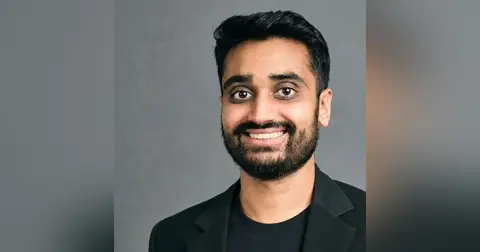
Kishan Dahya, CTO at AI Hospitality Group: Making AI Pay Off in Hotels


 Apple Podcasts

 Spotify
In this episode, Kishan Dahya, the Co-Founder and Chief Technology Officer at AI Hospitality Group, shares his take on what it takes for AI to show up on a hotel's P&L. He walks through how AIHG turns work into steps agents can run, how token costs determine whether AI saves money, and why the opportunity now is in implementation rather than just smarter models.
Connect with Kishan on LinkedIn and learn more about AI Hospitality Group.
Mentioned in this episode: The Ameswell Hotel
Watch Kishan's AI for Hoteliers videos on LinkedIn: Episode 1, Agents, simplified and Episode 2, on personal agents and OTAs.
Hear AIHG co-founder and CEO Sloan Dean on why he built AI Hospitality Group.
A few more resources:
- If you're new to Hospitality Daily, start here.
- You can send me a message here with questions, comments, or guest suggestions
- If you want to get my summary and actionable insights from each episode delivered to your inbox each day, subscribe here for free.
- Follow Hospitality Daily and join the conversation on YouTube, LinkedIn, and Instagram.
- If you want to advertise on Hospitality Daily, here are the ways we can work together.
If you found this episode interesting or helpful, send it to someone on your team so you can turn the ideas into action and benefit your business and the people you serve!
Music for this show is produced by Clay Bassford of Bespoke Sound: Music Identity Design for Hospitality Brands
00:00 - Introduction
01:58 - Growing Up in a Hotel Family
04:47 - From Hospitality to Software
08:30 - Starting AI Hospitality Group
12:43 - Why Hotel Owners Need a New Model
14:34 - What AI-Native Hotel Management Looks Like
17:30 - Building AI Agents for Hotel Operations
20:09 - Turning AI Into Bottom-Line Savings
24:07 - Keeping AI Costs Under Control
26:17 - Freeing GMs to Focus on Hospitality
28:13 - Using AI for Proactive Sales
30:09 - Turning Physical Work Into Usable Data
33:46 - Getting Hotel Teams on Board
38:56 - Agents, Skills, and Automations Explained
43:17 - Making AI Reliable at Scale
49:42 - Where AI Goes Next
Josiah: Kishan, thanks for making time to talk. I have been looking forward to this conversation. You and I had a brief chance to connect at Destination AI. I was like, "This guy's on fire. He has so many good ideas." I think we talked for five minutes, and I was like, "Dude, I wish we were recording 'cause there's so much good stuff." But thanks for making time today. I wonder if we can start at a place I do often in these interviews where I'm always curious, do you have an early memory of hospitality in some form that you think was formative for you?
Kishan: Yeah. First off, thanks so much, Josiah, for taking the time. I really appreciate it. The work you do with Hospitality Daily, it's really important for the entire ecosystem to get that hit of inspiration and also just the progress that everybody is making around the industry. With that said, I was lucky enough to grow up in the hospitality industry, so I can't remember not being influenced by it.
My family, we are owner-operators and franchisees for Hilton, Marriott, Hyatt. I grew up in the San Francisco Bay Area, and my family actually came here in 1972. 40, 45 of them all came on the same plane, and they started working and then leasing out these single-residence, SRO-type properties in San Francisco.
So if you don't know what those are, they're single rooms, and then they are actually shared bathrooms and kitchens. They were in kind of the rougher area of SoMa back in the '70s, and my dad used to always joke, "We had a very sophisticated security system," which was the second step on the second flight would actually creak as soon as somebody went up there, so that's how they knew somebody was trying to get in.
So that's really how I always grew up going to the motel, going to the hotel, working the front desk, folding towels, seeing my mom clean beds, work the beds. A lot of my cousins and family members grew up in pretty small motels, and so I just remember even growing up as a kid one time being like, "Why do you guys have to go work? Why do we have to go to the motel?" And I think they were way too serious with me, but they were like, "This is how we eat. The guest is how we eat. We only get food on our table because of the guests and the way we serve them and make them happy." And so it was maybe a little intense for a nine-year-old, but that always stuck with me in my head.
And so, yeah, I think that answers the question.
Josiah: Yeah. That's awesome. Amazing to grow up in that environment. A lot of work, right? Sometimes I feel like the work of hospitality is romanticized to a point where if you haven't done the work... it's beautiful, but it's also a lot of work.
Kishan: Yeah, I think what people don't realize, it's a 24/7, 365-day business. It never shuts down. It never closes. And you have employees, but at the end of the day, the ownership group and the owners are... the buck stops with them. And when a pipe leaks, yeah, sometimes you have people that can help out day to day, but at the same time, you have to pony up for the recovery, the fixes, the insurance premium that goes up, et cetera, et cetera.
Josiah: Yeah. Amazing. So you grew up in this environment, a lot of hospitality. You're also in the San Francisco Bay Area, where there's so much technology. I wanna hear a little bit about your story. So as the years go on, what's going through your head as you think about career, work, what is capturing your attention, and where do you focus?
Kishan: Yeah, so again, I was very lucky here to grow up in the Bay Area, surrounded by people that are technologists, and my dad's also into technology, showed me computers at a pretty young age. And so I was always into that and started programming because of that at a very young age, started learning that in high school. And then I was actually very interested in psychology and how people think, and then the interplay between humans and computers and machines.
And so actually in college, I went to UCLA, and I studied cognitive science with a specialization in computing and then a minor as well. But essentially, I was a glorified psych major, and then I also took a lot of upper division computer science classes.
Josiah: Interesting combination.
Kishan: Yeah. Well, the pitch line for that major is the interdisciplinary study of the mind, and you can think about the mind in many different ways.
There is a human-computer interaction component to it. If you think about artificial intelligence and neural networks and the way they're set up, they're theoretically modeled on how we think neurons fire and don't fire. And then there's also just straight-up neuroscience and brain study, the biology of the brain.
There's also philosophy, which is this more abstract way to think about the mind. What is the mind from a philosophical perspective? All of these different ideas could end up as a part of this overarching cognitive science major. Now, that sounds really neat, and you can go in a lot of different places, but that's kind of the trick as well. You might end up a jack of all trades, master of none. But you can also create some really cool things.
Josiah: Yeah, I think Steve Jobs famously talked about the computer being the bicycle for the mind. And as you think about bringing these two disciplines together, does that resonate, or would you describe the combination of the human experience and mind with technology differently?
Kishan: Well, I think one of the great things about seeing so many different things throughout my life is you start to pattern match. Not everything, but almost everything falls into certain patterns. And if it's a new thing that you've seen, well, maybe that's a new pattern, or you can almost always map something like that.
And so whether it's philosophy, computer science, psychology, or anything else, you end up seeing a lot of times the same thing again and again. In a lot of ways, the way you manage your agents today is the same way you would manage your humans in the past, right? You give them the correct skills, you give them the right tools.
You then also give them feedback on a consistent basis. You have to chunk up the work into pieces that they can consume and manage themselves. So a lot of those principles don't really change. And that's still just my college. I did cognitive science, and then was a software engineer out of college.
So the way I would always do it is I'd get an internship in software engineering kind of that first quarter. I might take this part out, but I'd have a little bit more fun the next two quarters, and then I'd do my internship. And then...
Josiah: This is a great thing to keep in.
Kishan: Yeah. So basically, I was a software engineer out of college for a number of years at different places, just building different applications, and I always knew I liked startups and loved that whole world. So I was pretty intentional about going to a startup, then I went to Goldman Sachs, then I was back at startups.
Well, I wanna figure out what do I like. I thought I liked it, but then you still have to explore it and make sure you test that theory. So I really like startups. I was like, "Let me try out a big company and see how that works."
That was cool. I could've been very successful there, but that's just not really how I work. I like to do a lot of things that I want to do, and I think once you have the privilege of having options, you can choose. I'm only gonna work on things I wanna work on with people I want to work on it with.
Josiah: Interesting. I'm gonna link in the show notes to your LinkedIn where people can see all the stuff that you've done through your career so far. Tell me about meeting Sloan. How did this new company start?
Kishan: Yeah. So I was a software engineer for a number of years. I was in VC and venture capital. Through that, I made a bunch of relationships. Was operating a couple of different companies. I actually had a startup before AIHG where we were selling software into law enforcement, and so we had a bunch of customers in a few different states where we actually had pilots for government contracts.
We converted them, et cetera. We had a lot of learnings from that business. One of the main ones, though, was that we had built a vitamin and not a painkiller, something that was nice to have for people, but ultimately just wasn't that needed. And so if the idea at that time was to land and expand, well, we had barely landed, and we weren't going to expand.
Now, I say all of that to say I was lucky enough to raise venture capital for that business as well, and so oftentimes with that type of funding, they're investing in the entrepreneur and not necessarily the idea. We tried that. We had a team. Ultimately it didn't work out. We downsized the team, and we tried about 10, 12 different pivots.
We tried a lot of different ideas. One day we can go through all of those. But on one of them, it was this hyperlocal intelligence tool where I met a few different people, and we had customers for that, and one of those was a person named Brian Dunn. Brian Dunn introduced me to Sloan, because as I was winding down that last company and returning capital to our investors, I told him, "Hey, thank you so much for working with us," et cetera, et cetera.
And he was like, "I think I've got the perfect person for you to meet," and that was Sloan. And so as soon as I met Sloan, I kind of understood the place that he holds in the hospitality world. And then with my pretty unique background of startup and VC experience along with deep domain expertise in hospitality, and then just an overall passion for this space, where this is so personal for Sloan, me, Eve, our entire team, just this mission to bring margin back, to change the operating model at the hotel level, because we do fundamentally believe it's broken.
Josiah: I wanna get into that, but before we do, I am curious, because you saw so many aspects of the startup ecosystem in finance. You were seeing a lot in the early stages of company formation, and the people you choose to work with are critical. Just in life, but especially in that stage.
As you met Sloan and were evaluating, hey, do we start something here, what were you looking for? What were some of the criteria that, as you got to know Sloan a little bit more, stood out to you, and then ultimately decided to go into business together?
Kishan: Yeah, happy to. So if I think about my time in VC, there's a lot of different ways to do it. One of the heuristics that people use is, "Hey, I believe this future is going to exist, and I am just looking for the right entrepreneur and founding team to go make this a reality." So when I was thinking about AI-native hotel management, I know this is going to exist.
There's gonna be a hotel management company that is actually AI native, that is actually implementing this technology in a transformative way. I knew I could actually build all of this stuff as well. I mean, it is difficult, but with the right people and talent, it's not that difficult.
That's not prohibitive. What is really difficult though is the distribution, earning the trust of getting all these contracts. And that's where Sloan's unique vantage point as former CEO and president of an incredibly large hotel management company, and having already managed for a lot of these capital partners, was a unique, distinct advantage that I couldn't have found from any other co-founder or entrepreneur.
And so for me, I almost went back to my VC training, and it was like, I know this is going to exist. I don't think there's a better team in the world than Sloan as CEO of this company and me as CTO of this company to go make this a reality. And so that's a lot of what I was thinking about. That last company, we did not go where we wanted to, and I carry that with me, that failure. The biggest learning from that was let's go after harder problems, and then let's also solve distribution much earlier on in the process.
Josiah: Let's stay with this a moment, because I love this idea of let's go after harder problems. So what was the problem or problems that you saw in the hospitality industry that made you decide to apply your talents here?
Kishan: Yeah, so truthfully, if you go back the last five or six years for owners, margin has eroded 20%.
And you ask why is that happening? Well, this is part of it at least. Everybody takes their toll from the top line. The franchise takes from top line, the OTAs take from top line, the management companies take from top line. The employees that you pay, ultimately all of that is from your top line. So by the time you break down a P&L, it's like 34 cents to labor, 12 cents to franchise fees.
You break it down and there's almost nothing left for the owners, and there's almost nothing that you can even send out to distributions. And so...
Josiah: And for you, I'm just thinking back to the beginning of our conversation. I feel like I hear this on stage. But for you, it sounds personal, 'cause we started our conversation talking about your family being owner-operators. So this wasn't just a data point. It's something that you were actually hearing from your family.
Kishan: Oh, 100%. I mean, we're sitting in this property that our family built here, right? And we feel it here, we feel it at the other properties that we've been owning and operating over the course of time as well.
It's just the business is very difficult on the ground level, and we need some type of relief. And we think that part of it is this new operating model. And the trick about this is it's not one system, it's not one software. It's this concerted effort where 13 to 15 disparate systems get brought into one agentic orchestration layer.
And so we spend a lot of time ingesting all that data, making it normalized, transforming it into something that all of our agents can read from and actually take action based off of.
Josiah: Yeah. So that's fascinating, and I always like to hear the why behind starting something.
And I wanna talk about this a little bit more. So I think it might help to hear in your words how you describe the company, what you offer, because I know we can get to so many details of this. How would you describe the company and what you offer a hotel owner?
Kishan: Yeah. So we are a hotel management company. We take over full P&L of your property. We implement our AI-native OS. We also implement a lot of our partners who are vendors that are very traditional in the hotel industry. And we... like, hold on. I just have to think.
Josiah: We can...
Kishan: Like, we're a... Oh yeah, I know you're gonna have to edit this.
Josiah: Yeah, of course. No, this is really good. I guess the piece that's resonating with me is "we're a hotel management company." And then you have your operating system. Yeah, that was resonating.
Kishan: So, we are a full hotel management company.
Josiah: Yeah.
Kishan: What that means is we're not a bolt-on solution for sales or accounting or HR. We have to do all of it, and that's both the hard problem that we're attacking, but also the most valuable problem that we can then...
We are this turnkey solution for owners. So instead of hiring a management company that then has to hire Canary, I don't know if I wanna name drop, but has to hire another third-party software company and pay their margins, they just hire us. And either we bring our own software and save that money, or we have a vendor where we have the best rates in the industry because of the partnerships that we've built up already.
Josiah: So it's interesting, 'cause I talked to Sloan a little while back about how he was seeing the dynamic here, and he was talking about AI-powered services. You could have built just software and just been a software company, and you've done that before, so you know that world. But talk to me a little bit about AI-powered services. Why you decided to frame the company that way.
Kishan: Gotcha. So this actually goes back to that same idea of chasing after hard things, doing the harder task. So if we believe that software is mostly being commoditized, which we do, the cost of creating it and maintaining it is crashing.
It is still difficult, but it is going lower and lower. We think that actually the value accrues to whoever owns the physical layer and the actual operations. And so there's two ways to think of it. There is data that is very valuable that is not physical, but if it's not the data, then it's this physical layer.
And so we think as the operator, instead of leaking margin to the software companies, you should actually be able to capture some of that internally yourself. And then to your point about the AI-native service company, that is what our bet is, basically. Our software is so good that we're... not totally, we're almost fully outcomes based.
80 to 90% of the income that we earn is because it's above a certain hurdle that we've set previous to signing the HMA. I don't know why I'm losing my place here.
Josiah: Oh, no, no. I think that's actually a really helpful overview, 'cause I wonder if you'd be open to starting to get into what it looks like when you start to work with an owner or even another management company. I believe you were going Parabel or...
Kishan: Parable.
Josiah: Parable, yeah. But if you're open to it, I'd love to get into, okay, I'm fascinated by this as an idea, but could we go into a story of what this might look like? 'Cause I understand you have pilots.
Kishan: Yeah, happy to. So I think I can talk about Ameswell. I'll probably hold on Parable, but I can talk about Ameswell. So for example, especially once we take over properties, we train all of the employees, we change their labor standards, we change how they actually operate.
It would be easier if I could demo for you, but I feel I can't demo on the thing, 'cause that's what I would do normally.
Josiah: I mean, we could do whatever, man. We could always clip it out. If you wanna show me something, then we would have your audio voiceover. Dude, man, you just roll, do your thing. We'll decide after. All right. Do you want to demo? Obviously we won't be screen capturing, but if you wanna record, we could also...
Kishan: Yeah, I'm just trying to think. So, okay, maybe I just pull it up, and then if we talk through it, it still conveys properly. You have the thing open? Yeah.
Josiah: Oh, interesting. So for people on the audio, we're looking at what's like a spider web of all these disparate systems.
Kishan: Yeah. It's a cloud of all the different systems of record, and then it's an arrow pointing into our agent ingestion workflows. And ultimately, all the data that goes into these workflows ends up in our data lake, and that's what we actually clean up and normalize, and that's what our full AIHG OS sits on top of, and then also our individual agents.
Then what we do is we actually treat all of our agents as digital employees. They get their own skills, they get their own tools and automations. If any of your listeners have used Claude Code or Codex or any of those, it's literally the same. So this is just for you. But you can actually come in and you have a strategic agent where you can ask questions like... review this campaign, that's a separate one.
Josiah: Yeah.
Kishan: You can ask questions like, "What were our cancellations the last 12 months? Are people rebooking? Compare Google production September 2026 to 2025." But this is just strategic. This is cool. This is like, oh, I've connected all of your systems, your PMS, your ERP, your POS, your guest service scores, your STAR data.
I've connected all of those systems, and then I put this super intelligent agent on top of it that can query and even take actions across all of it.
Josiah: Interesting. And so is OpenAI technology, ChatGPT, running? So you can use that. And then what I'm seeing is there's a chat experience where you can just ask questions about the business, and there's also an agentic layer where you can set up a worker, almost.
Kishan: Yeah. So we really think about it in a few layers. So one is the agents. So we have to bring the data in, and then this is a lot of, I think, what other people see, too, which is you're able to create this data lake. Maybe you give this data lake to a Claude or a Codex.
That's really neat. That's probably the first level of AI. Okay, you are doing a good job. You've got some AI capabilities here. But here's the trick. If I'm using up a lot of tokens here, that is actually just cost to the hotel owner, and where am I actually saving? Am I reducing hours? Am I generating revenue?
Where is the actual P&L relevance to this task, or did I just spend more?
Josiah: So this is maybe the biggest question in hospitality technology now, because I love this. This is amazing. But there's also a world where some companies out there have seen their token costs just go through the roof, and it's kind of like...
Kishan: We're even worse on the profitability front.
Josiah: Exactly. So how did you think about tackling, does this actually drill down to bottom line savings?
Kishan: Yeah. So that's where we're very intentional about how we've set these things up. One is, a lot of this chat functionality is almost like R&D for us. We figure out what's possible. But once we know what we wanna do, and it is essentially thinking, what does a smart human want to do for commercial strategy, for sales, for labor management, et cetera, et cetera, what we do is we actually do full process change and management.
So like a Palantir, like some of these OpenAI forward-deployed teams, we actually come in and we will benchmark, for example, for the reactive sales process, what does it look like to go from receiving the lead to sending the proposal out?
Josiah: Wait, this is wild. So do you have someone, a professional, sit down and they go through the manual process, and you all start time clocking it? It's like, "This step takes five minutes." Is that...
Kishan: Yes. A lot of it is observation that we'll do live with them, because you wanna try to get accurate benchmarks. And then sometimes it is also just mentally what they expect to take on certain times.
Josiah: Interesting. Interesting. And we're looking at a spreadsheet here that has a ton of rows, and so you're breaking down this task into a ton of detail. You're thinking about what are all the composite parts you have to take care of.
Kishan: Exactly. So for example, the reactive sales process, a group lead comes into this email inbox.
The first thing the agent does is it actually pulls all of that information from the email or the PDF. It reads it, it extracts it, and then it structures it. It checks it for completeness and contradictions, and then it actually adds it right into the CRM. And then what it does is it just emails you right away, right into your inbox, all of the stuff that it did, and includes any gaps that are remaining, along with the client reply that they can...
Josiah: So we're looking at this beautiful email that's very formatted. I feel like at a glance you understand here's the inquiry, here's the owner of the contact, the request. It's summarized in a way that feels instantly understandable.
Kishan: Exactly. And so this pattern, you can apply this pattern across all of our agents. But what it is, is we break down the workflow, we break down all of the individual tasks.
We figure out what can an agent do in the background, and it actually runs on its own. Whenever a new lead comes in, whenever a new schedule comes in, anything that comes in, the agent will wake up on its own. It'll ask the relevant questions it needs to, and then it'll do the downstream task that it needs to as well.
Josiah: It's so cool, and I think you touched on this earlier in our conversation, but you're almost looking at the agent as a digital worker. Here's a piece of work that needs to be done, and then we've gone through and broken down this piece of work into what was, like, 25 steps. And you say, "Hey, the agent could take care of actually a lot of these or all of these." So that's how you're defining the role of these agents. It's interesting.
Kishan: As in literally under the hood, all of these agents, they are made up of instructions, but also they just have the tools and the skills that they need to do their job.
Josiah: Wow.
Kishan: So it's quite literally like MD files. You might wanna cut that out. But depending on the hotel, they might have a very specific type of analysis that they wanna do, or, for example, how they score leads is different. And so that's where each of these skills come into play. And so again, that's where the agent literally has its own tools, it has its own skills.
You can give it its own email, actually. You can have it live in the Slack, anywhere that your people are already working today. And so this is where, because we've broken down the process, the cost of these agents is very, very minimal, and you actually don't always have to use frontier tokens. You can use the right model for the right task.
Josiah: How do you think about that? 'Cause I've heard some talk about, do you have a switcher that maybe uses some open source stuff? How do you think about underlying models and saving money on tokens?
Kishan: I would say that this is half art, half science.
There are different things you can do. These are all just levers that you can pull. A lot of them are effective. There's many ways to actually save tokens. One of them is actually just breaking down the workflows into their component pieces so that you're using deterministic code for many of the pieces, and then you're only using intelligence where you actually need it.
Josiah: That makes a ton of sense. It's funny, in my own personal use, I feel like these models have gotten so good too. From OpenAI, I feel like Astro's amazing. But honestly, using Sol or Terra is really good, you know? It almost feels like the floor of these base models is...
Kishan: Exactly. So that's where if you give it a little bit of structure, you can get frontier results from the lower tier model, the cheaper model. And it's because the cost of intelligence on an intelligence-per-token basis is going way down. Or sorry, intelligence per token cost is going way up.
So even though the frontier models are getting more expensive, because the other models now are also still very, very smart, you don't have to use the frontier models all the time.
Josiah: Interesting. Now that's the harness or the infrastructure you build that enables that too. So you have technology getting better, but also the rails it's running on.
Kishan: Exactly. So that's a very good word. That's a word that not a lot of people use. But that harness is, all right, everybody has smart models. Under the hood, we just use an OpenAI model. We sometimes will use a Claude model.
We can choose what that is. What we do around that is we actually give this very smart agent and model, again, the specific hotel-related skills and tools it needs to do the job. And that's really the differentiator. Are you outfitting the agent with the harness that it needs to actually do all of the different capabilities?
And there's a few different pieces with that. One is we can give this agent to all of the senior staff at the hotel. But then also, because we have these types of agents across labor, across sales, across finance, actually a lot of the back office work, a lot of the stuff that some GMs don't love to do, we can completely automate.
And then what we do is we hire GMs who love to do the people stuff, and they can be very spiky on that skill. And so it's like, okay, you can spend more time with guests and in front of them. You can spend more time in the community and selling. You can spend more time with your team and walking the hotel.
Josiah: Which is kind of what a general manager and good hospitality professional used to do back in the day. It's funny, it feels like it's coming full circle.
Kishan: Exactly. And so really, for us, all of this technology is in service of putting the human back in the forefront and making them a host of the property again.
And so because we have these agents doing all of this work, we can actually hire differently. We give them all the tools they need to do the job more effectively, and then also we free them up to do the pieces of the job that are, like you said, at the core of hospitality, the true essence of it.
Josiah: You're gonna be able to recruit some amazing people. You have already, but it feels like the headline is return to the reason you joined the business. It probably wasn't to sit in your office and work on spreadsheets.
Kishan: Exactly. So I mean, we completely automate the reporting processes, right?
And so all of that time... Eve, our COO, she's amazing. She's always saying how the best part about this is we're always asking our GMs and our operators to do more. We're always asking them to give us more reports, more information to drive more, but then we're not giving them the requisite tools on the other side to help them accomplish those goals and tasks.
And so that's really where we step in, and we have this amazing symbiotic relationship between our operations and tech where we can iterate so quickly and build exactly what they need to be successful.
Josiah: Awesome.
Kishan: So if we say, "Hey, we've automated 90% of reactive selling," now we change the labor standard of a typical sales manager to where they do more proactive selling. But then also, I'm gonna give you an agent that can actually do the research, that can find the contact name, and then actually also see if they're still at that hotel or not.
And we do that. There is literally a re-solicitation agent that will figure out what you've been up to and who the different people that you've talked to in your hotel are.
Josiah: This is so cool, because I used to work in sales, and I feel like a lot of this housekeeping stuff you gotta do is table stakes, but you win or lose deals on stuff that you uniquely can do.
It's really attentive listening and being creative and matching what you have to what they need. But you do have to do all the table stakes stuff of what did they ask for, you know.
Kishan: Yeah, and so much of reaching out is actually just getting to the person at the right time.
Josiah: Right.
Kishan: And so for example, we have the data lake where we have all of your information about the groups and sales and events that you've had at your hotel. Now, the next step is actually we have smart agents running on that data and trying to figure out what are effective outreach campaigns that we can do.
For example, the last three years, who reached out in Q1 at this property? Can we figure out who those folks were, whether they're still at that company or not, and then can we actually create an outreach list that is served up to the salesperson to make their next set of decisions? And that's actually what we have here. It's literally like, "Hey, this is the lead. This is the reason to reach out, that you can try to get back to them. If you need to review who to contact internally..." And then again, here's an email message.
Josiah: This is great. And it's drafted in a way that looks very personal and direct. I was fascinated about the details of this stuff. How it looks and feels, and it looks great. So this is cool. You mentioned a few moments ago the data lake, and then we were looking at a visual where you have all the point solutions, and it flows into the data lake, and then you're building agents on that, then your operating system is off that.
Tell me a little bit about the data lake. Where does that live? What does that look like?
Kishan: Yeah, definitely. I mean, it lives in the cloud with our vendors and providers there.
Josiah: Like a Snowflake or something?
Kishan: Yeah, it's Microsoft Fabric for us.
Josiah: Okay.
Kishan: So we're in that ecosystem for that data.
And then, essentially, I don't know how technical your audience is. Let's see. But basically it doesn't need to be anything more complex than a database. It is literally, hey, all of this data is coming from different systems. We just need to put it into one system. And then with that, we need to have some sort of data model that says, "Hey, this piece of data is coming from this system of record, and this is how we rank it, and this is what it means."
And oftentimes that's called a semantic model. Now, beyond that, a lot of people are building out that data lake. The trick here, and again, this is where we're a verticalized operating company, it's really important for us, is that we actually train how to put the data into the system of record. So we can do a lot of engineering magic to clean up and normalize that data, but we are a four-walls physical business, and there is on-the-ground reality that needs to be made digital.
Josiah: What is the... 'cause that's just a really good point, and I feel like I haven't really gotten into that on the show, because everyone wants the data, but there's all these physical workflows and stuff. Does an example come to mind of a real-world physical workflow where the data's really important, but it's a bit challenging to get into Fabric?
Kishan: So for example, and we've now automated this, we've solved it, but basically every day during housekeeping rounds, there are some number of rooms that are on do not disturb, right? You physically have to see that, the housekeeper reports it, then somebody has to punch that into Stayntouch.
Now some of that process is still manual, and actually what we had to do is retrain a lot of that and teach, "Hey, we're gonna do it this way now." Now the rest of that process we were able to automate, and then in the future maybe we do have some sort of sensor, some kind of robot that just goes up and down the hallways and checks.
But at least for right now, we had to do a human process of actually changing how they report out do not disturb or not, so that the rest of our agent could work and be completely automated. Now what that also saved, though, is we break out the rooms, we follow all of these very stringent rules in LA County, and then also the head housekeeper saves two to two and a half hours.
That's not typical at most hotels, that the room assignment takes that long, but at this hotel it does because of their very stringent rules.
Josiah: So for me, that speaks to how adaptable this infrastructure is, because you're working with owners to say, "Hey, we'll take this asset. We can manage it because we have all of this infrastructure that can attach to the asset the way that it can be run to maximize profitability." There's flexibility there.
Kishan: Yeah, so that's one of the nice things about our agents and the way we've built everything, is that they can pretty much live anywhere. So if they need to live in your email, like you saw a lot, they'll just email you. If you want them to live in your Slack, which is an internal messaging tool that we use, they actually live in our Slack and you can do your approvals, denials there.
Josiah: Interesting. That's so important, I think, getting close to the work being done.
Kishan: Exactly.
Josiah: And I'm curious, in your testing so far, because you've been testing this in hotels, this is not just talk. You're testing it. What has been some of the feedback from the folks on the front lines, or folks that are directly using this in their day-to-day work? Any early feedback?
Kishan: Yeah. I think so far we've been very excited about how positive it's been. I think naturally there is some, "Hey, what is this?" They just want to understand what's going on. But I think once they see the tooling and how helpful it is for them, it is really about, hey, what is the most valuable task that you can be doing as the director of sales, as a sales manager, as whatever other position that you might be taking on?
And it's how do we automate a lot of that drudgery, the collecting data from different pieces, and just serve it up to you so that you can make decisions very quickly and effectively.
Josiah: It's a pretty compelling proposition, I feel.
Kishan: Yeah. And we've been surprised. I think we come in and we get some wins on the board early.
And then people are actually opened up to it, and then they're like, "Oh, can we do this? Can we do this? Can we do this?" Another example, and this kinda goes back to the data lake thing, is once you start getting all of the data in from different pieces, there's synergies that you can have between them.
So everybody knows that you schedule based off of the forecast and what you anticipate to come up. But also sometimes those systems are connected, sometimes they're not. But then also, do you do the review after the fact, and then do you do a daily refresh of that schedule? Another one is, all right, so we talked a lot about sales. Once that lead comes in and it's definite, well, okay, you have to get them to pay, and then you have to make sure you follow up and we don't miss that.
So now we built out a deposit tracker, and actually they use this every morning. It goes into their inbox, and it just says, "Hey, this person needs to pay." This is a note that they put into their CRM, and it just shows up here as well. And this goes into the GM's inbox, it goes into the finance manager's inbox, and they can just make that next decision very, very quickly.
And so you see how, because we're bringing in data from all of these formerly siloed departments, we're actually able to do this cross-departmental pollination and do these automations that are actually now saving tons of time and then also recovering revenue for the property, actually.
Josiah: So this is so fascinating. I think two things jump out at me. One is I feel like in any job, probably in any industry, there's things that we all know should be done, and there's only so many hours in the day. And so it's kind of remarkable to be at a point in time where you can think about what does good look like in an insane amount of detail, and all this stuff that even the best professionals would probably know they should do but just don't have time to.
But there, you can create infinite agents to do all these little details. And then I think the other thing that jumps out at me is what you're saying. If you take datasets that typically have not been analyzed together, but more importantly, acted on together.
Because I think with even... I mean, I work for Actabl, which has ProfitSword and Hotel Effectiveness, and so I'm familiar with that sort of forecasting to scheduling loop. But imagine all the commercial functions, whether it's sales, marketing, all that data cross-referenced with all of your operational data.
I feel like there's so many interesting things that could be created there, and I feel like we're just scratching the surface. It's sort of been a data and a connectivity issue in the past.
Kishan: Yes. Exactly. It's connecting the data, and then now we have this really powerful ability to analyze the data.
And again, we do a lot of R&D and experiments on, hey, once we have this information, how can we be creative with it? And actually, this is, I think, the most fun thing for our commercial folks. Well, we call them hotel operators. I don't think that's a super typical term, but that's what we use internally to distinguish the engineering and product team versus the people who have typically worked in the hotel setting.
And they're so excited because we literally tell them, "Hey, what does a smart person do in this job? Tell us what that is, and then we can automate that, and then we can have an agent that actually just does that on a consistent basis." And so we literally have them write out all of the stuff that they want, and these are all plans.
These are not all built out. Some of them are just skills, some of them are analysis, some of them might just end up being a prompt. Ultimately, that's put into an automation. But that's kind of the idea here, is that you're right. You can be very creative. You can actually automate all of these... for example, I know I should be looking at this, but in the old world, I never would've been able to do the data analysis to get this information.
I'll give you another example. If you say, "Hey, I wanna understand the health of my top 10 group accounts next quarter." That's a question that the GM might have. In the old world, they probably never would've had the time or ability to pull together the spreadsheets to do that.
But because of the way we've set up our data lake, as you've already seen, that is actually just a prompt away.
Josiah: Interesting. So we're looking at a massive document that's organized by section. In each category, there's dozens and dozens of things that you've identified. And some of these are skills, some are automations.
I wonder if you could explain to the listeners what would be the difference between an automation and a skill or an agent, or maybe there's some overlap there. How did you think about putting this big table together?
Kishan: Yeah, happy to. So these terms are not necessarily fully industry standard.
With that said, at least one difference between a skill and an automation is, an automation is just, hey, I want this thing to happen at 8:00 AM daily. Now, what you put in that automation can be an agent, and that agent could have a skill.
Josiah: Got it.
Kishan: So what that means is, just like when you look at Claude, I don't know if you've ever used an automation on Claude or Codex, it's literally just at 8:00 AM, this prompt will run.
Josiah: Yeah. Every day at 8:00.
Kishan: Yeah. And then in that prompt, you might reference a skill, and a skill is not that complex. It's literally just a document. It is sometimes one page, sometimes two pages. It's literally just a page of what we want that agent to do. And I'm oversimplifying here for sure, but at its simplest, it's just one kind of instruction manual.
And what you do is you give that agent that skill, and then in the prompt, you can tell the agent to use the skill as it needs to.
Josiah: Interesting. It feels like agents have evolved so much. We're recording this in November of 2026, to timestamp it, but I feel like over the course of this year, it's been wild to watch the evolution of agents. And then on a personal level too, I think with Meta's Muse and Instinct, and Dots, I feel like everyone has a personal agentic thing as well. What's been interesting for you to see, 'cause you're close to this technology? What's really stood out for you when it comes to agentic development?
And then where do you see this going over the next, let's say, year or so?
Kishan: A couple of things. So one, I put out a couple of videos on LinkedIn that were actually pretty solid on explaining what an agent is, high level. I think there's this conceptual understanding that a lot of people don't totally get, which is that it doesn't need to be overcomplicated.
It's just a loop, actually, that calls these different functionalities. I'm sorry, what was the exact question?
Josiah: I think my question was too convoluted. So, yeah, I was curious, when you think about agents, what has been cool to watch in the evolution of this over the past year, and where does it go from here? 'Cause it feels like they're so capable.
Kishan: Yeah.
Josiah: Where do we go from here with this?
Kishan: Well, what's interesting is, so the models have gotten better, the agents have gotten better. I will say from my perspective, because I've been so deep in it for so long, the models have been smart enough actually for the last eight, nine, 10 months, and really now it is an implementation gap.
It is how do we take it from, like what I was saying earlier, this strategic and prompt-based thing to actually affecting the on-the-ground operations. And it takes actually an organizational and concerted effort. So I think that's what's going to be interesting. There's a couple of tailwinds at play.
One is that token costs in the longer term will be going down, but in the short term they're still high enough that you have to manage them. And so because of that, that's where I'm saying if tokens were no cost at all... Like for example, and this is for personal work, not work work. Do you use a personal Claude Code sub or personal...
Josiah: Yeah.
Kishan: So that $200 plan, you're getting like $5,000 of usage for it. So that is massively, massively subsidized compared to what a typical company or corporation would pay on API rates.
Josiah: Yeah.
Kishan: So those agents are really smart, and you can just hand them anything and let them go run and figure things out.
But if you do that at a hotel level, the margins matter so much that you can't have your GM spend $30 a day on prompts.
Josiah: Yeah. And there's also, I feel like, data governance and security challenges. 'Cause part of it, there's a harness for effectiveness to have the output, but I imagine the infrastructure building also has some security benefits too.
Kishan: Yes, definitely.
Josiah: Yeah.
Kishan: And then... I forgot, I was gonna say one other thing.
Josiah: It's okay. In terms of, yeah, I think it's interesting. I noticed this, like at the time of our recording, Fable 5.2 came out. I was like, it's amazing, but it's like to get the extra, you know... it leapt. It's like other things. So it's like it's not the power of...
Kishan: Yeah. Okay, so this is a good segue into, okay, what really matters. So if I think about, all right, we were talking about the personal sub and you using it as one individual. And then we've talked about how a lot of companies today, and this is not just hotels, this is across industries, their AI plan is basically we're gonna buy 20 Claude Enterprise subscriptions and give them to the people we think are most worthy or able to experiment with AI.
And that's not the most ideal strategy to get the most out of it. To really operationalize the AI, what you have to do is a pretty intensive QA process. You break down the task into its component pieces. What we do internally is actually we review all of the outputs weekly as a team, where we go, "Hey, all of the lead analysis that has come through, was this a thumbs up?
Was this a pass or a fail? What were the notes on that?" And so we actually do evals under the hood, and we're tracking how successful the agent is in these runs. And so this is where I was going with, when you're doing it as one individual, that's one thing. When you're doing it as, "Hey, I've given 10 subs to people," that's another thing.
The reality, though, is at any organizational scale, you have to be able to rely on your outputs. And the thing about these LLMs is that they are actually non-deterministic. So you're not gonna know what you get out of them unless you have very specific and strict guardrails around them, and a lot of how you get to that is different pieces.
Sometimes you break the task up into code, and then you inject the LLM in small places. Sometimes you actually let the agent do the whole task, but you have pretty stringent evals around them that you work towards. And so we do that on an agent-by-agent basis. Like I was saying, we actually go into our AI studio and we say, "Is this agent working how we expect it to or not?"
So there's a lot of work here.
Josiah: And I think sometimes there's this misconception, because it's easy to spin up a mock-up in Claude Code or Codex or whatever. You can have this feeling sometimes early that it's like, "Man, I could create this whole system with a prompt." But the rubber hits the road in what you're describing.
It takes a ton of daily, "How did this work? How do we..." It's a constant iteration. It's actually very technical.
Kishan: Yeah.
Josiah: And I think sometimes people miss that because they haven't... it's only brainstorming, you know?
Kishan: Yeah, yeah. So I think it's very easy to get caught brainstorming and then not actually do the real hard work of, "Hey, we need to take this from a POC on somebody's laptop into something that we can do 200 times a day, 500 times a week, 1,000," whatever that task is, and then you can also do it at a cost that's not prohibitive.
So I have a lot of family in the hotel industry that are more like owner-operators, and properties of a certain size that are not necessarily huge. And they're doing really incredible stuff on their own, experimenting with AI, automating their finances, automating a lot of their other processes.
The trick is that they're able to do it on the subsidized plans and accounts, because depending on the data, that's totally okay, by the way. If it's just your hotel financial data, it's okay to put that in a personal sub. We don't do that, but...
Josiah: Yeah.
Kishan: But the thing is, they can run that every day for 30 days on their $25 or even $100 a month sub.
But if they saw the actual cost per run at $3 or $2.88 or something, no chance they would do that. My dad and uncle, they're still not giving the GMs a $20 ChatGPT account. You know what I mean? So they're very cost-conscious on that, and so if they weren't getting the subsidized amount, they wouldn't be able to actually implement it.
So that's where us, as a professional management company that needs to be able to do this at a higher scale, that's why we do R&D in the chat, and we might spend a little bit more time figuring it out. But once your operators know what to expect, they're actually just trying to do their job. And so you actually wanna serve up the info in a way that's familiar to them, that they understand, and that they can just, like I showed you before, take action on.
So it's really about the agent doing this work in the background, and the operator just gets to take it and make some decision, and then do, again, the most high-value task that they could be doing.
Josiah: I love it, 'cause I think you're touching on all the stakeholders and what's important, right? So at the end of the day, it's a business, right?
So it needs to be, does this AI investment actually make us money or save us money? You're talking about, for the people using this, are their lives better? And I do feel like with AI, it feels almost like the early days of Uber, where it was heavily subsidized. 'Cause I buy both personal and enterprise accounts, and you look at the work done, the personal accounts are a steal in terms of tokens.
So that's wild. But I do feel there's this interesting thing where you're building a company on a bedrock that has the potential to get exponential benefits moving forward. 'Cause I think this is what's different. I taught myself to code in high school, too, and I feel like I've seen the traditional software development world.
This is a new world, because I feel like you can create these loops. I'm a marketer, and I think HubSpot has talked about loop marketing, where every input and every cycle gets better. But I think this is true from an operations perspective. It's not just about getting to a steady state.
I could see every turn that you do, every time you go in to tweak the system, it gets better and better for everybody.
Kishan: Yeah.
Josiah: Which is wild and pretty cool.
Kishan: Yeah, 100%. So we think that's a lot of our secret sauce, again, this vertically integrated operator, is that we get so much more opportunity and chances to iterate.
We move really fast. We know what to expect, and then our operators are actually on the same page as us, getting us that feedback and making us move faster and more accurately. And so, yeah, it's pretty exciting. Again, I think that's a big part of our secret sauce too, is just that we get these really condensed feedback loops that wouldn't be possible at a lot of other places.
Josiah: I love it, man. I know we're kinda at the top of time here. I feel like we covered so much. Was there anything that you were hoping we would get into in this conversation we didn't? I appreciate the demos and the deep dives. I feel like you are just cooking with all burners on, just go time.
Kishan: Yeah. I mean, it's just easier to talk about this stuff. I know in an abstract way it's one thing, but at least if I'm able to show you what I'm doing, that's a little helpful with aligning and...
Josiah: I appreciate it. It's always fun to record in person. But yeah, unless there's anything else you wanted to get into, I think we...
Kishan: No, I think we're good.
Josiah: I might just close by asking, again, we're recording this in November 2026. The world's moving so quickly, but I'm just curious, big picture, we've talked a lot about what you're making, but as you think into the next year, what excites you most? I feel like every day we have new AI news.
And so is there a piece of AI that is especially interesting, or even in what we've talked about? What do you feel like you're most fired up about today?
Kishan: I don't have any... You're evil. You're a tricky guy. So, like, I'm fired up about our company. That's the main thing.
I'm waking up every day trying to get as many of these agents out into production as possible for our properties. That's the main thing I'm excited about. In terms of other stuff, I'll say... I don't want this to be doom and gloom.
I think I'm so close to it that I know these models are very good. What I'm excited about is just this continued... intelligence will continue to go up, but also the less-than-frontier models will also get smarter and continue to get cheaper. And so, yeah, I'm excited to just continue to see the innovation around AI.
I think one thing is that even if the... well, I don't think the models are gonna get any slower in terms of getting better, but even if they do, I think there's a lot of innovation in core engineering, like how do you serve the models in terms of the data center build-out, and then also the harnesses that we put around it.
There's been a lot of these, I don't wanna say minor, but innovations on the agent side that were more coding. It wasn't necessarily the model getting smarter, it was just a different way of doing software engineering with the agent. For example, the MCP servers are now... well, that was a complex thing, but you'll...
Yeah, I don't know. These models just keep getting better. I don't know if that's not a great answer, but...
Josiah: It's actually... well, 'cause I think the Wall Street Journal published something today where it was looking at the effectiveness of Claude's releases, and it looked like it was tapering off a little bit.
But I think it kind of misses the point, because I feel like the last couple releases from Claude or from OpenAI, they're honestly phenomenal, and so it's not like your world changes necessarily with 5.2 over 5.1. I think it is the harness, it's the application, it's the usage across everybody in the organization.
You know what I mean? I think that's the big change in terms of business performance. It's not necessarily that the model got a little better.
Kishan: Yeah. Well, that's where that model increase at the frontier is only helping really difficult coding, math, and physics problems.
Josiah: Yes.
Kishan: In a lot of ways, they're not real-life problems at all.
Josiah: No.
Kishan: Whereas in hotels, we are always dealing with real-life, four-walls problems. And frankly, the flip side of that is that they're not that complex, actually. You can do a lot of them in 10 to 15 minutes, as long as you have the correct information and you're able to do it.
So that's where, again, for us in the hospitality industry, it is this implementation of the AI that is the most exciting and the most needed. It's not necessarily smarter models.
Josiah: Yeah. I wish we had hours, man, because I feel like there's so much here. I would love to record again with you at some point.
Kishan: Yeah, I'd be...
Josiah: If you're up to it. Because I feel like I'm so fascinated by seeing this start to get into the real world, and you're already doing this. And so I think it would be fun to record again at some point. But thanks for making time for the chat.
Kishan: Yeah, no, really appreciate it.