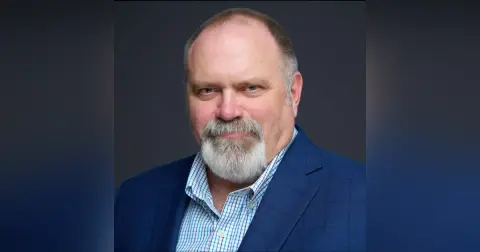
He Leads Tech Support for 180,000+ Hoteliers and Shares What You Should Expect From Your Tech Partner - Chuck Dalton, Actabl

 Apple Podcasts

 Spotify
In this episode, Chuck Dalton, VP of Support at Actabl, shares how he builds support around the person calling in, with hospitality-experienced people on his teams. An engineer on the ninth floor fixing a chiller needs something different than a VP of finance getting numbers to owners. You'll hear why a technology partner can't stop at "not our issue" when an integration breaks, where AI can get hotel teams a faster answer, and why Chuck won't put an AI agent in front of customers until his team trusts its answers.
Learn more about Actabl:
- Alice (ranked #1 in concierge software on HotelTechReport)
- ProfitSword
- Hotel Effectiveness
- Transcendent
- Altitude
Mentioned:
- Kellogg Center at Michigan State
- Zendesk
- What Smart Hotel Owners Are Focusing on Now with Andrew Arthurs
- The story behind Altitude with Stephen German
- How We Choose Technology Partners in the AI Era with Matt Schwartz
This episode is sponsored by Actabl
A few more resources:
- If you're new to Hospitality Daily, start here.
- You can send me a message here with questions, comments, or guest suggestions
- If you want to get my summary and actionable insights from each episode delivered to your inbox each day, subscribe here for free.
- Follow Hospitality Daily and join the conversation on YouTube, LinkedIn, and Instagram.
- If you want to advertise on Hospitality Daily, here are the ways we can work together.
If you found this episode interesting or helpful, send it to someone on your team so you can turn the ideas into action and benefit your business and the people you serve!
Music for this show is produced by Clay Bassford of Bespoke Sound: Music Identity Design for Hospitality Brands
[01:16] Josiah: Was there an early memory of hospitality, either as a kid or earlier in your career or life, where it kind of stood out to you and maybe somehow led you to doing the work that you're doing today and working in the hospitality industry as opposed to something else? Any early memories of hospitality that were formative for you?
[01:33] Chuck: So I think I've always been wired to help people, and I've always been wired to problem-solve. It's just my personality. And I went to Michigan State, and when I started at Michigan State, I had an opportunity to get a job on campus, and that job was working at Kellogg Center.
[01:50] Kellogg Center's the training hotel that's used for the hospitality school at Michigan State. I started out as a bellman. Had an ugly green jacket that I wore every day when I was out helping guests, carrying bags, shoveling the sidewalk, because it was Michigan, and that was a part of the deal.
[02:09] But in the course of my experience there, I grew in my roles. I started out as a bellman. I helped with banquet setups. I worked the PBX, if anyone remembers a PBX. I worked the front desk, and I ended up, over the course of multiple years, moving up in the organization to where I worked as an MOD and had responsibilities for the hotel in weekend and overnight hours.
[02:34] I loved the service aspect of it, because working with guests, greeting them as they come into the hotel, getting them into their rooms, addressing their needs when they have a question or a problem, it was just very gratifying to me to be part of that, because it allowed me to exercise that desire to help people, but also that innate thing of fixing things, being someone who fixes things.
[02:59] And I think that the experience with that when I was at Michigan State got me started. It motivated me and said, "This is something I want to keep going with." The irony is, hospitality wasn't my major at Michigan State. I was in journalism and economics, and the experiences that I got, combined with the education that I got, particularly in economics, just totally lent itself to being involved in hospitality and committing my work and my career to hospitality.
[03:30] And there's been so many growth opportunities. I started out in operations, started out working with Sheraton early on in my career, getting front desk exposure, systems administration exposure, things like that. And each time I got involved in one of those roles, I saw a new opportunity or another place where I could excel and where I could do really well and be gratified by it at the same time.
[03:52] You know, love the work that I'm doing and do work that is beneficial to other folks. So it really started with the Michigan State exposure and, you know, no shade to the UNLV people, no shade to UCF, no shade to Cornell and their hotel schools. They're all great, but Michigan State's school was definitely a good one.
[04:12] Josiah: I love it. This is why I love the hospitality industry. You and I were at a happy hour last week, and we have a Michigan connection, and I love that story. I also studied economics in school, and it's funny how life and careers work, when one thing leads to another, but hospitality broadly has so many different angles you can dig into.
[04:29] So I do want to get into the work that you're doing now, but I want to spend just a few more moments. As you think about your work and where you're focused today, were some of those stops along your career journey especially formative, and do they kind of guide how you think about your work today?
[04:43] Chuck: Absolutely. One of the things that happened when I was at Michigan State, the last year that I was there, is that I was a teaching assistant for the hotel school. I was a teaching assistant in the hotel systems class, and so I taught people how to use early-form property management systems and point-of-sale systems and trained students to see how to use technology to be able to do their jobs as F&B managers or front office managers or general managers, whatever it is they're going to choose to do.
[05:11] It's fun. I enjoyed it. It was a piece of the exposure to hospitality where you're saying, "Here are tools that you use. Your main thing is taking care of guests. You want guests to have a great experience. You want them to come back. Here are tools that you can use that help you do that better.
[05:27] "These things help you serve a customer faster, serve a customer better, and oh, by the way, you do need to make money. The hotel needs to make money, and so you use these tools to manage the business better, so that the business can be successful and efficient and the like."
[05:43] I think it was the combination of doing that teaching assistant role at Michigan State my last year when I was there, and then my first role with Sheraton was as a systems manager at a property in Baltimore.
[05:54] And seeing it at scale, where you have all the systems, phone system, office system, property management system, point of sale, accounting, all of it, saying, yep, here are all these tools that when they're working in harmony, they help the people who are delivering the business, who are taking care of the guests, to do it better.
[06:13] And it's like I've got a sweet spot for that. I've got a sweet spot for making those systems work well together and for making them do what they need to do so that the people who are taking care of the guests can do their jobs well. And it's like, this is the place where I fit, where I can contribute. I enjoy it, and it just really motivated me into the rest of my career path, which has all been around hospitality technology in different way, shape, and form.
[06:41] I've worked with revenue management providers. I've worked with BI system providers. I've worked with another revenue management provider, and here I am now with Actabl, with the operational tools that we offer. It's like, this is right up my alley. These are the kinds of things that help a hotelier do their job better if it's all delivered well.
[07:02] Josiah: I can't think of someone better for the work that you're doing now, Chuck. It's amazing. I love hearing people's stories because it is funny how things connect. And so you mentioned providing great service. Our mission at Actabl is empowering the people who power hospitality, so it's providing great service, but also empowering those folks that are doing the work of hospitality.
[07:22] But then the systems thing is interesting, too, because I think Actabl has a lot of technology that people have used and trusted for a long time: ProfitSword, Hotel Effectiveness, Alice, Transcendent, and then we have a whole bunch of new AI products that we have released this year. And so there's a mix of all these things, and of course, there's other systems hotels use.
[07:41] So connecting all those threads, making sure that you're using all the right systems to do what you want to do, both in service but also to drive financial outcomes, is so important. I want to get into the work that you're doing today, and I wonder if you could share with our listeners. Tell me about your team at Actabl and where you focus.
[07:57] Chuck: So one of the things that is challenging and exciting about the Actabl model is that Actabl as a company is made up of four very strong products. And what we find as we're delivering those products is that the products themselves are very specialized in terms of what they can deliver, the ways that they can help hospitality users.
[08:19] But also, the user persona is very different across the four products. When you look at Transcendent, for example, the team is working with someone that's an engineer at a property. The engineer may not be anywhere near a computer. The engineer may be working on their mobile, and they're on the ninth floor trying to fix a chiller.
[08:38] And then for ProfitSword, when you're working in the BI space and you're working on the finances, usually of a management company, you could be talking to a VP of finance. And the VP of finance spends his whole day sitting in front of a computer trying to make the numbers work, trying to get reports out to owners.
[08:56] And you just see these different personas. They all need good support. They all need to be able to get their jobs done, but the way that they need it and the kind of support they need is different. And so the way that we have the teams built for each of the products reflects that. The teams are tuned in terms of the team size, the tools that they use, the processes they use.
[09:18] They're tuned to the personas that they're working with, and the people on the support teams are also different. So you will see, ProfitSword being a good example, the vast majority of the people on the ProfitSword support team have hospitality backgrounds, most of them in hospitality finance.
[09:37] So they know the business that the application is being used in, so that they understand when the numbers don't balance, why that's a problem. They understand why you owe numbers to the owner, and you can't get them to the owner because you've still got this last little thing that needs to be changed.
[09:54] They understand why that's important and why that needs to be done. And so what we've done is built the teams and enabled them with tools, enabled them with processes, so that they can take care of the users that are associated with each of those products the best way possible. You have folks that hang well and deliver well with the engineers and the engineering folks that are primarily using Transcendent, and we have folks that work with the managers and property leaders that primarily use Hotel Effectiveness. ProfitSword, it's finance people, frequently at management company level, but also at property level. Each of the teams is enabled and tuned to get them what they need in the context that they need it, and that helps us deliver a better answer to the customer than if they got just a generic service experience like you might get from some other software company.
[10:47] We pay attention to the customer. We care, and we adjust our model and our teams to fit the customers.
[10:53] Josiah: Well, I love that, Chuck, and I wanna get into the philosophy behind that, but I think just a couple quick things. I've done some research recently in terms of how CIOs and CTOs and CFOs at hotel companies are buying technology.
[11:04] There is a push across the industry towards consolidation, and so it isn't just us saying this at Actabl. I do kind of independent research to get a sense of how people are buying. So there is more of kind of like, I want one technology partner, and I think that partner concept's key, because I've talked to Andrew Arthurs and others, and I think Andrew does a great job of explaining why looking at your technology provider as a partner and not just a vendor is so important.
[11:27] That has always been important. He's led technology at the biggest hotel companies. He's kind of seen that from the C-suite. But now, here at Actabl, it's especially important with new capabilities coming online and services, and we have all these AI capabilities, and the space is so dynamic.
[11:43] And so if you think about all the ways that technology needs to support every person at every level across all of your hotels, there's just so much complexity there. So you need to make sure that your technology partner has the infrastructure, has the support, that the product works, but also, as you're working through things, you just have a very comprehensive approach to support.
[12:05] But this approach to support that you lead with, Chuck, isn't an accident. We were talking off air about how you have a vision of providing accurate, fast, empathetic help. I'd love to hear you talk a little bit more about this, because you talked about the structure, all the different levels of complexity, the types of work, all the products, but what's behind this vision that you have for support of hoteliers and hotel companies?
[12:28] Chuck: I think it's knowing how powerful our solutions are when they can be used well and when the customers have what they need to be able to use them, knowing what kind of an impact it can have on the customer, the success that they can get from it, and the fact that we have accountability for making that happen. And there's a breadth of accountability that we have to take from a service perspective that says not only do we need to think about the specific question that a customer's asking when they reach out to us, "I need to make this change. I need to install this integration," or whatever, but it's also the things around it. You have to have awareness. If you're installing an integration, you're working with another system in the company that the customer depends on, and your solution probably has an impact on that system as well.
[13:19] And so much of our system is interdependent with the other systems in a hotel, getting data from it and sending data to it. When something goes wrong with that, we can't just say, "Oh, not our issue. We answered our question." It doesn't work like that.
[13:35] We reach across, we say, "Okay, looks like there's an issue with this PMS, and the data isn't flowing the way that we expect. Here's what we know. Here's the things we're seeing in our logs and things like that, but if we can get your PMS vendor involved, we'll work with you and your PMS vendor to figure this out."
[13:55] It's like, are we sending something we shouldn't? Are we receiving something that we shouldn't? How do we collectively solve this? And we stay engaged and involved until we get to an answer, even if we have to reach outside the thing that we're specifically responsible for. Because by doing that, recognizing the fact that our stuff is part of a system of tools that the customer is using, we're more likely to get to the success, even when the problem that needs to be solved is not in our realm.
[14:26] We also, at the same time, are broadening our own tool set to be able to get to what are the best ways for us to get work done, to have access to information, to train our people on all the new things that are happening, and how do those new things interact with all the things the customer already has.
[14:43] If you're gonna be looking at our Altitude product, that data right now is coming out of the ProfitSword system. And so the data in your ProfitSword system has to be accurate and good in order for you to get the benefits and the gain from the Altitude product.
[14:58] So it's constantly being aware of how the landscape is changing. It's like, what tools do we need to be able to enable a customer, troubleshoot any questions or problems that they have? And it's led to, with the recent boom in AI solutions, how do we use AI? What can we use AI for to take care of customers better?
[15:18] Josiah: Yeah. Well, and I'd love to actually get into that, because I think it's been really remarkable over the last year, year and a half of me being at Actabl and being in a lot of rooms, including last week, where you were going into a lot of detail on all the architecture, the systems you're using to enable your teams to deliver this kind of service in the right way, and it's way more complex than it might appear at first glance.
[15:40] We can't share all of the things, but I wonder if you can just give our listeners a little bit of a sense, as you think about AI-empowered technology supporting your team as they're serving hotel companies. What were some of the considerations that you had, things that you were thinking about, and where did you end up? I'd be curious to hear a little bit about the journey that you've been on, leading our company through when it comes to AI-powered support.
[16:06] Chuck: Certainly. One of the things that we did was we made a change in the core system we use for ticketing management. We moved to Zendesk about a year ago, a state-of-the-art, one of the best, if not the best, ticket management systems out there right now.
[16:19] And we did that because of the tool's flexibility and its growth opportunity. The things that you can do with it now, but also the fact that they are making changes to it and evolving it so that you can do new things tomorrow. And we have taken advantage of that ourselves. When we first rolled out Zendesk, it was primarily just bring the system up and be able to take care of customers without interruption.
[16:46] We did this transition back in March '26, and it was important to us that it should be as seamless as possible to the customers. And so we did that. And so now that we have been stable and operating well with the system, a few months ago, we started exercising the AI tools that exist within the Zendesk platform, and also the AI tools that we can use within the company against our systems to be more informed, to answer questions faster, and to identify opportunities faster and with more detail than we did before.
[17:21] So kind of the core philosophy that we have to have with AI is that the answers that our tools give, if we have an AI agent that's taking care of a customer, right now we don't, but we are in the process of standing that up, the answer that the AI agent gives has to be at least as good as the answer that you would get from one of our human agents.
[17:44] One of the things that happens with people who experience AI out in the world is that it's directionally accurate. The answers that you get from it may be directionally accurate, but may have some of the details wrong, and we won't accept that. In the solutions that we're gonna put in front of customers, it won't go in front of a customer unless we trust it ourselves, unless we say, "Yes, this answer is correct."
[18:06] As a result, it's taking us a little longer to stand the tools up. There are two manifestations of AI in terms of how we deliver service. There is what you would call agent copilot services, which is our human agents answering a question, working on something for a customer, and they're using the tools that they have available to them to give the most accurate answer as fast as they can.
[18:29] The main thing that we think we can get from AI is a faster answer. Productivity to some extent, but it's more of a faster answer. So agent copilot helps us do that by enabling the agent to access information even faster than they could before, and be more complete in the answers that they offer to a customer.
[18:52] The other aspect of that is an AI agent itself, where a lot of the community is used to, if you try to get support on a consumer site, you're talking with an AI agent, you're not talking with a human. In order for us to stand that up in our world, because of the specialized nature of our applications around the hospitality space, accuracy is just an absolute requirement.
[19:15] And so what you see in terms of how it gets deployed is what's called a deterministic model, and if it sounds familiar, it's the same sort of approach that Actabl is taking with Altitude, the AI product that sits on top of ProfitSword. And that is where you're guiding the AI to say, "Here is how you get to the answer."
[19:33] You don't turn it loose with information and let the engine try to figure out what the answer is. You tell it, "Here's the path that you follow to get to this answer." And the outcome of that is you have a more consistent result, you have a more accurate result, more reliable result, and that is the model that we're using to deploy the AI agents for support.
[19:53] So when they start to show up for our customers in chat, in an email, it'll be because we have built the procedures that train it. You can almost think of it like training a new human employee. You are training them in what the right answers are and how to get to them. And once we complete that training, then we will start exposing it to customers.
[20:17] Customers will be able to use it. They'll get a faster answer. The AI is always available. You don't have to wait, and it'll give them what they need faster, and we won't put it in front of them until we trust it, until we believe that it's the best answer. I have a hypersensitivity, I'll confess, to the service aspect of what we do and the empathy.
[20:37] The fact that we're working with humans, and humans are working hard, particularly in hospitality. And so the way that we use AI needs to reflect some of that, and that is the fact that it's primarily gonna help the humans take care of the customers faster and better and not act as a deflection tactic where we say, "Okay, we don't wanna talk to you."
[20:58] We won't do that. It just isn't the philosophy of our company. We are humans taking care of humans, and we want to make sure that those tools are accurate and beneficial to the customer.
[21:09] Josiah: I appreciate you walking through that, Jack. The world is changing quickly. When hotel companies are thinking about who do we partner with to make sure we have the right technology, the people, again, are such an important piece of the puzzle here, to make sure that we have the support across our teams.
[21:24] And then the business world is operating at the pace of AI now, so you need to make sure that not only the technology is empowered by the best of AI, but you also have the people that are equipped to operate at that pace as well. But it strikes me how you have such a high bar for doing this well.
[21:41] Which is so important, right? You don't just leave this to chance. You don't just put in a chatbot. That would be the easy thing. But you maintain a quality where if you work with Actabl, you can expect this level of excellence. And I think everything you mentioned at the beginning, even having people with hotel finance experience on the team, it's like these people on your team know their stuff, right?
[22:01] Or they know operations. They just know the business and the work. And so that's what you compare it against, really world-class experts, and now evaluating whether there's a way where AI can enable quick capabilities, either in support or helping our team members provide support. But I think this is so important to think about from a partnership perspective.
[22:21] Are you gonna work with a company that has these capabilities, really helping our customers, I think, operate with the speed that they need to be operating with?
[22:28] Chuck: That's exactly it. And so AI can help us. It can help the agents take care of customers. It can help a user get to an answer if we enable it, if we train it and set it up in such a way that the customers can trust it and that we trust it.
[22:44] Because the expectation is that getting an answer from us enables you to move on with your day and get your job done and hit your deadlines, get that report to the owners, get that chiller fixed, and having the tools to support that faster, but still with accuracy and still with high quality, is the only way to go.
[23:04] You get breakage if you try to adopt the technology for the wrong reasons or for the wrong outcomes. It's not gonna go well. The customer satisfaction is gonna slip. The customer trust will fail, and that can't be true. That can't be the way that we deal with this and that we use the tools. We wanna get the maximum bang that the tools can offer us, and setting expectations correctly and then enabling the tools to give us what we need is critical to making that happen.
[23:32] Josiah: It really is. Before we go, I wonder if a story comes to mind of working with a customer. We don't need to share their name, but I feel like I see a lot of this in Slack, your team just working through these situations where our customers are facing thorny problems, right? And your team comes through to help them through.
[23:46] I wonder if there's an example that comes to mind in terms of working through something tough with a hotel company and how you navigated that with the team and what you were able to accomplish together and help them get through that.
[23:58] Chuck: In the Alice product right now, we are working with some very important customers.
[24:02] We work with a couple of customers that just have incredibly high expectations because of how they deliver to their guests. And so those expectations, as I mentioned before, come back and reflect on us. We need to deliver at the same level, the same intensity, so that they can do their jobs and they can be successful with their customers.
[24:25] And I think about one of the challenges, particularly in the Alice world, is the exchange of data, primarily with property management systems. And as a new property is coming up and the property's getting used to how Alice works and how it works with the property management system, we can run into these wrinkles where maybe the user thought it was gonna work one way and it works a different way.
[24:46] Or everybody's expectations were correct, but the system underneath it isn't doing what it's supposed to. And so we've had these experiences where the customer says, "Hey, I've got a problem. I've got an expectation problem." And by the way, in the hotel business, particularly in Alice, these problems happen seven days a week, twenty-four hours a day.
[25:09] And for the Alice and Transcendent products, we're there taking care of the customers seven days a week, 24 hours a day. And we have these issues on a weekend where an integration isn't working like it's supposed to, it's affecting customer service, and our integrations people are on the phone with the customer saying, "Okay, what do you see? What kind of problem? Okay, I'm looking at logs. I see we can make this change, and we'll get this solved for you, and we'll get an answer to you."
[25:36] And we're able to break the logjam that the customer is having on a weekend, when frankly a lot of hotels have lower expectations. They go, "Oh, my PMS vendor, I can only call them Monday through Friday."
[25:50] And being able to take care of them in their time with their issue and work with the other vendor. Frequently we're on the phone with the PMS vendor and the customer saying, "Okay, what's this look like? How does that look? Okay, we've got an answer." We figured out among us what the right answer is, and sometimes it's a change for us, sometimes it's a change for the PMS vendor, sometimes it's the customer.
[26:12] But we get to an answer, and we get the right people working with the customer and with the partners to get them into a good place. And so I think about that a lot. It means that we have to rise to the occasion to be able to meet the customer where they are, whether it's a schedule issue, or a system complexity issue, or a challenge with a partner, and we meet them where they are to get the problem solved so that they can move along and take care of guests. And we strive to be good at it. We strive to have the respect and the trust of our customers, and I hope we're doing well with it.
[26:48] Josiah: I love all the different solutions and software that we have.
[26:52] You chose Alice, because I think we empower people at some of the most celebrated hotels, five-star, over-the-top, luxurious experiences, kind of the highest bar of excellence in hospitality. And I'll include links in the show notes. Alice has been rated number one for guest services, number one concierge, number one small, midsize hotels, large hotels.
[27:14] The industry really likes their software, but I think a lot of those ratings are coming from also what your teams do to help them with it, right? I love that. It's all the work behind the scenes, right? Just like the people in hospitality are behind the scenes to create that amazing guest experience, we're behind them in helping them deliver that.
[27:30] Chuck: Exactly.
[27:31] Josiah: And so I really appreciate you taking time to share some of your story and what you're doing, Chuck. It's always good to chat with you, and we'll include some links where people can learn a little bit more about us and reach out for a conversation. But great to chat today. Thanks for making the time.
[27:44] Chuck: Very good. Thanks for your time.