How a Farmers Market Brings San Francisco Together - Steve Pulliam, Heart of the City Farmers' Market
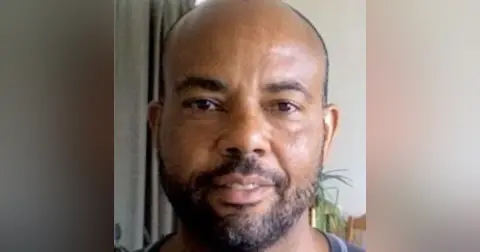
In this San Francisco Sundays episode, Steve Pulliam, Executive Director of Heart of the City Farmers' Market in San Francisco, shares how a farmer-run market welcomes every shopper while coordinating about 50 independent businesses without micro-managing them. You'll hear why the market keeps a waiting list instead of filling every space, and how the team rebuilt its flow after moving across the street. Learn more: Heart of the City Farmers' MarketSteve Pulliam on LinkedIn A few more...

 Apple Podcasts

 Spotify
In this San Francisco Sundays episode, Steve Pulliam, Executive Director of Heart of the City Farmers' Market in San Francisco, shares how a farmer-run market welcomes every shopper while coordinating about 50 independent businesses without micro-managing them. You'll hear why the market keeps a waiting list instead of filling every space, and how the team rebuilt its flow after moving across the street.
Learn more:
A few more resources:
- If you're new to Hospitality Daily, start here.
- You can send me a message here with questions, comments, or guest suggestions
- If you want to get my summary and actionable insights from each episode delivered to your inbox each day, subscribe here for free.
- Follow Hospitality Daily and join the conversation on YouTube, LinkedIn, and Instagram.
- If you want to advertise on Hospitality Daily, here are the ways we can work together.
If you found this episode interesting or helpful, send it to someone on your team so you can turn the ideas into action and benefit your business and the people you serve!
Music for this show is produced by Clay Bassford of Bespoke Sound: Music Identity Design for Hospitality Brands
Josiah: I'd love for listeners and viewers to get to know you a little bit, Steve. I wonder if you could share a little about your role today, and then I would love to hear the story of how you got into doing the work that you're doing today.
Steve: Well, my name's Steve Pulliam. I'm executive director of Heart of the City Farmers' Market. I've had various roles at the market. I've been there for about 14 years now, I believe. And how did I get into this? That's a long story. I'll try to keep it as short and sweet as I can.
Back when I was in college, I worked in a little pizza shop, and it was converted into a full-service restaurant that ended up being considered one of the best restaurants in the city. So I got to see it go from a pizza shop to a place that served much better food and provided much better service, and it was very interesting for me to see.
Unfortunately, I got a degree in chemical engineering, and I went into that for about 10 years before I decided that it wasn't for me, and I stopped doing that. I ended up working in a couple of bar restaurants for about 12 years. I did that while I was in Atlanta, and it wasn't until I moved out to California with my wife to go to grad school that I started volunteering at a garden and realized I loved produce and growing things, and one thing led to another.
I now manage community gardens and the farmers market, to make a long story short.
Josiah: I love that, Steve. We'll get into some of that. I'm always interested in the personal motivations. You've had an amazing life and career and spent a little bit of time in Atlanta, an amazing food scene there. But it's interesting, you're overseeing this massive, complex operation, but you personally were connected to growing things.
Tell me a little bit about that. Going from chemical engineering, you have done a lot of things over your career. What was it about growing things that you enjoyed so much?
Steve: Yeah, I don't know. Like I said, I started volunteering at a garden when I moved here and I just immediately fell in love with it. Getting your hands in the dirt and seeing how to make things from your actions. It's seeing your productivity in action and seeing the results of that productivity.
And I've always loved food, and that was seeing it from the ground level. Managing the community gardens got me in touch with the people as well. I've always been somewhat of a people person, so I was able to put it all together and realize that I ended up in a fantastic position, and I have a couple of great jobs.
Josiah: Amazing. This is going to sound like an obvious question after what you just shared, but I feel like food can connect people, and that's such a connector. Even in what you've described, it seems that way. For you personally, community gardens, farmers market. It's interesting to see not only food in terms of dining together, but the food ecosystem has an opportunity to connect people, it seems.
Steve: That's right. I don't think there's anything that brings people together like food does, to be honest with you. I can't think of any other activity or thing. Anytime you have a meal together or grow things together, it really brings out the best in people. I'm a firm believer in that.
Josiah: I love that. Now, you mentioned earlier in your career that you've seen the hospitality industry from a bunch of different angles. You worked in other industries, and you've seen that as well. I'm very interested in hearing your perspective. What is the role of food and farmers markets specifically in the broader hospitality ecosystem?
There are a lot of elements of this that we can get into. But I wonder if you could describe in your words Heart of the City Farmers' Market, because San Francisco has a number of farmers markets. There's a bunch in San Francisco and in the broader Bay Area. I live very close to the market that you run, and it is unique and special in a bunch of different ways.
I'd love to hear from your perspective, how would you define what you do at Heart of the City Farmers' Market, and maybe what makes it stand out from some others?
Steve: Well, regardless of what I did, I think it was set up very well in the beginning. The market's been around since 1981, one of the oldest markets in the city, and it was begun by the American Friends Service Committee, a Quaker organization, and the Market Street Association.
They had the foresight to make it a farmer-operated farmers market, which is the one thing that makes us certainly unique from just about every other market almost in California. What I mean by that is our market's run by a board of five farmers who are elected yearly, there's a rotation, and two community members, so that gets us in touch with the community as well.
The mission from the get-go was, first of all, to support small and medium-sized farmers. And secondly, which is probably the most important one, they decided that they would make this fresh, healthy produce accessible to low-income communities, which is something that I think we do better than just about anybody else.
I think that's one of the things that makes us special.
Josiah: It's really remarkable, because sometimes you go to a farmers market and the stuff's so expensive, and it's like, I love the fresh nature of this, but it just feels economically like a whole other tier. So I think it's interesting to think about the way it's structured, what it enables.
There are so many elements to that I'm fascinated by. This is a hospitality show, and one of the things I'm also interested in is how you and your teams think about making a hospitable environment. As the name suggests, it's in the heart of the city, so it's in the middle of everything.
But I think it's an enjoyable place to spend time. Going there frequently, there's a fun vibe there. How do you and the teams think about being hospitable even as you're bringing so many producers together into this environment?
Steve: Mostly what I try to do, and what my team tries to do, is just be welcoming to everyone. As you've seen, we have a very diverse selection of farmers. We have farmers from all over the world, Laos and Mexico and other parts of South America, just all over the place.
They offer a very wide selection of produce. Our produce is as inexpensive as you said. But we also have specialty produce for those more affluent customers that want their dry-farmed tomatoes and specialty mushrooms. So we try to be welcoming to everyone that comes to our market.
I think that's the main thing that we strive for. I try to make sure that I stay in touch with people on the ground to make sure everyone gets their questions answered, and we have daily contact with all of the vendors. A lot of people don't realize there's basically 50 businesses out there, and you're trying to coordinate them and make sure people are doing the right things, but at the same time not overmanaging them, because they are their own business with their own workers.
The main things that we try to do are to be welcoming and to have the right attitude about it. It's not hard to do, because the way you feel when you come to the market is the way I feel most every day when I'm out there.
Not to say that we don't have issues and problems, but I consider it the best job I've ever had because of that. I love...
Josiah: Yeah, it's a really good energy. But I'm curious how you do that. I'm thinking about what it looks like to welcome people who are shopping there, but this ecosystem of 50-some small businesses. What have you found useful over your time with the organization in interacting with them? Because they're all running their own business. They're doing their thing. It feels like a very complex thing to manage. What's useful in leading this?
Steve: I think you have to be understanding, because there are a lot of different issues. A lot of times it's mostly listening, which can be difficult at times because over 50% of our vendors don't speak English at home. And I am certainly not bilingual by any means.
I speak a little Spanish. But you're having to identify the people that you can communicate with and just try to be understanding for everyone involved. I think it's because of our mission to support small farmers and the fact that we have farmers on our board, that basically I work for them. We have certain things that other markets do that aren't exactly farmer friendly.
For instance, we don't charge farmers when they don't come to the market, because we recognize that they don't always have produce and we want to make sure that they're not losing money when they're not coming to the market. We have some policies in place that are really beneficial to them.
We don't set prices, which some markets do. I want everyone to make money there. I want everyone to make sure that they're being profitable when they come to the market. So I won't add a bunch of vendors with the same offerings, because I want to make sure that the people that do come are able to be successful when they do come, and I think that's something that we do pretty well.
We have a waiting list. A lot of markets would fill the market up until it was stuffed. But we make sure that we're respectful to all of our vendors.
Josiah: Yeah. Well, it feels like listening is core to all that. It's an interesting position you're in. You have to coordinate all these business owners. At the same time, you're also thinking about the experience of everybody who is visiting and shopping there. I wonder if you could talk a little bit about that operationally.
First of all, what do you want it to feel like for somebody, whether it's someone who lives in San Francisco or somebody who might be visiting and coming through there? What do you want that experience to feel like? And I'm curious what goes on behind the scenes to enable that.
Steve: Yeah. As I said, I want everybody... And to be honest with you, I don't feel like it's that hard, Josiah. When you've got food, I mean, we have music, and we don't even curate the music or anything. We just have guys that show up and busk out there. They play music, and the guys love it.
The customers just love walking in and feeling the energy. We do some things with spacing and how we get the flow through the market, because it is a little bit challenging with the big statue in the middle. We work on some things around flow and that kind of thing.
But in general we just try to make sure everyone's comfortable, to the best that we can.
Josiah: I've got to ask about this, Steve, because I nerded out on these little details. My understanding is the market moved, right? And I imagine there are flow considerations. Tell me a little more about that. How do you want people to move? You mentioned you had to think about all these different elements. What went into that?
Steve: Well, oddly enough, when we moved across the street, a lot of people thought, "Why are you complaining about moving across the street?" I won't get too much into it, but all I'll say is that it made it much more difficult for the farmers. They used to be able to have their trucks with them, and they could no longer do that.
It was basically adding a couple hours to their workday, which doesn't seem like a great thing until you think about the fact that those farmers already work about 16-hour days. Traveling two hours to and fro, a lot of them. And we have an unusually long market.
And the bricks over on the other side kept the produce nice and cool, which is not the situation on the hot asphalt we're on now. So there were some logistical details that we had to try to alleviate as much as we could. One of the first problems we ran into was people would populate one side of the market, on the statue closest to our old location, but they didn't want to come to the other side of the market.
So we did some things with moving vendors around, ones that attracted more customers. We made sure there were some transitional vendors to keep people moving around. We placed vendors on the sidewalk so that people could see that the market continued on and wasn't just one side.
We did some things like that. We put our information booth on the side of the market that was slowest to draw people that way. So we did some things to try to improve the flow. The space is smaller, but oddly enough, people think that it feels more open.
That was one of the things I decided once we gave up on our old space and realized, hey, we're not going to be able to stay there. I tried to look at the positives. And one of the big positives was customers, for some reason, felt that this is a much more open space. A lot more people see us now, and there's a lot more demand for the market, so we welcome these positive changes as well.
Josiah: There you go. One thing I'd love to get your take on, Steve. On this show I'm trying to show the different aspects of San Francisco and what makes this city so vibrant. As we were talking off-air a little bit and earlier in the conversation, food is such a catalyst for good things.
As the name of the market suggests, you're in the heart of the city, in the middle of it all, and I think there's so much potential there. There have also been some challenges over the years, so you're right in the middle of it all.
I wonder if you think about the work you're doing and the role it plays in the vibrancy of San Francisco, what makes this such a great city. Do you think about that sometimes, the role and the impact of this work?
Steve: Yeah, I do. We have a lot of tourists that come to that area, mostly because of City Hall, and the Asian Art Museum's right there, and the library's right there. We're right there at the BART exit. BART and Muni are right there. So a lot of people flow through that area.
It's certainly a big part of the city for those reasons. So people that do come to the city, on those market days we do have an impact on them, I'm sure. Even though there are other markets in town, as you said, I think we're unique. So we have a pretty big impact on the communities that surround us.
So I, yeah.
Josiah: Well, it starts with making the city dynamic for people who live here, right? And then I think that energy ripples out and becomes attractive for people visiting too. But it starts with the core of providing access to stuff and connecting people through food and connecting them with others in the area.
I think it's powerful. It's a fun place to bring friends to, visit, and do some shopping. Before we go, Steve, I'm curious, as you look ahead, what excites you the most or what are you looking forward to? I feel like there's always a lot going on with the market, but is there anything you're especially excited about now?
Steve: As far as tomorrow, what am I excited about? Well, I'm excited about some of the accomplishments we've had. I don't know if you know about our Market Match program.
Josiah: Tell me.
Steve: Where basically, if you use your CalFresh benefits at the market, we double your money, to the tune of about $2 million last year in free produce that we gave out.
That always excites me, just knowing the impact that we're having on the community. Future stuff, I wouldn't mind expanding a little bit, more towards City Hall. That would be exciting. But I think I'm just trying to ride the wave and see where it takes me. I'm certainly always excited about the role that we play in the city and making sure that we represent the city well.
And yeah.
Josiah: Yeah. It's a special place. It's a really special place. I'll include some links in the show notes for people who are watching or listening, and encourage you to check it out if you're in San Francisco. I've really enjoyed hearing the backstory, Steve, of all the moving parts, how you get everybody working together, the flow of people. The role it plays in the city. It's a really special thing. Thanks so much for taking the time to chat.
Steve: Oh, thanks for reaching out.
Josiah: Of course. I'll stop the rec-