How I Found Meaning and Purpose in Hospitality - Paul Martin


 Apple Podcasts

 Spotify
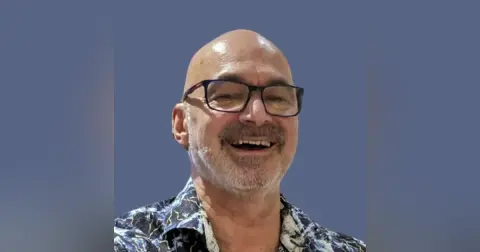
In this episode, Paul Martin, the founder of Mixxa, a hospitality transformation consultancy, shares his journey from washing dishes to becoming an accomplished bartender and helping others develop their hospitality skills. He reflects on how his love of entertaining people led him to find meaning and purpose through connecting with guests and creating memorable experiences. Paul also shares how his motivation has evolved over the years, from enjoying the personal satisfaction of serving others to helping hospitality professionals recognize their strengths and reach their potential.
Watch Paul's TEDx talk, mentioned in this episode.
A few more resources:
- If you're new to Hospitality Daily, start here.
- You can send me a message here with questions, comments, or guest suggestions
- If you want to get my summary and actionable insights from each episode delivered to your inbox each day, subscribe here for free.
- Follow Hospitality Daily and join the conversation on YouTube, LinkedIn, and Instagram.
- If you want to advertise on Hospitality Daily, here are the ways we can work together.
If you found this episode interesting or helpful, send it to someone on your team so you can turn the ideas into action and benefit your business and the people you serve!
Music for this show is produced by Clay Bassford of Bespoke Sound: Music Identity Design for Hospitality Brands
Josiah: We were talking a little bit off air. I'm trying to show people what's possible from a career perspective in the world of hospitality, and I will link in the show notes to your TEDx talk. Fantastic. Watched it this morning, and very entertaining. Enjoyed it.
Paul: Thank you.
Josiah: You got into your story a little bit, but I wonder if you could just share with our listeners a little bit about the environment you grew up in, the house you grew up in, and what ultimately led you to working in the world of hospitality.
Paul: Of course. So I grew up in an ordinary household, except for the fact that my dad, who's still with us and still doesn't actually realize how old he is, he certainly doesn't behave like he's the age he is, he was, and is, an extraordinary character. He was a singer and songwriter, and he had quite a level of success in, I guess, the 1960s and then again in the 1980s. His most famous song that he wrote is a song called Can't Smile Without You, which was a massive global hit for Barry Manilow. It's actually the only Barry Manilow hit song that Barry Manilow didn't write himself.
Josiah: Wow.
Paul: He generally doesn't record other people's music. He records his own music. Anyway, I digress. So I grew up in that household with that kind of influence, and that's what I wanted. I wanted to be that. I wanted to be the flamboyant person on TV, singing, being in a band. And even though I came from a musical father, something happened with my DNA, and I had no musical talent. So I can't play any instruments and I can't sing, as my family will attest.
So I had this sort of hunger for performance, but music was never going to be the route. I tried stuff at school and college, and drama and what have you. But what happened to me, actually, I had this moment, this almost road to Damascus moment, which came out of watching the movie Cocktail with Tom Cruise.
I was so overwhelmed by the potential of having a hospitality audience who was different every night and unpredictable, and that audience being maybe the audience the other side of a bar, if I'm on this side of the bar. It really captured my imagination. And to start with I said, "Oh, maybe I can learn to juggle and flair," as we call it in a cocktail bar, and do that stuff.
So I started working in bars really to follow that dream. And actually what it did was it led me, funnily enough, to a kitchen, not a bar. I got myself a job as a kitchen porter washing dishes, and I really wanted to get into the bar, but my boss wouldn't move me because he'd employed me to wash dishes.
And then one day I had an accident in the kitchen. I actually can't remember whether I told this whole story in the TEDx talk that you saw or not, but the accident I had was this. In the kitchen, in wash up, you're not permitted any glasses, because glass can break, it can cause problems, and you have to clear everything up. But I did have a glass, and I had a glass full of Coke, and it was on the shelf above my sinks where I'm washing up, and I went to take a drink from the glass of Coke. Because my hands were wet, the glass slipped. My instinct was to grab it and catch it before it fell. And what happened was I caught it as it smashed on the side of the sink.
And so I grabbed broken glass. I look at my hand, and there's a huge piece of glass sticking out of my hand. You won't even be able to see it, but even all these years on, I don't even know if you can see, but there is a scar. I pulled the thing out, blood went everywhere, and I had to go to the hospital and get stitched up. When I came back, my boss couldn't put me back in the kitchen because I had stitches, so he moved me into the bar, and I never went back into the kitchen.
Josiah: Wow.
Paul: And what I found in the bar was my absolute first love, my first love being drink making and cocktails, and this interaction between you as the performer, I guess. And it was almost like, this is what's in my DNA, right? I can't sing, but this is my audience. And I developed that over the years, and I became very good at cocktails. I held world records when I was a kid, and I've written all sorts of books on cocktails and mixology.
But actually, my real love was not the drinks at all. My real love was the connection between people. And I realized very early on that I was very good at this. I was very good at making people enjoy themselves when they were sitting at the bar with me, and I seemed to know who to really connect with, who to give more space to, who would enjoy a joke, who appreciated a more serious approach. It was a sort of instinct thing, and I knew I was good at it, but as a youngster, I didn't really know why. In other words, I couldn't explain it to you. It just felt right. It felt good.
Josiah: Yeah.
Paul: Anyway, that's how I got into it.
Josiah: Amazing. Paul, so what has kept you in the broader hospitality... I mean, now you serve people across the hospitality industry and other industries, but I'm curious, because it's amazing that at that moment in your life you found that connection, that meaning. But what has kept you close to working in the hospitality industry? Maybe it's not you there behind the bar, but is it to create a world where more people can connect with each other?
Paul: I've definitely over the years gone from wanting it to be about me. So when I was in my 20s, I was driven by the same ego that can drive a lot of 20-year-olds. But as I matured and grew as a person and aged, I'm now really driven by the idea that I can help people find what's inside them. What I mean is that I think there are a lot of really talented, skilled people who are attracted to hospitality but never manage to find their spark because of the cultures within which they work.
So actually, if anything, it's kind of a form of oppression, but I don't mean that in a negative way. I actually mean that in a naive way. I think our industry is still naively attached to old-fashioned ideas, and what that does is it restricts how people develop. So what's become almost like a quest for me is, how many people can I help escape that?
And I'm in business to help businesses, and I'm in business obviously to live and feed my family and all the rest of it. So it's not purely philanthropic. But it means what I'm doing is driven by an absolute passion and belief that I can make a difference to people's lives. And I've obviously touched so many people's lives over the years because of all the people that I've worked with. But it never loses its appeal to me, because there's something magical about watching someone who is like a sort of 2D version of what they could be become three-dimensional and expressive, and create memories for people that they come into contact with, so that their face comes to mind when someone like me asks the question, "What's the best experience that you've had?"
And if I could have played that part, and I don't even need the adulation that I really wanted when I was in my 20s, just knowing that I've helped somebody else along the way is amazing.
Josiah: Love that.