Why I'm Building an AI-Native Hotel Management Company - Sloan Dean, AI Hospitality Group
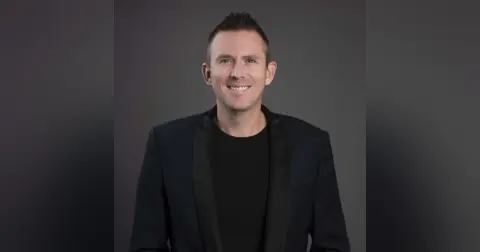
Sloan Dean introduces AI Hospitality Group and explains why he's building an AI-native hotel management company. He covers the pace, risks, and benefits of AI; the pressure on hotel owners; and how he's approaching recruiting, sales, and daily operations through hotel partnerships. Sloan also explains his profit-sharing management model and what he believes this approach could mean for hotel associates, owners, and guests. Links: AI Hospitality GroupSloan’s newsletter: Services Are the New So...

 Apple Podcasts
 Spotify
 Sloan Dean introduces AI Hospitality Group and explains why he's building an AI-native hotel management company. He covers the pace, risks, and benefits of AI; the pressure on hotel owners; and how he's approaching recruiting, sales, and daily operations through hotel partnerships. Sloan also explains his profit-sharing management model and what he believes this approach could mean for hotel associates, owners, and guests.
Links:
- AI Hospitality Group
- Sloan’s newsletter: Services Are the New Software. Hotel Management To Be Heavily Disrupted.
- Sequoia Capital: Services: The New Software
- Emergence Capital: Why AI-Native Services, and Why Now
- Emergence Capital’s original 2024 essay: The Death of Deloitte
- Subscribe to Sloan’s NOT DONE newsletter
- Listen to NOT DONE with Sloan Dean
- Connect with Sloan on LinkedIn
Previous conversations with Sloan:
- AI for Hotels: MIT Lessons, Claude, Vibe Coding and Real Use Cases
- Not Done: Sloan Dean After Remington
- The Power Shift in Travel
- The Future of Hotel Management: Automation, AI, and Innovation
A few more resources:
- If you're new to Hospitality Daily, start here.
- You can send me a message here with questions, comments, or guest suggestions
- If you want to get my summary and actionable insights from each episode delivered to your inbox each day, subscribe here for free.
- Follow Hospitality Daily and join the conversation on YouTube, LinkedIn, and Instagram.
- If you want to advertise on Hospitality Daily, here are the ways we can work together.
If you found this episode interesting or helpful, send it to someone on your team so you can turn the ideas into action and benefit your business and the people you serve!
Music for this show is produced by Clay Bassford of Bespoke Sound: Music Identity Design for Hospitality Brands
00:00 - Introducing AI Hospitality Group
04:01 - AI Progress, Safety, and Adoption
08:30 - The Pressure on Hotel Owners
12:14 - Building an AI-Native Hotel Company
15:01 - Why Start With Back-of-House?
16:40 - Where Should Hotels Start With AI?
18:13 - AI Recruiting at the Ameswell
19:24 - Faster Group Sales Responses
19:54 - Rethinking the Daily Standup
22:34 - AI for Labor, Inventory, and Marketing
25:44 - A Profit-Sharing Management Model
28:58 - What Are AI-Native Services?
32:39 - How AI Changes Hotel Jobs
34:54 - The Opportunity for Owners and Brands
Josiah intro: Today, Sloan Dean is announcing AI Hospitality Group, his AI-native hospitality company. In this episode, we get into that, the context, why he created the company, and what it means to be AI native. We get into real, specific use cases of how AI is being used in hotels today to drive results. We talk about where this is all going, how it benefits people, and the implications for people across the hotel ecosystem at every level, what it looks like to operate in this new environment.
This is a conversation I'm real excited to share with you because I've talked to Sloan a bunch of times. I've linked in the show notes to some of those past conversations as well as resources. But I think in listening to this, you're going to be inspired by what is possible by applying AI to the hotel business where everyone benefits.
So without further ado, let's get into it.
---
Josiah: Sloan, it's really good to see you again. On my run this morning, I was listening to our last conversation back in March. It's interesting to watch our conversations. We've recorded a bunch now. And thinking about the evolution of technology, I feel like you're always ahead of where technology is and how it's being applied in hotels. You're always a few steps ahead of everyone, so for me it's a real treat to speak with you. I'm excited to catch up with you. Again, we recorded earlier this year. Catch us up. What have you been up to over the past months?
Sloan: Yeah. So I was on garden leave till my non-compete ended, which was June 6th, so that forced me to slow down a bit, which was a hidden gift that I didn't know I needed. I had a daughter, so I have four children, three sons, and then our daughter was born January 9th.
Josiah: Congrats.
Sloan: So that's probably the biggest news regardless of what we're going to talk about today. And then fast-forward to June, I started AI Hospitality Group with my co-founder, Kishan, and our founding partner, Zach, and we've been off to the races. We've been in this private design stealth mode ever since I cleared my non-compete, and super excited to be going public with who we are, what we're doing, et cetera, on September twenty-first, I think, when this podcast comes out. So it's been a busy year to say the least. New baby, new business, hopefully a lot of new that comes through, and we're really trying to change the industry, so all exciting times.
Josiah: Very exciting times. And building an incredible podcast, incredible newsletter. I'll link to those if people aren't...
Sloan: Thank you.
Josiah: ...listening, watching, reading. This is must-listen, watch, read stuff. I was just this morning rereading your newsletter from a week ago, and you're talking about some massive changes in technology and the opportunities that presents, and I think we'll probably get into some of that in this conversation. But I always admire your approach to learning, staying ahead of things. This is how you win in business. You've got to constantly learn. So I appreciate all you're doing there.
Sloan: Curiosity is one of the greatest gifts in business. Always staying curious, always staying hungry. If you listen to anyone who is successful over a long period of time, they're always constantly learning, constantly reading, because things change. The only constant in life is change, and you have to keep up.
Josiah: I want to get into some of what you're doing now, but I would like to catch up on the past year, because in going back and listening to some of our past conversations, and so our listeners know I'm not just blowing smoke, there are some specific things we talked about that have come to pass. At the time of our recording, we're in September 2026, there's a lot of conversation about security and what that looks like in AI. You were talking about that a year ago. Going back some time, you studied AI at MIT. That was part of our conversation, that security needs to be an important part of the conversation. I'm curious, as you reflect back over the past year, things that you were learning, we made some projections back then of how things might unfold. What do you think met your expectations in terms of how things unfolded as compared to a year ago, and was there anything surprising in terms of how you've seen technology evolve over the past year?
Sloan: I expected the LLMs to continue to get faster and faster because they're now iterating on themselves. We recently had Dario come out, and then Sam Altman and Elon Musk follow, and even the Chinese in the last twenty-four hours have come out and said, "Hey, maybe we need to slow this down."
Josiah: Parties that hate each other.
Sloan: If you get deep into the AI, there's real risk. There is a very high probability that AI will kill us in our lifetime. And if you don't believe that, then you're just not educated on the subject. And it's not 1%. There's a very high probability, double digit probably, that it could kill us. And so I think being very smart... it also is transformative, and we could be living in the age of prosperity. So I don't want to be doom and gloom, but I do think there needs to be global regulation around safety, around usage, and how we bring AI to bear, particularly once we get into physical AI.
So the rate of change, I'm not surprised by. The rate of adoption in hotels is worse than I anticipated. But I guess having been in the business now for twenty-one years, I shouldn't be shocked. We are unfortunately a laggard of adoption, if I were to judge us hoteliers. I think a lot of the innovation that we're seeing is what I would call bolt-on AI, where there's really not a re-imagination of the work. It's stairstep innovation, and hence why I'm doing what I'm doing, trying to be a real disruptor in ways that we can shift the industry.
So I guess in summary, the speed of AI evolution for the total world, I'm not surprised at how fast it's moving. I am a little surprised at how slow particularly hotels are at adopting. But we are a four-wall business and a people-intensive business as well. So I think eventually we'll get there. It just may be slower than other industries.
Josiah: I don't want to make this conversation just about recent news, but I also don't want to bury the lede. What you just shared, what's been talked about, is pretty remarkable in terms of some of the downside. And you have all these market participants that have personal and business interests to make the other businesses go away. So the other side of this argument is, okay, this is a regulatory capture scheme that's going to help the big ones. But if you realize these leaders are probably seeing things that the rest of us aren't, and they have incentive to not work together, but you are seeing them work together. I bring that up not because we need to go deep into that story, but I think it's important to actively participate in what's unfolding because this is happening. And I think that's a good frame as we apply this to hotels. There is an opportunity for us to be agents of driving the future that we want to see, right? So we're not just passive participants in this stuff unfolding.
Sloan: That's right. You want to be able to shape the future, not be simply a victim or someone along for the ride. And so if you're not educated and in the process and figuring out how AI is going to transform a business, then you're just along for the ride. I think we're at one of these critical times in human evolution where things are changing dramatically. Think the Industrial Revolution, the advent of the internet. We are now in what I would argue is the most transformative period of human evolution, and if you're not educated on it, you're just a passenger.
Josiah: So, Sloan, I want to spend most of our conversation focused on what you've created and the opportunity you see. But I want to spend a few moments talking about the current state. You touched on this briefly. You not only have built an incredible career as a hotel leader, and now with the podcast and all the work that you're doing, you talk to so many people. We're in fall of '26. As you look out over the hotel industry, what are the things that are most broken that need fixing the most? Because then we can start talking about solutions. But what's most broken right now?
Sloan: Well, it's hotel profitability for owners. The U.S. consumer in 2025 spent more on travel than they ever have. We are the largest exporter of travel in the world. We've also been losing our share of foreign inbound since 9/11 every year. We also are an industry where, for U.S. hotels, net operating income margins have declined 20% since 2019.
In the U.S. hotel industry, we have what I call the value leakage model. The owner, who takes all the risk and owns the physical real estate, has seen for several decades value leakage away from them to booking channels, distribution channels, hotel chains, just over 70% of all hotels in the United States are branded, operators, software companies, et cetera. And you'd even throw in the labor unions in unionized markets, to where we have a sustainability problem. Skift did a piece on this, I think maybe you had the writer on your show, about the crunch of the hotel owner, the crisis that we have. And it is one of the reasons why supply growth in the United States is anemic and will continue to be.
If you think about the hotel industry as a pyramid, and the base are the just over sixty thousand individual hotels, a lot of them owned by an owner-operator, you can't have that erode or the whole system collapses. And so I think we're in this period of time where, frankly, the value has all been leaked away from the hotel owner, and we've got a sustainability problem for the industry.
If you look at all other travel industries or versions of travel, so take airline, car rental, cruise, you have vertical integration. The owner, the operator, the brand, they're typically all one and the same. That allows for more control and less value leakage away from the actual owner of something. And in the hotel industry we've chopped up all these different pieces. You have a booking channel, then you have a stay brand, then you have an operator, and you have an owner, and you have all these different parties involved. Well, everyone except the owner is paid on revenue or on a fixed subscription, and that's just not sustainable. And so we need to have a reset of the industry and a different way of thinking, because we can't keep going down the path where the owners lose, which is what we've been doing for some time now.
Josiah: This is super interesting. You and I have talked about this, so I can link to some of our past conversations, but for people that are just listening to us now, it's critically important for the economics of the hotel business to work. For all the beautiful things we love about hospitality, if you're listening to this show, I imagine you love hospitality, but none of that works if the economics don't work. So even if you're not an owner or investor, you need to be contributing to making this puzzle work for capital to move into the industry to fund all the things we love about hospitality.
Sloan: That's right. Think of a house. You can't have the foundation sink into the ground or the house collapses, right? If owners are not making money for protracted periods of time and are seeing their profitability tremendously erode, that is a long-term problem for all of us, for those that work in the hotel industry.
Josiah: For sure. Okay, now let's get into the thing that I've been excited to talk with you about, your new company. Tell us what it is. How have you structured it? I want to get into the details of this. I can't wait to share this, and I've been really excited to speak with you about it.
Sloan: Yes. Well, thank you. The name of the company is AI Hospitality Group. We are the first AI-native hotel operating company. We're venture backed, so we raised a full seed round this summer backed by Rackhouse Ventures, Sierra Ventures, and Dynamo Ventures. So we raised a significant amount of money, and we are off to the races in terms of designing not only an operating system that coordinates AI efforts across hotel operations, but reimagining how work actually happens.
One of the things where you're an AINS company that is not software or your traditional operating company is, yes, you're developing AI agents that automate work humans used to do. Then you have to reimagine the work processes, the labor standards, and the training of the humans that you do have. If you look at the Palantir model and why they're so successful in going into the Department of Defense, it's that they put a forward deployed engineer into the Department of Defense and they not only create AI capabilities, they then change the work that the humans are doing. And that's really the big unlock. You can't just take AI off the shelf and bolt it onto an operation or a workflow, just like you can't do that with traditional software, and expect transformational change.
You have to go the last mile in taking into account how this is going to impact, if it's customer-facing or not, how it's going to impact the humans I do have, and by the way, how does the human interact with the agent, and how are they trained on AI? How many hotel organizations today train their operational people iteratively on AI, and then actually, as part of their annual review process, have them judged on AI? That doesn't exist. So in an AI-native service company, having proprietary tech is important, but also having proprietary training, proprietary onboarding, and educating and reimagining the work that the humans are doing is critical, and that's what we're doing.
Josiah: So when you say AI native, this is top to bottom. It's built around the capabilities of what AI can do. We're not inserting a technology or even a role or a function. What I'm hearing is a top-to-bottom organizational approach. So in Palantir's model, you send people in because it's not just about the technology, it's about how the work's done, all of that.
Sloan: That's exactly right. We're starting with back of house first because you don't have the issue of, well, how is this going to impact the customer? So think about human resources. We have an AI recruiter that fully and autonomously manages recruiting for housekeepers, servers, bartenders, et cetera, which are always a challenge for hotels. We have this worker shortage that still exists today, even with AI and improved technology. Think AI in accounting, procurement, marketing efforts, et cetera. So not front desk to start with, because you have implications around customer experience. We are going to bring AI in transformative ways to customer-facing functions.
But we really started with big cost centers on the hotel P&L, back of house predominantly, and reimagining, okay, how can we bring AI to automate a lot of this work, get higher productivity, greater efficiency, drive margin for the owner, and reimagine how we actually operate hotels? People get into the hotel business to host others, not to do accounts payable in their office or spend time doing paperwork. And we have introduced all types of software into the hotel industry, but for some reason, all we've seen is margin erode. And so there has to be that getting back to first-principle thinking and reimagining how we do work. So as we go in and take over a hotel, we actually will take job functions, and we break them down step by step by step, and then we figure out what in that work, if all or part, can we automate.
Josiah: Okay, so Sloan, I want to nerd out on this because it's so fascinating to me. You know the hotel business inside and out, and so it's interesting as you've been building this company, it sounds like you've been spending even more time with your team getting even closer to a business that you know so well. Can you take us behind the scenes? What did that process look like? Are you on site? Are you talking to people? How do you get into these specific functional areas to see what AI might unlock?
Sloan: So first, you have to be very intentional about where you start, because it can be overwhelming, right? If you think about work at hotels, there are hundreds of tasks that happen a day, maybe thousands if it's a resort. And you still have a lot of physical work that you can't automate pre-robotics. So where you start is you take the P&L on the left side of an equation, okay, where are the real cost centers for a hotel, and then you take AI capability, what can be automated, and you try to line those up. You start with things that are high impact from a cost perspective and that AI is capable of doing today.
In an oversimplified way, it's reasonable engineering work. There are certain things you can automate today that are very difficult, dense problems. You don't necessarily start there because you may become overwhelmed by the amount of engineering dollars you have to spend. So it's this mapping of high savings, high P&L impact to speed of engineering and AI ability, and that's where you start.
And then you start with one problem. So we started at The Ameswell Hotel in Mountain View.
Josiah: Beautiful property.
Sloan: Yeah. Shout out to Simone Harms, who's been an amazing partner. We started with AI recruiting because we already knew the workflow and the problems. We knew that every hotel has turnover. What happens when they're short positions? They give more overtime. They use contract labor. Hiring managers are spending unnecessary time screening resumes for invalid candidates, and so it's just a messy process, and I knew that from operating hundreds of hotels. And so we created an AI recruiter that automates all the way from you apply on a job board to you show up for an in-person interview. It handles the entire process, in both Spanish and English, on WhatsApp and SMS, directly integrates with the ATS, and the feedback has been overwhelmingly positive. Simone and all the managers there absolutely love it. So much so that the ownership group is rolling it out to their hotel in Park City. They own the Sundance Resort that the Robert Redford family used to own.
You start there with one thing you want to solve, and then you go to the next, and then you go to the next. So then we developed an AI sales agent that fully automates ninety percent of group sales responses at a full-service hotel. That hotel does ten million in group sales and has a phenomenal sales team led by Ksenia, but we wanted to speed up their response. Their average response time to group RFPs was really good. We were able to accelerate that substantially.
And then while we were building that, we built an operating system that ingests data from PMS, RMS, CRS, POS, financial ERP, applicant tracking system, engineering preventative maintenance solution, et cetera, and then harnessed that around, if you think about it, the most important meeting at a hotel, the daily standup. We wanted to automate the daily standup such that we can 10X all the managers in that meeting. One of the things that AI is great at is aggregating data and then arming the humans with that data. We call it the Pulse, but it's our AIHG operating system.
So we've been designing since June 10th at the Ameswell, and we've just been moving, iterating, move, iterate. And the team has been incredible in giving us feedback. Anyone listening who wants to innovate or bring AI in a transformative way into a business process, you've just got to pick one that is a real business problem and is something that you can iterate quickly upon, and that's what we've done. That was our first. And then we have two other design partners, but we can get into that. It's been quite the journey, and we've been moving fast.
Josiah: I remember talking to Zach. Zach's incredible, by the way. I talked with him at HITEC, the big trade show, in June.
Sloan: Yeah, Zach's our head of data, by the way.
Josiah: Amazing leader and innovator. So awesome to see the progress since then. And the Ameswell's an incredible property. I'll have to get down there again sometime soon. But these are big, complex operations, and you think about the Ameswell, this is at the heart of Silicon Valley.
Sloan: That's right. That's $30 million a year. It's a pretty substantial property.
Josiah: Right. And I think it's interesting to call that out because sometimes I feel like pilots are introduced in places where the stakes are lower, and you have an environment at the Ameswell where this is all of Silicon Valley, all the big tech companies are there, they're staying there. So it's a very high bar for what good looks like, and it's surrounded by engineering excellence and talent. Just the best of the best, right? So it's interesting to use that as one of the pilot hotels, but I think it shows the power of it. Go big or go home.
Sloan: Yeah. And also, my co-founder and chief technology officer lives in San Mateo, so he's in the Valley, and two of our three big investors are in the Valley, too. So it was a natural to say, "Hey, let's have our first design partner be at the heart of innovation." It's literally out the gate of Google. So we thought, "Hey, if we really are going to transform hotel operations forever, this is probably a good place to start."
Josiah: Amazing. I think this is so cool to see, but you've got me intrigued. You said there's maybe another example or two that you could share. I love these examples because I feel like we've talked about AI for so long. You're deploying it, you're getting results, so I want to hear any examples you're willing to share.
Sloan: Yeah. We signed a design partnership with Parable Hospitality, so shout out to Scott Roby and Matt Marquis and family.
Josiah: He's incredible.
Sloan: We've been designing at Marina del Rey Hotel, shout out to Dan and the team, and Hotel Hermosa, John and team, shout out. And we are designing a couple things there. One, we're trying to iterate again on the operating system, the sales agent, and the recruiting agent, so retesting those beyond just the Ameswell.
By the way, this was not a paid thing, it just happened by chance. We are developing a labor agent in partnership with... they run Hotel Effectiveness, Actabl's LMS. And so we're developing a labor agent that will plug in to Hotel Effectiveness and effectively go a little bit further than standard Hotel Effectiveness and do some of the work that maybe a GM or a supervisor is doing in creating some auto schedules. California, for example, has a lot of square footage rules, and prior at Marina del Rey, the executive housekeeper was having to do some of that square footage calculation, and we've automated some of that.
We also have developed an AI inventory agent. They were doing monthly inventories and it was hours of time. A lot of the time it's the F&B director doing inventories, maybe it's the GM. And so we've automated that function. We also developed a marketing agent. Yes, these are independent hotels, but we think it's also applicable for branded hotels. You're spending money on travel ads, Google AdWords, various distribution channels. How do you aggregate that information and make sure that you're doing a need-period campaign in the right way? Are you optimizing spend? Are you doing offers in a timely fashion? Is it tied to your revenue management system?
So that was pretty verbose, but it gives you a flavor. We're pretty ambitious in how broadly we want to bring AI into hotels. And some of those will be through strategic partnerships like with Actabl. Or we're working on an RMS partnership right now. We're not going to build a revenue management system. We're going to have a strategic partnership. We're just getting ready to ink a partnership for our financial ERP. So there are a lot of use cases of AI that we will build and own, but we'll also have partnerships as well because this business is so dense and complicated, you can't do everything.
Josiah: Yeah. That's awesome. And for disclosure, I work at Actabl. I remember having some great conversations with Zach, and I think Zach's been talking to some on our team. But a couple things stand out. One is the wide range of pilots that you've been deploying. It sounds like the results that you're getting, and also the people you're working with, you're working with top-tier people. Scott at Parable is an incredible leader who has deep, deep expertise in this. So you're working with people who know the business really well, know what needs to be done, and it's awesome to see that.
I am curious, just talking structurally about this, let's say an owner's listening to us and is interested in what you're doing. How might that owner work with you? What are the engagement parameters? Would it be good to think of this as a hotel management company, or as you mentioned, you're AI native, so are there differences with a traditional hotel management company?
Sloan: Yeah, that's a great question. So we've been in this private design mode where we've been developing proprietary AI tech with the intent to, instead of sell that as software, sell our services. And so we are a management company. We sign an HMA. I'm negotiating several hotels as we speak to take over in Q4. We manage branded and non-branded hotels. Ninety percent plus of all the AI works in a branded environment just the same as an independent hotel.
Josiah: Really? That's different than in the past. I feel like past cycles have been limited on the branded side. That's interesting.
Sloan: That's right. We build everything to try and be PMS, CRS, RMS agnostic. Automation in accounting is automation in accounting. Automation in human resources is automation in human resources. And doing things to really impact labor and revenue. It's not just, "Hey, let's eliminate labor." It's also, how can I move the needle on revenue and frankly make things more efficient, so there's an efficiency gain as well to really move the P&L. We can move a full-service hotel's GOP margin by five hundred basis points today. We think we can get that to a thousand. And if we do that, we will transform profitability for hotels globally.
And if we do that, we'll ultimately, in just a few years, be the largest manager in the world, because you can replicate technology much faster than you can the old model, which is, frankly, where you're maybe a commoditized staffing company. If I were to place judgment on the current management industry, they've become very commoditized. Is one management company different than the next? Arguably, maybe. One manager has more hotels in New York versus another. But there's a lot of similarity, and we feel like we're very, very differentiated.
So we sign a management agreement, we take ownership of the P&L, and our economic relationship with the owner is very different. The vast majority of our money is a profit share component. Today, most managers get paid somewhere between 2% and 4% of gross revenue. That is 80% to 90% of how they're paid. Yes, they may have an incentive management fee. They're maybe getting reimbursed for some shared service costs. Ours is the opposite. 80% plus of our fee comes from just an incentive, meaning we move profit, we participate in that, you're making more money as an owner, and we believe that's a realignment of incentives where we're not just being paid on gross revenue.
Josiah: Fascinating. This, I think, has so much potential to change the industry, and from what you've shared, this is going to happen quickly. It's not just tech, but business models that are evolving. I want to talk for a few more moments, if we could, about not just AI native, but AI-native services. You mentioned this a few times. I wonder if you could expand a bit, because I was rereading a newsletter you had last week, and it's very insightful. I'm going to link it in the show notes because I encourage people not only to subscribe, but to read that, because there are resources and you went into a ton of detail. But what's unique about AI-native services as opposed to just an AI-native company?
Sloan: Yeah. So AI-native services is where you deliver a service faster, better, or cheaper than incumbents, and you bring in AI natively since inception, and you get back to first-principle thinking. No one's done it in hotels. They're doing it in other industries, and I'm actually friends with a few founders. It's a term that was coined in 2024 by Emergence, which is the leading AINS venture capital company, and then subsequently Sequoia wrote a big piece on this in March of this year. I would encourage you to go read it.
It's really about how these AI-native, organically started businesses, built from the ground up, disrupt. Think Uber and car rental, although they're not AI, they're tech-enabled. Think Amazon and retail. It's getting back to first-principle thinking. What most competitors do when they move into a space is they either copycat the old way of doing business or they maybe have five, 10% innovation. In an AI-native service business, you throw everything out and you say, "Well, should I have a human resources department? Should I even have accounting?" This is how we used to do a revenue displacement model. How can we do that now that an LLM is better than a human?
The problem with bringing AI into an existing business is that you always compromise the first-principle thinking because you're always taking into account, well, this is my current work process and I've got to get all the way over here, and getting all the way over here may mean I need to lay off a bunch of people, and it may mean I have to throw out some of the tech that I have. There's just a lot to it. The analogy is IBM years ago sold their hardware business to Lenovo, and had they not done that, IBM would not exist today as a company. It's the same with Netflix. They were in the DVD business, and then they got out of that to get into streaming. That takes a tremendous amount, almost rare air, to do what they call eat your children. Throw away the old way of doing business, hurt your profitability substantially in the process, such that you can reimagine.
And so an AINS company is an organically started, typically venture-backed company that is coming into a service business, a four-wall business, and reimagining how service delivery happens. We just happen to be the first one in hotels, and we'll see if there are fast follows. Our lead investor, Rackhouse, Kevin Novak, is actually the former chief data officer at Uber. So we like to think that there's a reason that Uber founders invested in us, because we are really moving the needle and reimagining how work happens in hotels. But there are AINS companies in other industries. We just happen to be the first in hotels.
Josiah: It's actually helpful, though, to look at some other industries as a reference when you're trying to understand how innovation is happening and unfolding, to see what the similarities are, where we differ, and what it's going to look like in our industry. So I'll include a bunch of links in the show notes, because before this we were sharing a couple links, and it's really interesting for people to read up on this. But I like how you're putting this.
Before we go, I want to talk about what this world looks like for each of the core stakeholders. What does it look like for owners? You touched on this increased profitability, but I'd love to spend a few more moments there. What does a world look like when they're working with you as an owner? What does it look like for people working at your company, the day-to-day in an AI-native, services-focused hotel management company? And then people on the front lines as well, what does their day-to-day look like? Because I want people to imagine, depending on where they're working in the ecosystem, what this represents for them.
Sloan: I think it's inspirational and empowering for all categories that are working with us. So let's start with the associates first, because you would think that would be a negative, right? "Oh, my job's at risk." Yes, we are the first company that says we operate hotels with less people. I think that's important. You have to come out and say it. That's what we're doing. But we're doing it from day one, and we're putting the host back in human.
Our GMs do not do end-of-the-month P&L variances for hours at a time because the AI automates that. They do not do accounts payable because it's all automated. They do not have to go through and screen resumes because it's all automated. In our hotels, the GM is actually in the lobby welcoming guests. What a novel thought.
Josiah: Yeah. That's why you got in the business to begin with.
Sloan: Yeah. And actually, in an AI world, certain positions like the GM and the director of sales become even more important because you do what you call 10X them. You harness them with AI, and the jobs become even more relevant. By the way, all that margin that we unlock, the majority of that goes back to the hotel owner for sustainability and profitability of the asset, but some of it goes back in a reinvestment in wages. Yes, we have less people, we can pay them more. And so we like to say we're putting the host back in hospitality, and we want to make sure that we don't lose the essence of hospitality. Yes, we're making hotels more efficient, that's the core of what we're doing, but it's also with improved service delivery in mind. I think it is a misnomer to think that if you bring AI too much into hotel operations, you lose customer service. No. Everything that we're doing is with, hey, enhance customer service, free up the humans to go be hosts in the hotel.
Second, the owners are starving for this. Owners have been getting kicked in the teeth ever since 2019. And so we have gotten nothing but rave reviews from the private equity, public REIT, and family office groups that we've been talking to. And I think they're naturally skeptical because the numbers are so compelling on how much we can move the margin. And so as I say to them, "Well, we'll just prove it." As we've done in our design partnerships, we'll just keep proving it as we take hotels over, and then one hotel becomes two, becomes 10 with an ownership group. But I think owners are starving for a solution to profitability and cash flows that have been a big struggle for years now.
And then, frankly, we're going to be a positive for the hotel brands, because as hotels are less profitable, there's less development, less growth for the hotel brands. We're an operating solution that unlocks hidden margin, and I think that's a good thing for hotel brands as they want to grow, because we can deliver that margin expansion not only in independent hotels, but branded as well. But make no mistake about it, the primary reason we started this business is because profitability of hotels has been waning, and we want to help solve that and transform that. And by the way, as we do that, we want to inspire the humans we do have to be hosts.
Josiah: I'm excited. I'm inspired, Sloan. I always am when we talk, but especially now. I think you're building something really extraordinary. I'll include a bunch of links in the show notes so people can learn more. If someone's listening to us and says, "I've got to talk to Sloan. We've got to work together," what's the best way to reach out to you?
Sloan: Yeah. So our website, now that this podcast is coming out on September 21st, is live. Just go to AIHG.com. A-I-H-G. So it's a four-character URL. We mean business. And you can find us there, or you can find me on LinkedIn too. So thanks for having me, by the way.
Josiah: Always good to talk, Sloan. Thanks so much.