Why Hotel Guest Satisfaction Is Rising - Andrea Stokes, J.D. Power
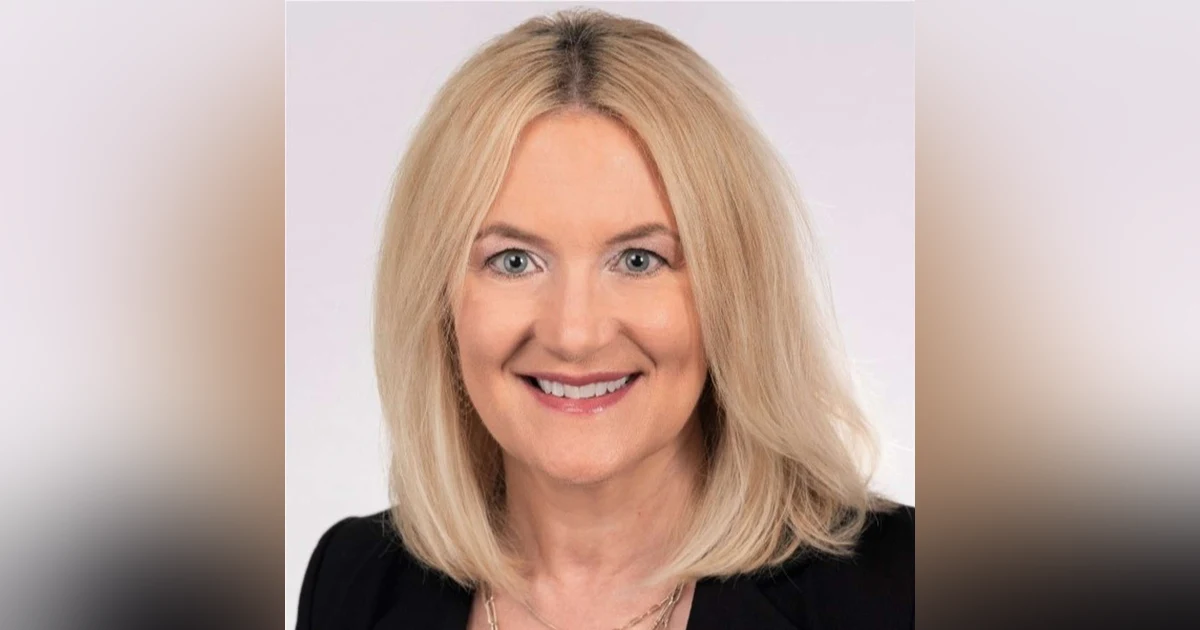

Hotel guest satisfaction increased across every segment in J.D. Power's 2026 North America study. Andrea Stokes, Practice Lead, Hospitality Intelligence, explains what guests are noticing in rooms and shared spaces, why responsive human service still matters alongside mobile check-in, and what operators can learn from food and beverage. We also discuss how J.D. Power benchmarks large third-party hotel management companies. Learn more: 2026 North America Hotel Guest Satisfaction Index Study20...

 Apple Podcasts
 Spotify
 Hotel guest satisfaction increased across every segment in J.D. Power's 2026 North America study. Andrea Stokes, Practice Lead, Hospitality Intelligence, explains what guests are noticing in rooms and shared spaces, why responsive human service still matters alongside mobile check-in, and what operators can learn from food and beverage. We also discuss how J.D. Power benchmarks large third-party hotel management companies.
Learn more:
- 2026 North America Hotel Guest Satisfaction Index Study
- 2026 North America Third-Party Hotel Management Guest Satisfaction Benchmark
- 2023 conversation: How J.D. Power studies hotel guest satisfaction
- 2024 conversation: Changing guest expectations and hotel management
A few more resources:
- If you're new to Hospitality Daily, start here.
- You can send me a message here with questions, comments, or guest suggestions
- If you want to get my summary and actionable insights from each episode delivered to your inbox each day, subscribe here for free.
- Follow Hospitality Daily and join the conversation on YouTube, LinkedIn, and Instagram.
- If you want to advertise on Hospitality Daily, here are the ways we can work together.
If you found this episode interesting or helpful, send it to someone on your team so you can turn the ideas into action and benefit your business and the people you serve!
Music for this show is produced by Clay Bassford of Bespoke Sound: Music Identity Design for Hospitality Brands
00:00 - Introduction
01:13 - Thirty Years of Guest Data
05:12 - Gen Z
08:21 - Catching Up on Deferred Renovations
10:10 - The 2026 Jump in Every Segment
13:06 - Front Desk, Responsiveness, and Training
16:32 - Why Guests Still Want People
18:57 - Guests Are Eating On Property Again
21:34 - The Price Shock Has Worn Off
23:18 - AI Search, Influencers, and Smart TVs
26:54 - Personalization's Unfinished Promise
28:44 - Ranking Third-Party Managers
32:50 - Closing
Josiah: Andrea, great to see you again. It's great to have a chance to speak. I will link in the show notes for our listeners to go back. I know we talked a lot about how you think about understanding the hotel business. That is something that I'm trying to do on the show, raise awareness of what's going on in our industry.
So thanks for making time to chat today. For people who are maybe meeting you for the first time, encountering your work for the first time, I wonder if you could explain a little bit about where your work focuses these days, a little bit about the firm, and then we'll get into this exciting new research report that you released recently.
Andrea: Thank you. Thanks so much for having me today. Yes, so I oversee all of the hospitality work at J.D. Power. I have been with J.D. Power seven years, so having the hospitality industry under my purview really flows well from my background in not only customer experience research and marketing research, but of course doing that work for the travel and hospitality industry for many years.
Today, I think we'll talk about the annual hotel guest satisfaction study that J.D. Power conducts. We're out there 24/7, 365 collecting feedback on a hotel stay in the past 30 days. We screen consumers nationwide. We do include some Canadians as well.
And of course, we ask them about a recent hotel stay in a branded property. "Please tell us about the experience." We ask everything about the on-property experience from the time the guest walks in the door until the time they check out. We also ask some questions around the booking process.
It's not necessarily a focus, but because we've included those questions in our study for many years, and obviously there's always innovation in booking and all of that, we are capturing that as well. But I'm happy to celebrate the 30th anniversary of conducting the J.D. Power Hotel Guest Satisfaction Study. The first year was 1997. So originally this study was only among business travelers, interestingly. And it was conducted in partnership with the old Frequent Flyer magazine. I don't know if anyone ever remembers that. But we were only surveying business travelers about their hotel experiences.
So the hotels and the brands tended to be upper upscale, luxury. But obviously the study's evolved since then, and we cover over 100 brands right now, so luxury on down to economy, everything in between. It's obviously grown, and that wouldn't have happened without the support from the industry and the interest of the industry in having a third-party, unbiased view of each segment in the industry and all of the large brands within each segment to provide those benchmarks, right?
So obviously brands will be able to see how they're doing against that segment average, that benchmark. Are they above? Are they below? What do they need to do to move the needle on guest satisfaction?
Josiah: I love it. And it all comes down to that. It's interesting. We were talking a little bit off air, but there's so much complexity to our industry with different stakeholders. You have different segments, different chain scales, we have different types of hotel offerings. Then you have different market participants between the brands, and the owners, and the operators.
And you do a lot of research. There's guest research you did. There's also some research into third-party management companies. And so for our conversation today, we can reference either of those. I'll link to both in the show notes. I think both are studies that I'd like our listeners to check out.
I guess I'm curious though, kind of high level. Like you say, this all comes down to guest satisfaction regardless of what area of the hotel business you're in. And at a high level, over the past year, let's say, what is standing out to you in your research about the guest? What are they talking about, noticing, evaluating? What's standing out in some of this research?
Andrea: Yes. So we do include Gen Z now and all the way up to the boomers, right? You have to be at least 18 years old and have a past 30-day hotel stay to be screened to answer our survey questions. So every year that goes by, more and more of the guest base in our survey are Gen Z.
So I think they have their influence, right? A while ago it was the boomers, and their influence on the industry was huge. Then it was the millennials. And so obviously now Gen Z, as they're becoming adults and now they have careers, families, whatever, they're starting to have a little bit of an influence on our results.
And obviously they are looking for perhaps different experiences than other generations might be. But the table stakes, of course, are the same regardless. And those table stakes have obviously been there. A clean room, good service, especially from the front desk. Even with mobile check-in and apps, the front desk, we have found, still has a very, very big importance to the service experience on that human-to-human side.
But the product side as well. Condition of the guest room, cleanliness, those types of things you just can't ignore, right? And again, we call them table stakes. But I think when you see different brands and their standards and how those evolved, we are able to cover some of that as well, because obviously standards are important to guests. They come to expect a certain product and a certain level of service from a brand that they may visit a lot or use a lot.
But on the operating side, standards matter because it does make it somewhat easier for a franchised hotel to follow the standards. It's a playbook. It's there. It's something that's operationally fairly easy to do. So we do capture that consistency and the ability of brands to be able to tell their owners and operators, "Hey, you are all doing a great job adhering to our standards."
There's a lot of consistency in the data, and there's a lot of consistency in your guest satisfaction scores. And so usually when we see high consistency, we also see high satisfaction as well.
Josiah: Interesting. I want to dig into this a bit, Andrea, if we could, because I think the consistency, the standards, defining those standards, there's a big opportunity for brands to do this in a way that is relevant for consumers today. And then to the other two stakeholders there, when we connected a couple years ago, we were talking a little bit about investments needing to be made into the properties.
The physical infrastructure's going to matter, and then the guest service piece. I wonder if we could dig into those elements too. Over the past couple of years, has your research picked up on investments into the physical property? And if so, has there been any noticeable change or not as a result of that?
Andrea: That's a great question. And I would say yes. Obviously coming out of the pandemic, we sort of knew it would take a few years for the industry to recover. Not so much recover the revenue, because there was so much demand, rates shot up after the pandemic. Hotels were trying to recoup that lost revenue.
But at that time, the investments that got put on hold during the pandemic, capital improvements, even small investments, got put off. And so you had this huge demand coming out of the pandemic, and of course guests just expected the world to return to what it was, and maybe found some hotels that were not being renovated or were looking a little run down, and it started to show up in our data. So we did see declines in satisfaction versus pre-pandemic.
Josiah: And was that broken down by area? Do you notice a difference in lobby spaces or common areas versus rooms? Was there any difference?
Andrea: Yeah, absolutely, and I was just going to say we've climbed out of that. So the study we just published, the 2026 study, we saw a huge jump in guest satisfaction, all segments. And in most segments, a statistically significant jump. And we don't often see that. J.D. Power, we conduct hundreds of studies across many industries, and we don't often see from one year to the next a really big jump to a higher level of satisfaction. So all segments, and obviously great news for the industry. And I do think it's because now guests are starting to see these past few years, those capital investments.
So we saw jumps in satisfaction with condition of the guest room, condition of bathroom fixtures, condition of lobbies and common spaces, maintenance of pools and fitness centers, and all of the upgrades that are needed to those types of facilities in a hotel.
We've seen increases across the board there. So I have to credit the industry, and owners and operators, for, after the pandemic, coming back to those capital improvements, renovations, getting them done quickly, and guests are starting to see that.
So despite higher room rates, obviously we don't see the year-over-year jumps that we saw right after the pandemic, but guests have an expectation. They're paying more, so their expectations are higher. So I think this year is really when we're seeing hotels firing on all cylinders from the physical product standpoint.
Josiah: Interesting. I did a road trip across America this summer, and I stayed at a number of hotels where the service was great, but I was just struck by the importance of investing in the physical properties, because you can have incredible team members, and you can just really hurt the guest experience, and it's kind of irrecoverable in some cases, where you're like, "I love that you're providing the best service, but I just didn't sleep all night because of XYZ in the room."
And so this is fundamentally important. And so I think for the owners and investors listening, this is a really good message. It sounds like others are investing in the properties. They're building this positive flywheel of higher guest satisfaction, which creates more demand, which creates pricing power.
I'm interested on the service side as well. Let's speak to the operators here. They may not be able to deploy capital to upgrade the physical infrastructure, but there's a service element that you're looking for as well. And I wonder if you could speak a little bit more about what you're seeing on the service side.
Andrea: Yeah, that's a great question. Definitely we've seen increases in satisfaction with guest service as well. Not only front desk. Obviously with apps and online check-in and mobile check-in, folks would think the front desk doesn't matter anymore, but that's absolutely not true.
Even guests who do have the app or use mobile check-in, they still visit the front desk during the stay, for whatever reason. So obviously guest service has changed and how guests interact with staff has changed, but the fundamentals are still there. So having courteous and knowledgeable front desk staff, but also responsiveness.
So I think we're in the era where we want a response to a question, an issue, right away. We don't have patience anymore. We don't want to wait. And responsiveness has become, I think, more important. Not only responsiveness of the front desk staff, but of maintenance staff or housekeeping or dining staff, for example, and restaurant staff.
So whoever the staff members are that are interacting with the guests, that is important. And I think with staff training, the good news is that training platforms and training opportunities, the cost of that has really gone down.
So for an owner or operator, it's a very small expense but has a very big impact on the guest. So if you cannot necessarily invest in a property, a physical improvement, you can perhaps invest in a really good training platform. Obviously investing in your staff in terms of wages and benefits or flexibility, that kind of thing is also very important.
We've seen hiring increase in the industry, which is great news. I hope that's because owners and operators realize the importance of staff and that the industry's becoming attractive to workers again. After the pandemic it was really difficult. But hotel owners and operators being able to offer hotel staff a really great place to work is very important.
And I do think happy staff enables happy guests, right? So I think that's also very important, and we do measure that in the study year over year. I'm looking forward to seeing improvements, continued improvements there. We did begin our 2027 study. As I said, we're 365/24/7 out there capturing guest feedback.
So we have our first quarter publish coming out for 2027 in October, and that will let us know, give us a hint of whether all of the gains that we saw are continuing.
Josiah: Interesting. Well, on the people side, if I heard you right earlier, it's not only that you think this would be a good scenario where you have more people wanting to work in hospitality, but it sounds like this is what consumers are looking for. It's not just digital interactions. Did I hear you right there? This actually would be good for the business if more people are excited to work in this business and are providing great service. It sounds like there's some consumer demand for that too.
Andrea: There absolutely is, and I don't think that will change. Again, yes, we see obviously technology having a big importance. And I think hotels can use that technology in a positive way. Obviously, we've seen the rise of the ability of staff to text message with guests and vice versa.
And that works great to the extent that someone's on the other end responding to that text message. If a guest has a question or an issue and they text, it's got to work end to end. Sometimes we see failures there, so then technology has a negative effect instead of the positive effect that was the goal.
So it's interesting. We are seeing that, but the human interaction, that's what hospitality is, and that's not going to go away for sure. And I do think guests, when they get that fabulous service from a hotel staff member, I do feel that guests are more willing to share their appreciation, whether it's through a tip in the restaurant or a tip to the housekeeping staff.
But verbally and in reviews and online reviews as well, I think guests are more willing to call out staff members and great service maybe than they were before. So I feel like it's a two-way street, right? Guests are getting that great service, staff is providing the great service.
Josiah: And you have to get into the detail. It's not as simple as you just add technology, right? It's technology that delivers these kinds of outcomes. I think on the service side as well, I appreciate how you got into responsiveness specifically. Because I think everyone would agree service is good, but it's what element of service is mattering?
So responsiveness. Is there any other specific thing, either on the service side or the physical building side, that you'd say, "This specific thing I would like owners and operators to really focus on to move the needle on guest satisfaction"?
Andrea: Well, I will say sometimes we do see surprising results out of the study. And this past study, 2026, we saw that 80% of guests are using on-property food and beverage, and that is the highest we've seen in a really long time. And that's maybe not necessarily the economy segment, which doesn't tend to have food and beverage, but all of the other segments.
And that really speaks to the importance of food and beverage, of breakfast in the limited service categories and segments, right? Of that complimentary breakfast, quality of food, but also the dining, the service in the dining area and/or restaurant. That is very important.
So getting back to the staff service side, we do measure that, service in the dining area. Timeliness of your order, the efficiency of that F&B operation, right? We have benchmarks for that. So I would say I was surprised at how on-property food and beverage has only increased in importance.
And it's a great revenue generator, obviously, for properties, especially upper upscale and luxury properties. So something for the industry to keep in mind that your guests want on-property food and beverage. That may be a reaction to off-property food and beverage in the area, and maybe they're just not interested in those. Prices for restaurants have gone up, of course.
And so folks are seeing the value in staying on property. I think the industry probably is pricing food and beverage right where it needs to be in terms of profit and also being able to provide that value for money for the guest. It's a delicate balance, right?
So that would be something I would say. It'll be interesting to watch if that continues, that very high interest in on-property food and beverage.
Josiah: That's fascinating. I'd love to touch on a couple areas briefly before we go. We were speaking before about the power of doing these surveys over time and the institution that J.D. Power has created around what is the consumer saying, what's going on in these businesses.
So that on-property F&B spend is interesting. We touched on a number of elements of this, but is there anything else, either in the research or just things that you're observing and might dig into in the future, around the changing consumer? We talked about generational changes, but just broadly speaking, any other consumer changes that owners or operators should be aware of?
Andrea: Well, of course, we measure satisfaction across the operational areas, right? Guest rooms, food and beverage, staff, all of that. But we also ask about value for prices paid, and satisfaction did improve there. So probably consumers, yes, prices have gone up for everything.
I think travelers probably are now used to it. Value tends to be scored a little lower than guest service or food and beverage, for example. But I think that value piece, guests are realizing that, yes, costs are going up, prices are going up, but hotels are delivering.
So that's good news. I think the shock has worn off, that post-pandemic price shock. And then again, as I said, hotels are firing on all cylinders to make sure that they're offering that service and that level of value.
Josiah: Yeah.
Andrea: So that's a little bit of a shift that we're seeing.
Back to technology. We're asking about using AI to search for hotels. So we've asked about hotel search and research for many years, and what tools the guest typically uses to find hotels. And we ask about AI now. The numbers are still small.
I sometimes see surveys where it says, "50% of guests are using AI." That's not what we're seeing.
Josiah: What are you seeing?
Andrea: Our survey is pretty large. We have over 44,000 hotel stays in our data set. So it's not a small survey. So we see the AI number. I think it's slowly creeping up. Gen Z is driving a lot of that. Also millennials. We're starting to ask about the impact of social media, so the impact of influencers, for example, or other social media channels like YouTube and all of that, in terms of researching hotels, researching a brand, researching where guests want to stay.
So it's great that we're starting to track that, so now we'll be able to track those numbers over time. And then obviously on-property innovations. We want to make sure that we're capturing our owners and operators keeping up with innovations that are being offered by suppliers to the industry, right?
Wi-Fi, of course, is always important, but any innovations around in-room technology. Smart TVs are very important. Everyone wants to be able to stream their entertainment while they're traveling and while they're at your hotel. So if I were to tell owners one thing to do, it would be to make sure you've got smart TVs with streaming capabilities in your guest rooms.
But just in-room technology and operational technology that maybe the guest doesn't necessarily see, but that makes for a better experience, whether it's more personalization. So the staff is using technology to be able to personalize their interactions with you as the guest, or personalize something about the stay because they know something about you as the guest and they're able to personalize it.
So I'm glad that we've got those measurements in place to track that and track those impacts on guest satisfaction over time.
Josiah: It'll be interesting to watch this over time. This is why I love the frequency that you do the research and all these factors coming together, because sometimes something's really noisy, it gets a lot of attention. So I'm watching people using AI for discovery. You said it's relatively small now.
Influencers almost feel like the counterbalance to that. It's the opposite of an algorithm-driven approach. So there's that. But I think what's interesting is how all these intersect as well, because if you have guest satisfaction going up, rates are still high. The year-over-year changes aren't as dramatic as out of the pandemic, but they're higher than ever.
They've not come down. So you still have sky-high rates, but you have guest satisfaction increasing. Almost everyone, it feels, is using AI, at least in their personal life, and I hear a lot of use behind the scenes. And so it's interesting how, to your point of operational or behind-the-scenes AI, I do think this is really ramping up. It's interesting to see this.
Andrea: Right. Right. And again, it's an opportunity. Obviously, hotel properties may not be able to take advantage of it. But I think anything you can do technology-wise that touches the guest, and again, even if it's just staff service and personalization, or some way for the staff to go above and beyond.
And if technology enables that, I think that's fantastic. And I think guests do reward you for that in online reviews. You'll be able to see that come through, right? And by no means... We want hotels to do reputation management.
They have their own surveys that they do. A lot of times they're very quick surveys, so they may not dive deep into all of the areas that J.D. Power does. We dive into all of the operational areas and that kind of thing. But the more you can understand your guests, the better.
I know OTAs make that difficult sometimes, where you don't really know who the guest is and who's checking in. So hopefully AI and improvements there will help that along and will enable hotels to really personalize that stay.
I think it's an up-and-coming thing. We've talked about personalization for years, and it always seems like it falls short. It never really reaches the goal of a hotel really being able to understand their guest, to be able to improve their stay. So we'll watch. We've got our eyes on it, and we'll see if things change.
Josiah: Well, I appreciate the methodology that you have in your research and the apples-to-apples comparison. The more knowledge of guests, of consumers, the better, right? And before we go, I would actually like to ask you about your third-party management study as well, because I think this brings to life how you're looking at the industry in different ways and providing apples-to-apples comparison.
I think for industry participants, like we started the conversation, owners are often looking for what is the third-party manager that's going to steward this asset, this hotel, well. And I wonder if you could just briefly tell us, I'll link in the show notes, but the methodology in this study, and then how would you like owners to use this study as they're thinking about who might be the best manager to steward this hotel asset?
Andrea: Yeah. I mean, it's definitely great that we have the ability to provide that benchmark. We do rely on CoStar for hotel property information, and when guests do respond to the study, they do have to select the property. So they select their destination and then the brand, and then we serve up a list of properties within that brand.
So the guest actually selects the property where they stayed. So we have that information. Obviously with CoStar, we're able to understand who manages that property. Is it self-managed? Is it third-party managed? Is it chain managed? So we're able to get that information, and that's how we're able to roll up the results for third-party managers.
So we've got, I think it's 20, 21 companies now. We do have a minimum threshold of 14,000 rooms under management, branded rooms under management. So we're only really focused on the largest third-party management companies, right? That have a number of rooms above that threshold.
But it's several companies. And all of the benchmarks are across the areas that we've been talking about. Guest rooms, food and beverage, staff service, the hotel facility, and maintenance and all of that. Connectivity. We talked about technology and Wi-Fi and all of that.
So that offers a really great benchmark in all of those areas for third-party management companies, and for owners. All of the companies that we cover are large operators, right? So they have a range of properties and a range of brands.
We tend to see that across the board, where the management companies maybe concentrate in one brand a bit, but they have multiple brands. So it really is, again, going back to that measurement of adherence to brand standards, right? If you're an owner and you're going to franchise and raise a flag, you want to understand what those standards are and then, can the company help you adhere to those standards?
We have a range of companies, and obviously we provide that ranking on their overall guest satisfaction score, but I will say generally the scores are high. So you might see a company above the average or below the average, but in the end, we see scores that are high compared to other industries, or even maybe some other hotel segments themselves, right?
So they're all, I think again, getting back to operating and firing on all cylinders to provide a great guest experience. The management companies are indeed doing that.
Josiah: That's awesome. Well, it all comes down to the guest experience and the service you provide. Awesome to see that hospitality is still leading some other industries out there in terms of service, because expectations are very high in the hotel business, and so to be able to do that is great.
So thank you for walking through this, Andrea. I'll include a bunch of links in the show notes. People can learn more about the research, dive into this further, learn more about you and your work, but it's always fun to chat through this, so thanks for making time to talk today.
Andrea: Thank you.