Danica Smith and Josiah Mackenzie: Is AI Actually Improving Our Lives?


 Apple Podcasts
 Spotify
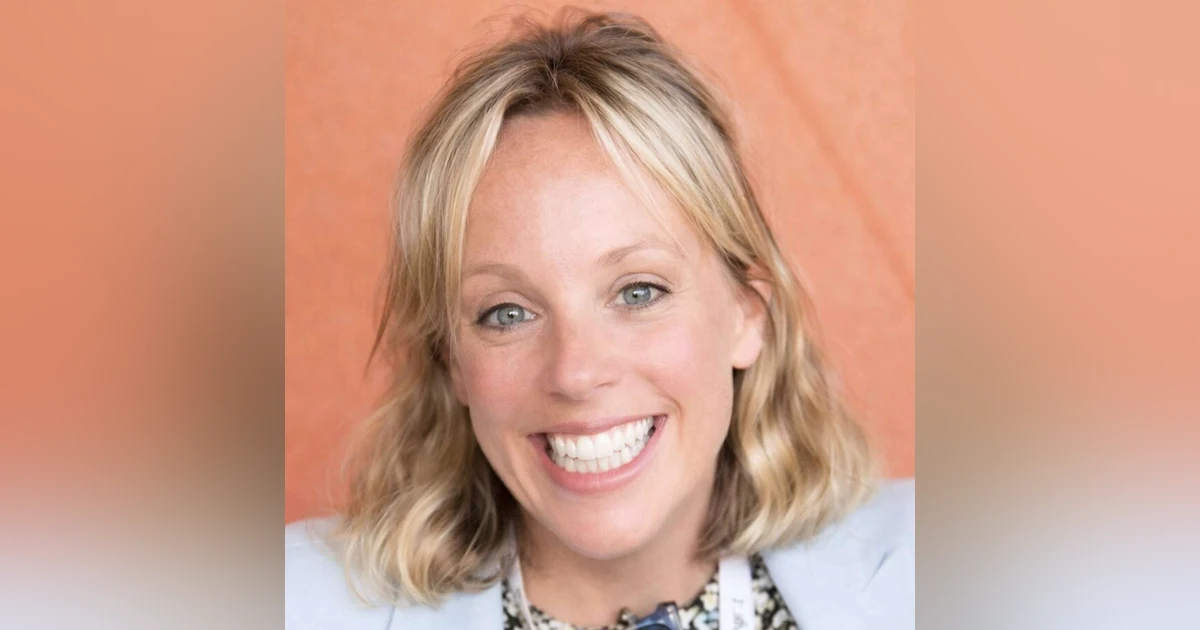
 In this episode, Danica Smith, Guest Experience Correspondent at Hospitality Daily and founder of MorningStar GX, joins Josiah Mackenzie to share her read on AI in travel and hospitality, fresh from the main stage at AI Summit Barcelona, where not one person in the room said they would let an AI agent book their trip without approval. Danica and Josiah compare that hesitation with Josiah’s recent experience using AI to research and book a trip. They also discuss inequality in experimenting with AI, what productivity measures can miss about hospitality work, consent when technology records guests, and whether a new tool is actually making life better.
Mentioned in this episode:
- AI Summit Barcelona
- Women in Travel Thrive
- ChatGPT Codex
- Claude
- Meta Muse
- OpenClaw
- Wispr Flow
- Granola
- Lovable
- Canva
More with Danica:
- Should Hoteliers be "Vibe Coding" with AI?
- Guest Experience Tech: What I Learned Building, Selling, and Using It
- Beyond Buzzwords: The Truth about Guest Experience
A few more resources:
- If you're new to Hospitality Daily, start here.
- You can send me a message here with questions, comments, or guest suggestions
- If you want to get my summary and actionable insights from each episode delivered to your inbox each day, subscribe here for free.
- Follow Hospitality Daily and join the conversation on YouTube, LinkedIn, and Instagram.
- If you want to advertise on Hospitality Daily, here are the ways we can work together.
If you found this episode interesting or helpful, send it to someone on your team so you can turn the ideas into action and benefit your business and the people you serve!
Music for this show is produced by Clay Bassford of Bespoke Sound: Music Identity Design for Hospitality Brands
00:00 - Intro
02:24 - AI Summit Barcelona
07:38 - Letting AI Plan a Vacation
12:28 - The Gender Gap in AI Adoption
13:44 - When the Algorithm Ranks Workers
15:33 - Danica's AI Chief of Staff
18:24 - Pick One Tool and Build
20:20 - Consent to Recording
21:54 - AI Spend
23:02 - Vibe Coding and Peace Over Shoulds
Josiah: My understanding is that there was the AI Summit recently. Yesterday I saw your post. It looked amazing. Tell us a little bit about this event. It feels like everybody's doing these AI summits and whatnot. What was going on? And then tell me about your panel, and I would love to get into some of the stuff that came up there.
Danica: Yeah. Okay. So it was the AI Summit, a two-day conference happening today and yesterday in Barcelona. It's in its second year. Interestingly, run by a 23-year-old.
Josiah: 23 years old.
Danica: 23-year-old. It's huge. I think they had, I want to say, 3,000 attendees. They had 300 speakers, okay? 300 speakers. The agenda was jam-packed, so I was so pleased that hospitality made it to the main stage, and I did a panel on "Is AI ready to check in?", which I'll talk to you about.
But the summit, there were queues. It took two hours to get in. Every single main auditorium panel discussion, I'm talking 300 people queue deep. So it was fascinating that everybody from Europe had kind of flown in, and all different stages of AI, from engineering, to a lot of investors and founders, to your average manager that just wants to look at efficiencies, cross-industries.
So it just shows that everybody is interested, and I would be so fascinated to see how that event compares to one in Silicon Valley, because I really feel like in Europe, we're very scrappy. We're very new. Everyone that I met had founded an AI business that was three months old, four months, six months. And the longest business that I met yesterday from an AI founder was 18 months.
Josiah: It's crazy. But what's also wild is that some of these businesses that are six months old or whatever, you see them, and then some of them are worth a billion dollars or a billion euros or whatever, and you're like... It's kind of crazy how fast things are moving.
I also feel, so it's interesting with innovation. You and I both worked at a company that was based in Barcelona, but I feel like Barcelona has always been such a hub of innovation. Whether I'm thinking back years to the Mobile World Congress or whatever. But it still is, obviously, not just in technology, but in sustainability and so many forms of innovation. So I feel like Barcelona is a really interesting global leader. But from an AI perspective, it's interesting to weave hospitality into that, because it's also such a tourism and hospitality hub. So it feels like a convergence of so many things.
Danica: Yeah, and it was great to have hospitality on the global stage. I did walk away feeling, after lots of conversations and talking to different events, that there's still quite a lot of fluff.
Josiah: Okay. Okay, tell me more.
Danica: There were no solid use cases. There was a lot of conversation around what's being built, but nothing... So I think it's really interesting to see what we're talking about when it comes to production and building and shiny demos, and actually what's live and what's working.
So on my panel, I had a hospitality tech vendor, and he was the VP of engineering, and he was talking about how they had used AI to do bug resolutions and revamp their whole platform. And I just kept thinking, "But that's not relevant to my mom who's staying at the hotel." You know? Where is it when it comes to the guest experience?
So I started my panel asking a question. There were about 300 people in the room, and I said, "If you had 2,000 euros, who would let an agent plan, book, and pay for your holiday without your approval?" Nobody put their hands up.
Josiah: At an AI conference. This is not just a...
Danica: 300 people, and there was not one person that put their hand up. So then I started to go back in the phases. I said, "Okay, who would let it do the planning, the itinerary, the booking, and the payment with your approval?" 10 people put their hands up.
So I then completely pivoted the panel. I was like, "Sorry, gentlemen, but we need to look at this." Here we are saying we have all of these fantastic AI capabilities in our industry. I mean, every tech vendor has a co-pilot, a digital concierge, the voice AI. We're AI everywhere, but yet we have 300 people from the AI industry that are interested that will not pay and hand over the money.
So it's like this element of trust is still completely broken, and again, nobody's talking about it. It's just like the industry's saying, "We've got this AI," but who's using it? How are they using it? And I think, yes, in guest services and the digital check-in and the voice AI, yes. But when we look at the booking, the research, and the payment, there's so much talk about it in our ecosystem, but where are the results? How many people are using it?
Josiah: So this is fascinating, Danica, because it's interesting to ask this sort of question at an AI conference. But broadly speaking, it's not just an American or European or another part of the world thing. It does feel like general adoption is quite low. I'm curious if it changes.
So I'll just share a quick personal story. You and I have been talking about AI forever. We've talked about it a lot on the show. Up until a couple weeks ago, honestly, I was not really using AI for travel planning. I found it good, actually, visiting Barcelona last year. I found my experience was enhanced in destination, because I'd be walking around a neighborhood and I'd be learning in real time about this architect or whatever.
So I was finding in destination it was good. I wasn't finding it useful at all in planning, because everything was off. I was using all the frontier models, and stuff would be closed, and it would be wrong information. And a lot of guest service experts on this show are finding this is actually a really big problem, because guests will come and say, "Hey, I want to do X, Y, Z thing," and they're like, "No, that business has been closed for five years."
All that to say, I have not really used it for travel planning, just in the chatbot experience, because it's not as good as doing my own research. In the last couple of weeks, though, this has changed for me, and the change has been using AI to take over my browser. So having the full experience.
I'm planning a holiday over the Christmas break, and I obviously love travel and hospitality. I do find it quite exhausting, though, to look into all the details for logistics, and even looking for hotels. It's fun to an extent, but when you have a very tight itinerary that has all these criteria, honestly, it's a chore. I'm just tired. I just don't have the energy.
So what's interesting is I'm using ChatGPT Codex specifically. I'm using full computer use, and I had it interview me: okay, I have essentially eight days, and I have these parameters, and here's what I've enjoyed in past vacations, and here's some criteria, and it's high season. A lot of these hotels are already booked up. I have a budget that's kind of impossible for what I want to experience.
And so I'm getting a lot of success with having it just take over my computer, and it works for hours on its own in this sort of agentic way, where it's clicking around, doing searches, checking hotel availability, putting together an itinerary. And then every couple hours it checks in with me, and I'm like, "No, this is the right direction."
I did this for a couple days, and at the end it just had all my browsers open. "Here's all the hotels that we recommend. Do you prefer path A, B, or C?" I was like, "This one sounds fun." And it's like, "Here's the window that we opened up for you of all the hotels loaded with the dates."
Danica: In an OTA window, or what?
Josiah: A mix. It was a mix, and I think this is where it's not super clear to me. It feels like Booking.com was kind of the best on all this, but it wasn't just them. And so all that to say, I feel like we're in a moment where it's changing quickly, and it's specifically computer use. It's not the connectors.
Danica: That's fascinating.
Josiah: It's just changed a lot for me recently, and I'm curious if we're at this moment where... I don't know. I don't know.
Danica: Yeah. I mean, I would love to know, Josiah, because you seem very excited about it. Do you think that was the novelty? I wonder if you will continue doing that. And you should record it. I would love to see your...
Josiah: A screen share.
Danica: I would love to know, did it look at the pictures? How many pictures did it look at? Did it look at the reviews? Did you see it scrolling through the reviews?
Josiah: So yes, I do think it's a bit the novelty, because it's wild to watch your computer, and it's clicking around and scrolling. And I'm like, "I want something highly rated by guests." But there's a certain amount of judgment that I wanted. Honestly, I do not enjoy searching through everything. I do enjoy pulling up the hotel website, clicking around myself, checking the reviews. So I wanted to do that, but I wanted it to give me the shortlist, and I wanted to be the executive approver.
Danica: Of that, yeah.
Josiah: I want to click Book. I don't want it to click Book. So yes, there is a piece of novelty, but I do think my life is materially better, because I didn't spend hours, and I was just too tired to click through. So I think it's both. I think it's both. I don't know.
Danica: Yeah. Well, I want to know at what point you'll start just putting your card in and trusting it. When will that...
Josiah: I don't think I ever will. Would you? I want to hear your take on this.
Danica: I would have said no, but then I remind myself of purchasing while doom scrolling at 1:00 on Instagram, and I spend so much money there. And I would never have thought about spending money on Instagram two years ago.
Josiah: But it's still you doing it, though.
Danica: It is still me. It is still me doing it, yes. But I'd probably save money if it was an AI.
But I do think, Josiah, something that is really interesting, and another heavy topic that we're not talking about... I went to the Women in Travel conference, and when we look at the bias in AI, it's really fascinating that you, overwhelmed with your workload and energy levels, have the confidence to be able to play around with AI to do that. Whereas when you look at the adoption between males and females, females typically have 35% usage compared to a male. And when you look at the building, I saw a stat this morning that only 13% of Lovable's users are female.
So when we look at AI helping us remove the overwhelm, in your case, and looking at how it can extract the mental load and enable you to be more efficient in your life, what does the female in the household equivalent look like? Maybe she has the mental load of the washing. She doesn't have time to sit down and play around with it because she's busy carrying the mental load, and that's also a concern in terms of the AI gap.
And at the conference, to that point, there was a speaker talking about AI in hospitality, looking at efficiencies and productivity with cameras. So you have a camera. You have two front-of-house receptionists, one male, one female, and the camera's monitoring you, and it can tell check-in speeds. The man goes to the toilet, takes five minutes. The woman goes to the toilet, takes 20 minutes. The algorithm is ranking productivity. It comes to cuts at the end of the month, and they have to fire one receptionist. It's going to be based on productivity. They keep the man. Now, what the algorithm and the AI is not picking up is that the woman, on the way back from the toilet, helped an elderly guest and spoke to them and left a really nice sentiment.
So there was that example, and then we took it even a step further and we said, "Well, let's look at the HODs." The heads of department, the front-of-house managers, male and female, are both going for the role of general manager. The male has been using and playing with AI for two years. He knows Claude, knows how to create really cool, really nice presentations with Canva, has all the data points. The female was still at the basic prompting level. How does that impact it? So this is also global, the bias between males and females when it comes to the AI gap.
Josiah: I really appreciate you bringing that up, and I know for months you've been not just advocating but teaching people in a lot of different contexts about this. You've been really leaning in to encourage AI adoption among women in hospitality, women leaders. I appreciate that.
And I think there's also the big point that you can over-rely on these algorithms, so let's make sure we're really clear on their boundaries. But I want to hear from you, Danica. I'm not asking you to speak for all women, just you personally, because I want to pick up this thread of: can AI actually make my life better? So for you personally, have you noticed some of this? Do you feel like it's not there yet? What's been your personal experience?
Danica: Huge, huge. I've just managed, and again, fumbling around and using myself as a guinea pig, to set up my own chief of staff. Not 100% accurate, but now I have my daily briefing.
Josiah: Wait, tell me, where do you do this?
Danica: It's in Claude. But my issue, side note, is I need to decide: am I with ChatGPT or am I with Claude? I was on Claude for six months, now I really like ChatGPT, and it's really frustrating jumping between two. I have my chief of staff in Claude, but I actually use OpenAI a lot more daily, and I prefer it, actually, right now.
So what I've done is, I live in Spain. My kids go to a Catalan school, and the WhatsApp messages are in Catalan, so I just copy and paste everything. I would love to know how to connect WhatsApp, please.
Josiah: We need that.
Danica: I don't know if that's possible or not, but please. At the moment, I copy and paste any important message, and then it's picking up my emails. It's just personal at the moment. And then I have a daily briefing for my kids. So it's like, today this is the PE kit, this is the weather, this is what sports activities they have. And that has been an absolute lifesaver.
But then I look at it: I'm married to an AI founder, and we have these conversations. I work in hospitality technology. I'm not an engineer, but I know what an API key is. So I don't have a confidence barrier in playing around and just seeing how it goes. If I look at my friend who is an executive PA in London, she thinks I'm mad. She has no idea what I'm talking about. And I have this conversation with my friends, and again, just like with male and female users, it's the same. The ones that have been playing around and are comfortable are becoming that much more efficient, are building. I have two female friends that have built an AI app as a side hustle, and then I have a whole other group of women that are still at simple prompts, using it like a Google search.
Josiah: I'm going to add a bunch of links in the show notes, because you've done a lot, Danica, to raise awareness around what's possible here. My hope, I guess, is that the technology evolves quickly to the point where it provides some of these capabilities and we have to spend less time configuring and setting up.
I tried OpenClaw at the beginning of this year, but it was so much to build it. And in the months that have followed, there have been all these rollouts. At the time of our recording, Meta's rolling out Muse, which is more of a personal assistant type of interface. But I feel the same switching cost. We're recording this at the end of September 2026, and it might evolve. But my personal experience is there are so many of these agentic assistants, and you almost get more value by just picking a lane and building.
Like you, I was in Claude, and then the last five or six months I've been in ChatGPT, and I find I like its writing a little better. It's a little tighter and faster. But these models are all so good right now. It's sort of like, pick one...
Danica: Pick one.
Josiah: Give it context, make the connectors. I think that's going to get you 95% of the way to any of these, Clawdbot or any of these tools out there.
Danica: Yeah. I mean, connecting... I'd had it with Claude, but I couldn't get it to work, but connecting ChatGPT to my Canva was just a lifesaver. So now I can do my LinkedIn, and my imagery looks a lot better. It's a lot easier, so that was a huge lifesaver as well. And Wispr Flow, not that I'm here to sponsor anything, but...
Josiah: Wispr Flow's good.
Danica: Yeah, I can go for a dog walk, and I'm a talker, not a writer, so...
Josiah: I'm glad you mentioned that, because that's been a big unlock for me as well: moving from typing to just talking to your AI. You can provide so much context so much faster, and it improves your quality of life. So that's my litmus test. Is my life actually fundamentally better or not? Let's get real with it.
Danica: But I have to say, this came up in my panel yesterday around using recording tools like Granola and Wispr Flow, and then post-panel we had a conference debrief, a whole conversation, so fascinating, about consent. There was a use case on the panel yesterday: if the waiter had Granola in his pocket, and the guest said, "I didn't like this wine, actually," it would then be recorded on his profile instead of doing a survey touchpoint. And then afterwards my friend was like, "I would never want to have somebody recording my conversations." And then I said, "Well, with Granola you don't have consent when it's in a meeting."
So we had this whole conversation around, as a guest in hospitality, where do we consent to this? And it's the same as the sustainability conversation as well, around tracking your room movements for carbon emissions with the lights. Where do we consent to this as a guest? Is it hidden in the Ts and Cs, or are we ignoring that part as an industry?
Josiah: I think so. Granola's a good example, because you just don't know. It runs locally on someone's computer. So I just assume every conversation is recorded. There are all kinds of legal protections in different jurisdictions. I just don't know. It kind of feels like the technology is there, or someone will be visiting from another country that has these expectations. I kind of feel like I'm always recorded, which I don't love, but it's just kind of where we are.
Danica: That was a good baseline. And coming back to that mindset, what I also find so fascinating about our industry, and I'm sure it's the same in everybody else's industries, is when you look at consent, look at what a barrier GDPR is, or all of the different regulations and governance when it comes to data. Then on one side as a leader, on the other side you have the commercial aspect. Everything has to have an ROI to have any spend.
But now we have AI, and we have leaders blindly firing 20% of their workforce, throwing money at it without even having token budgets, looking at how we are using it. Are we efficient with our AI spend and tokenization? And I just have to laugh at the madness of it all, because you won't send your general manager to a conference because it costs $3,000, but you're going to spend millions. So again, you put AI in front of something and everyone just runs forward to it.
Josiah: It's wild. We live in an interesting time. I would love to close, Danica, by circling back to a recording we had earlier about vibe coding. I would love to hear if there's anything that you've created recently that you've enjoyed. I recently redid the Hospitality Daily Podcast website, and it was fun to experiment and iterate.
Danica: It looks great.
Josiah: I used Codex for that, and I feel like these models are getting quite good. But there's a lot of back and forth, and I find out of the box they look a little basic. It's interesting to go back and forth. Have you been playing around with anything recently that you've enjoyed?
Danica: So I built a website when we spoke in December. I did the vibe coding course, and again, from a basic technical level, I had to stop: "Okay, go to the API key. Now I put that into..." I can't remember if it was GitHub, the cat one. And so I built it, and it worked 60%. None of the forms worked, and I couldn't understand why. I obviously made a mistake.
And then my husband was doing the exact same thing, and we put our websites side by side, and they were exactly the same.
Josiah: Visually?
Danica: Yeah, a big question. The way that the text was centered, the colors. So I then went and paid for a website agency to build my website. And he's gone on and built a really nice-looking website because he continued with it. But my mindset, I was like, "Pff. I'm out. I can't continue with this." And again, I'm not an engineer, I'm not a website developer, I'm not a website designer. So my vibe coding experience was short and sweet.
Josiah: Well, I think it's probably good to revisit some of this stuff every now and then to see the capabilities. But I think the bigger point that we've touched on in our conversations is: figure out where you want to put your life energy, your attention. Maybe you want to be the best vibe coder, but that also might not be the right choice. I want to create a world where everyone doesn't need to be a vibe coder. If you want to, fantastic, but maybe your life energy is better spent on something else.
Danica: Exactly. And what is it costing you? Back to that point, I had so much of, "Oh, I should be doing this. I need to be picking up more. I really should be doing more." And it's like, no, that's adding to my overwhelm, adding to the shame and the guilt. I'm going for peace in my life, not shoulds, coulds, and need-tos.
Josiah: Peace and happiness.
Danica: Peace.
Josiah: I like that. It's a good note to end on. We should bring on somebody in the hotel industry and have another chat about these topics.
Danica: Yeah, I've got a GM that we can bring on who's built his own guest experience platform.
Josiah: Oh, fun. Very fun.
Danica: So yeah, I can reach out to him.
Josiah: Well, it's always good to chat, Danica. Thank you for making the time. I always appreciate all you're doing in our industry.
Danica: Thanks. Likewise.