How to Make Hotels More Profitable and More Human - Alex Cabañas

 Apple Podcasts
 Spotify
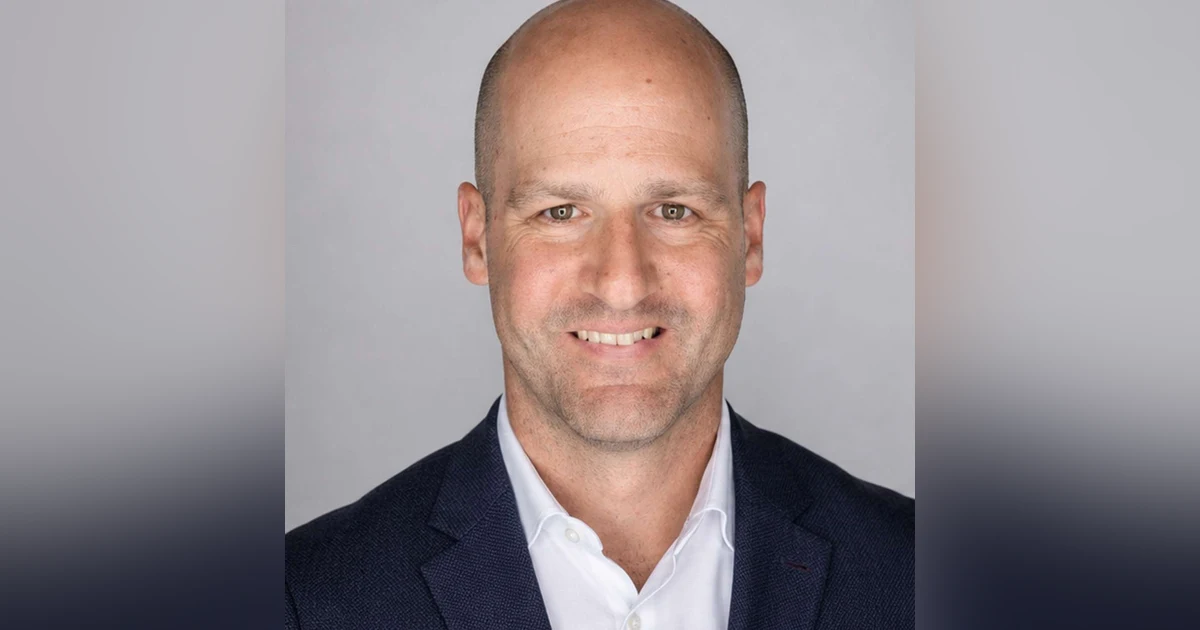
 Alex Cabañas, founder and CEO of Astound Ventures and executive chairman of Pyramid Global Hospitality, shares how our industry can innovate to make hotels more profitable, working in hotels more rewarding, and stays in hotels more enjoyable.
Learn more:
- Astound Ventures: launch announcement, net unit margin approach & portfolio companies
- Operational examples: Base Power (home batteries) | Fox Fold (refillable paper) | Outmore (heated outdoor furniture) | Relivable (meeting and event workflows)
- Events: Destination AI Forum | Blueprint
A few more resources:
- If you're new to Hospitality Daily, start here.
- You can send me a message here with questions, comments, or guest suggestions
- If you want to get my summary and actionable insights from each episode delivered to your inbox each day, subscribe here for free.
- Follow Hospitality Daily and join the conversation on YouTube, LinkedIn, and Instagram.
- If you want to advertise on Hospitality Daily, here are the ways we can work together.
If you found this episode interesting or helpful, send it to someone on your team so you can turn the ideas into action and benefit your business and the people you serve!
Music for this show is produced by Clay Bassford of Bespoke Sound: Music Identity Design for Hospitality Brands
00:00 - Introduction
02:05 - Alex's Hospitality Beginnings
03:51 - Why Hospitality Matters
06:01 - Head and Heart
10:14 - Pyramid, Convene, Astound
14:04 - Hotel Margin Pressures
19:04 - Influence, Involvement, Investment
21:06 - Net Unit Margin
23:07 - Team Productivity and Pay
24:39 - Energy Management
25:22 - Waste and Construction Costs
27:36 - The Lobby Host
29:49 - Adopting New Ideas
31:59 - Changing Old Habits
33:51 - Lessons Beyond Hotels
37:25 - Healthcare's One-to-Many Model
38:54 - Meeting Human Needs
40:03 - Guest Arrivals and BEOs
41:17 - Equipping Hotel Engineers
42:11 - Building the Astound Community
Josiah (intro): Alex Cabañas is the founder and CEO of Astound Ventures, which was just announced today. I've included some links in the show notes if you want to learn more about it. He, of course, is the executive chairman of Pyramid Global Hospitality. He serves on the board of Convene Hospitality Group, and is a board member of the American Hotel and Lodging Association. So many of you know him for all he's done across our industry, and today in this conversation, we get into tackling one of the toughest challenges in the hotel business, and that is the profitability of hotels. Now, you know on this show we've talked about this a lot. You've read in the industry, I'm sure, how challenging this is. You've seen it in your business. But this recording today, our conversation here is about the solution, what Alex has seen in his positions leading hotel companies, as an advisor, now building a community around solving this, bringing the ecosystem together to solve the toughest challenges our business faces. So keep listening for what he believes needs to be the most important metric we all work towards, as well as a framework for innovation and much, much more. I've included some chapter markers if you want to dive into a specific part of our conversation, but without further ado, let's get into it.
---
Josiah: Do you recall an early memory that was maybe formative for you in the world of hospitality?
Alex: Easy one for me. So my family's 46-year history in this industry, and that doesn't count my dad's days as a lifeguard at the Shoreham Hotel on Miami Beach, and then front desk. He is the part of our family that grew up doing all the jobs that many people in our industry do. So I was around the business all of my life, but never planned on joining the family business, so to speak.
Alex: So when I got out of college, I was married January of 2000. My wife went to work for Arthur Andersen, and she went to the Q Center up in Chicago that lots of people are familiar with in the consulting world, and she was there for three weeks straight. I had not started my job yet. I was starting a month later. So I called my dad on the Tuesday before St. Patrick's Day weekend in Chicago and said, "I want to go surprise my newly married, like three-month marriage wife in Chicago and be in Chicago for the weekend, right, for the parade."
Alex: So he calls C.A. Anderson, who, if this somehow lands on C.A.'s desk and he gets to hear this story, nothing would make me happier, because C.A. got us a suite at the Allerton Hotel two blocks from the parade.
Josiah: Wow.
Alex: And I'm like, "This is pretty cool," right? Now I do this all the time, and I joke it is my favorite thing to do, to be a concierge for my friends' kids. Anybody who needs a place to go and wants to know someone, I am more than happy to oblige.
Josiah: Yeah. That is an incredible story. I love that. Alex, you may have answered my next question, but one of the things I'm trying to do on this show is show why you spend your life, your career, working in the hospitality business. And I'm curious for you, maybe a part of what you just shared is an element of that, but what keeps you in this industry? Of all the things you could do, why work in the hotel business?
Alex: I've been around it for a lot of my life, but that may have actually, funny enough, been the detractor. And not for any reason. There is an odd and obvious joke in the business: "What, you mean you couldn't keep your kids out of it?" Like you shouldn't want your kids to go into hospitality. It is hard work. But we never talked about it. I always say I grew up in the industry by osmosis. I was around it.
Alex: And so I'm sure I absorbed much of service mentality, servant leadership. It's always stuff that has been a part of my makeup and character. But I was in consulting for six years, and fortunately, the right conversations at the right time led to being in the family business. But even now as I've run management companies, done lots of mergers and acquisitions, I still fundamentally think that in our business, we make memory and emotion for a living.
Alex: I say that all the time in front of every employee. What's our product? What do we make? Because they think manufacturing. Well, we don't make virtually any physical product, at least not lasting physical product. We make food and beverage, so that makes your tummy nice and warm and happy. But we don't make the T-shirts and the furniture and all the other physical things.
Alex: We make a memory or an emotion, hopefully something someone tells a story about in the future or something they feel that they're willing to remember. That's the best product in the world, period. By far, the best product in the world, the best life-changing experiences. And the hands and feet that make that happen is an incredibly noble employment reality, and that's always been my favorite part of our industry. We employ a lot of people whose day-to-day job is to get up and make memory and emotion.
Josiah: Amazing, Alex. We have a lot that we're going to get into in this conversation, but I want to hear some of the moments along your career that led you to believe this. You spent some years with the Boston Consulting Group. You've done a lot in the industry. A lot of people know your work. I wonder if you could share some of the steps along your career journey that led you to believe this, because I think it's so powerful, and I'm curious how you got there.
Alex: Oh, it took a lot of time, and more teaching from our team and from those who were at the line level, right, delivering that level of service. So I often teach on head and heart, Josiah. Life and career is in many ways a balance of your head and your heart. I actually gave this speech at an event with a bunch of students at Texas A&M, where we run a hotel and where I went to school, and a woman came up with a tattoo of a balance scale, one of those old balance scales with a brain on one end and a heart on the other.
Alex: Swear to you, I was like...
Josiah: Amazing.
Alex: No way. How is that possible, right? And so head, right, is all the intellect, academia, the right skill set. Fortunate to have great education. Use your brain, right? And heart, much more of the emotion, much more of the cultural engagement, belief in what you're doing, passion, care for the people, care for the customer base.
Alex: And I find in our industry, or any industry, there's too often too much head. It's all about bottom line. It's all about cutting costs or whatever it is, right? Too much head, not enough heart. But then the opposite can be true. Too much heart, everybody gets a trophy. There's no accountability, right? There's no focus on profitability. And I believe the real benefit of any business is right in the middle, and everybody's career could follow the same.
Josiah: Yeah.
Alex: Mine did as well. Much of my career, through being in consulting, getting an MBA, coming into the industry in finance, development, property acquisitions, HMAs, very head heavy, very academic in nature, very finance in nature, which is my background in education. I'd say I was probably seventy-five percent head, twenty-five percent heart, even though I very much loved the business.
Alex: My love for the business, my heart for the business, grew through experiencing it, being in it, being on property with our teams, going through an exercise that still lives on to this day, almost fifteen years ago, of what do we really focus on? What's the phrase that can go from the top of the organization to the bottom and back up and not change?
Alex: And that phrase for Pyramid still today is "be the difference," which is all about the opportunity to be different and visible and noticeable in those moments, and those moments are small. They're not grandiose gestures, and they're certainly not physical. It's saying the right thing at the right time, opening your eyes and ears to the possibility, right? Stepping in in that moment and doing something special that's personal that you overhear, right? Taking care of someone, even fixing the problem, even answering the phone call when you're the CEO of the company and the customer calls. Blow people away, because they don't expect even one answer. It's all those "be the difference" moments that really grew my heart for the business and my genuine passion for what we do.
Alex: The HMAs and underwriting deals, that's easy. It's not easy, but it's much harder to keep a team together. It's much harder to keep the humans focused on a purpose and a passion to drive excellence in service. That is so much harder because humans are complicated beings. We're just hard. People say our business isn't rocket science because they stayed at a hotel. I'm like, "Yeah, it's harder." Rocket science is formulaic. I can do the math, the physics, the chemistry to decide how much propulsion I need to take that piece of equipment up into the sky at a certain trajectory. I can do the math. Humans, you wake up every day and you show up to the office, you have no idea what chemistry or physics you need to make sure that execution happens accurately and according to practice.
Alex: Because humans wake up every day with some emotion in their life, and instruction doesn't cover it. It has to be a balance of instruction and inspiration.
Josiah: I love it. Well, I appreciate you sharing your story. I've, through the course of this show, spoken with a number of people who started out in consulting, maybe entered on the development or the finance side of the business, and I think what stands out from our conversation so far is how spending time with your teams has led you to see the balanced nature and opportunity that exists in the hotel business. It's exciting.
Josiah: So many people know you and love your work. I'll include a bunch of links in the show notes where people can read more if they haven't met you. But where do you focus your time today, Alex? I know there's a bunch of things you're involved in. How would you describe your world today?
Alex: Well, 46 years of history. I include my father's time because we're still partners today. He's still an investor in one of the hats I wear, which is this one. But really, Pyramid, still as exec chair for that management company, which goes all the way back to 1980 and the start of Benchmark. We're coming up on five years of merging that business with Pyramid. We have an incredible management team. I'm fortunate that I have been out of the day-to-day management for several years, but still very much focused on helping grow the business.
Alex: And then our other business that maybe I'm less associated with, but simply because of our background with Benchmark, is Convene Hospitality, the meetings and events platform based in New York. My company and our family invested in the UK competitor to Convene before COVID, in 2018, then sold that business to Convene in '23. So I'm still on the board of Convene, a big supporter of Ryan Simonetti and team.
Alex: But that really is the first 46 years, and now over the last year, building this, focused on innovation. A simple family conversation around, why don't we actually venture, invest, and support innovation that will actually drive value in the business we know, versus investing in industries we don't necessarily have a connection to? And that was a very basic family conversation a little over a year ago, and now it's turned into a platform where every week I'm talking to new owners, brands, managers, executives in the industry, even adjacent industries, around margin compression and the need for innovation.
Alex: Obviously, here comes AI. How's that going to change our business? And in particular, the last 10, 15 years of owning real estate assets in hospitality hasn't particularly been favorable. Particularly since COVID, with supply increases, energy increases, healthcare, you name it, all costs in the building are going up faster than the revenue, and that's not good for any of us.
Alex: And all this messaging, Josiah, came out of that first conversation, and then one phone call after another, talking about the concerns and the problems in the industry, the frustrations. I say management's exhausted, ownership's capital is not being returned, and brands are asset light and have an awful lot of influence that needs to be put towards improving net unit margin, not just net unit growth.
Alex: So I have completely reinvented my career and spent an entire year focused on innovation, focused on talking to the industry, building this community, raising capital to invest in innovation. And of course, I want that to also benefit my two primary businesses. If Convene and Pyramid get better along with the industry, all boats rise, everybody's more successful.
Alex: And I truly believe if the ecosystem doesn't turn this trend around relative to margin in the box and margin in the building, it's bad for everybody. It's bad for the food maker, the dining chair maker, right? Bad for the podcaster. It doesn't matter. It's bad for everybody if capital isn't continuing to invest in our industry. And I would've never thought a year ago I would've been doing this. But it's been an absolute blast, and a totally different way of looking at the industry I've known for 20 years, or 46 years, if you include my father's time. So yeah, it's been a really interesting year.
Josiah: Amazing. There's so many elements of this we want to get into, and we want to show our listeners what it's going to take to drive innovation. How do we actually move forward? We were talking off air. I feel like we talk a lot about the problem, and we want to spend most of this time getting into solutions. But I want to spend just a few more moments talking about the problem, what you're seeing, what led you to found Astound.
Josiah: You talk about margin compression. What are some of the biggest drivers of that? I would love to hear some of your thoughts about the ecosystem. You briefly touched on this. Between brands and owners and management companies, what was the dynamic that you were seeing unfold, amidst maybe some market headwinds, that made you say, "Hey, we've got to do something different here"?
Alex: Yeah. It's easy to read in every press piece, every article, anything about the business. If AI is the number one topic, margin compression and margin erosion is the second biggest topic, and easy for everybody to see. Labor costs, healthcare costs, energy costs, supply costs, construction costs in terms of new development or redevelopment or repositioning. All of these things, every single one of them, impact the capitalization of our business, and everybody's aware, right, that these things are happening. Some obviously are out of our control, but fundamentally, margin compression's a big piece of the problem that came up in every conversation.
Alex: Second is really... I say we have built a monster industry that doesn't digest change or innovation well. So along the way, between asset light, right, the division between the brands and REITs. Obviously, I'm in the management business, so you have, in the worst case, the disintermediation between a franchise brand, an owner of the building, and a third-party manager. Every founder I talk to says how difficult it is to sell to our industry, because you don't really know who the decision maker is.
Josiah: Yeah.
Alex: That's a reality. I'm not trying to fix that. That's our reality. But that reality also has to come with a greater responsibility to adopt change, particularly in a situation like this.
Alex: So margin compression, disintermediation. Oh, and here comes AI, which nobody really knows. I joke, we're not even in the batter's box on this game. We're still in the dressing room, still putting on our socks and shoes. We don't really know how this is going to fundamentally change our industry, but we do know it's going to.
Alex: And at least if we look historically in the last 25 years, call it, between the two significant disruptions in our industry, online travel and short-term rental, not suggesting anything other than that those were significantly competitive forces that didn't necessarily do good for hotels and hospitality, it would suggest that we're not great at adopting and adapting in revolutionary technology times.
Alex: So do we stand to win or lose during this next iteration? I would like for our industry to get better at that. And I actually fundamentally believe we have a chance with AI, simply because the workflow is where the value lies.
Josiah: Yeah. I want you to say a little bit more about that, because it feels like technology adoption in hospitality has been a challenge for many years. Margin compression also has sometimes been a challenge. And you've seen some of these things play out over your career. You also mentioned having a ton of phone calls with people, and you've been really digging into solving this. Besides the fact that you're building Astound, you're doing what you're doing to drive change, you mentioned being not even in the first inning, so much room to run here. What are you seeing, either in these calls or with technology, that leads you to believe that there's a lot of potential here?
Alex: Your last statement made me think of an entrepreneur who asked me on a phone call, "Are you exhausted by your industry or enthused?" And I said, "Both." Truly, it is a hard industry. I remember standing in front of my own Pyramid team, six hundred and fifty people wide, and talking a bit about what I was focused on at the time, before Astound was going to be announced. And I asked how many people are exhausted and just tired and understaffed? And everybody in the room, honestly, raised their hand.
Alex: And I told that same story because I believe there is a great enthusiasm, a great opportunity for us in our industry to adapt and become significantly more efficient while still driving significant value. I actually think that the industry will become easier, more personalized, easier to recruit for, and remove technological friction. I think there's a tremendous opportunity in all of that.
Alex: As I've built Astound, I've come up with this three-word phrase of influence, involvement, and then investment. I will tell you categorically, investment alone is not going to solve it. If money would have solved our problems, we would have solved them already.
Alex: So when I go to influence, that is me getting the attention of the CEOs in the industry and my peer group and people I've known for a long time. I'll throw Geoff Ballotti's name out there just because I was just interacting with him today, and I remember telling him about Astound, margin compression, the need for innovation, the need for us to lean forward. He's literally walking by a lake with a hat on in the winter, and he's like, "Alex, I think you've got something." And this is not someone who has a tremendous amount of time as a public company CEO. He would give me the time, that's not the issue. But for him to immediately say that is pretty consistent with three hundred plus conversations and counting.
Alex: Here's the fun fact, Josiah. I haven't had one person say no to being a part of Astound, except for Rosanna Maietta, who's the CEO of AHLA, who said, "I don't want to skirt any antitrust with a commercially focused fund," but she's basically speaking to the same audience. That to me says there's something there.
Alex: So the involvement layer is what is key, in my view. We can all, as CEOs or senior people or podcasters, talk at the influence level about innovation and the problem and what we need to do. We can go raise capital, which I'm doing. But if we don't have the involvement layer, if we don't have the people on property, the people who are the hands and feet touching that innovation, innovation doesn't happen in our industry.
Alex: We can't just roll out a new version of the software. No, we have to roll out a whole change management effort to change the jobs at the property level for people who are used to doing that job a certain way. That is where the value proposition lies. That is where I think our industry needs to lean in.
Alex: And the metric that I believe pulls all of that together... I am literally trying to invent a new metric in the industry, because we talk about net unit growth, NUG, people call it NUG. We talk about RevPAR. We talk about STAR penetration. We talk about pipeline, rooms in the pipeline. We certainly talk about customer sat, employee sat. Where does our industry talk about net unit margin, at least on a regular basis?
Josiah: Yeah.
Alex: I believe that is the one metric that has somehow been lost in all that disintermediation. And I'm not trying to solve for whether the major constituents in the industry are all motivated by that based on contracts or franchises. That doesn't matter. We should all be motivated by it, because guess what? If that doesn't get better, net unit growth goes away, new projects go away, redevelopment goes away, eventually employment goes away. Everybody loses. Everybody in the ecosystem loses if the hotel ecosystem becomes less profitable or less worth investing in.
Alex: So we all should, at every level, be pulling the lever of how do we drive more margin in the box. And by the way, that includes employee experience and guest experience. I'm not a cost cutter. This is not driving to the lowest common denominator. It is dramatically improving the experience and actually making it more personal, easier to function with fewer employees that can actually get paid more, and paid more to do more with the tools and resources that we have. I actually think we have a chance this time for that to be the case.
Josiah: I like the idea of a better North Star metric that we can all work backwards from and that aligns all the different stakeholders here. I am curious, though, as you look at the profitability pie, what are some of the biggest chunks that you think are candidates for improvement in the short term? What are the biggest levers? Because if we crush it in a small little sliver of the profitability pie, it's not going to... You and I are in the same business. We want more capital moving into our industry. So what are the big rocks that need to be solved for here?
Alex: Yeah, look, labor obviously is huge. And anytime anybody talks about labor, everybody gets all sensitive. I don't know the exact stat, but I would venture to guess that we are somewhere between 10 to 15% understaffed across the industry in general. Add on top of that, we have a horrible turnover rate. And I'm not talking seasonal turnover. That's fine. That's understandable. I'm talking about just people who get into our industry and don't enjoy it, right? Because it is hard work.
Alex: So my simple view of that is, if we can work with the labor force we have, and we're taking the 10 to 15% of job postings we can't even fill out of circulation, then we need to pay better, retain longer, equip people, and give them more and better tools to efficiently do their job. If all we do, Josiah, is save 10% of the positions out there, that's 4% margin improvement across the industry.
Alex: I've got to believe AI is going to solve for that, and that alone. Simply from administrative complexity, all the manual handoffs we have in our industry, some of the video recognition technology that's available, given the fact that we run these very complex buildings. I'm particularly passionate about engineering, housekeeping, and culinary. Anything that makes those jobs easier makes them more productive and, again, more rewarding to the individual. I'm all for those items.
Alex: Energy management's another big one. We are energy hogs. This is an area I am definitely not as familiar with, but I'm learning a lot about from other classes of real estate that are better users of the energy and the grid and distributed power and storage and all kinds of solutions that are out there in other classes of real estate.
Alex: Base Power is a good example. Very well financed, growing in residential marketplaces, and all they're doing is putting batteries at homes to provide a backup, but then also storing electricity to sell back to the grid. We have thousands of hotels, and we're energy hogs, and we are very rarely talking about those types of opportunities.
Alex: And then I'd say there's two more. Supply, simply in that, how do we eliminate waste, be more efficient, and I mean deliberate. We can't just go batshit crazy for paper straws and not care about food waste. Or one of our businesses, Fox Fold, that eliminates all the half rolls of toilet paper that we throw away by having a refillable system. It's one of my favorite investments, because who reinvents toilet paper and facial tissue in 2026?
Alex: So energy's a big one. And then the most intriguing one for me, that I'm less involved in, but I have met with some architectural groups and construction groups, is how do we actually make the box less expensive to build? Whether that's through better design process, more systematic approvals, better PIP management in the world of brands. It shouldn't be as complicated as it is. How do we shorten that cycle, make the approval easier, spend less on soft costs, and then of course, any way to drive down the cost of construction, because it's not penciling right now with how much construction costs.
Alex: So if we make the box cheaper to build, the margin and return on that capital is already higher with the current margin, but then we double down on increasing margin in the box, and we start to make a big dent in reinvestment in this space.
Josiah: So Alex, talk to me a little bit about what the world looks like when what you're describing is done well. There's hotels that are more profitable, more capital's flowing into this. You said before, you think there may be this opportunity in the industry to hire fewer people, pay them more, retain them longer, help them be more productive. Sounds like on a personal level, I get more money, I might enjoy my work better. But is this a larger pie that could expand if the economics work in the business, and you get more capital flowing in, more jobs overall in hospitality, if this equation works?
Alex: Yeah, without question, right? The math will solve all of that. Capital will flow where there is value. It's funny, I have a panel coming up, and one of the questions I like to ask people is, "Can you imagine a workflow in our business that is going to look dramatically different in five years?" Not just a little different, dramatically different.
Alex: And mine is, we will no longer hire for a front desk agent. We will be hiring for a lobby host. I don't care whether there's still a desk there physically or not. It doesn't matter. Today, I have to hire thousands of front desk agents, and those are usually entry-level jobs. And given where the world is right now, I'm more than likely to hire somebody who for most of their life has operated off of technology about this big, and then I train them on a property management system with a keyboard and a big giant screen where they have to enter all this data. And I'm pretty sure, while I haven't interviewed very many front desk agents, we probably lose a lot of them to, "What the F is this?"
Josiah: Yeah.
Alex: "This is a horrible job," right? "I came here because I wanted to enjoy my interaction with a guest." Not that that doesn't apply to a lot of people who do the job, but the reality is two-thirds... I mean, do the math, Josiah. Next time you check into a hotel, how much of the time is personal time versus the steps of a check-in? From the physical steps to the stuff they have to tell me because they're supposed to tell me all these things, right?
Alex: So I envision the future of a lobby host where they're not behind a desk. They might be powered with an iPad or an iPhone, some simple device. They know the minute of your arrival, not the date of your arrival. They know the minute that you're arriving. And we're not checking IDs and credit cards. I don't know what the legality of that is. Let's just say that we're going to have a better way of doing that, facial recognition or something. And all they're there to do is say welcome, and treat you well, and love on you.
Alex: And if you're in a hurry, you just get to move on. If you've been there 10 times, you probably don't need the speech. If you're there with your family, you're already set up with what you want for your family. Maybe they hand you your itinerary for the entire time. I don't know, something better than checking in, which makes me want to vomit every time I get the checking-in comment.
Josiah: I started my career on the front desk, and I feel...
Alex: There you go.
Josiah: I want this world, Alex.
Alex: Wouldn't you want to do that job? I want to do that job.
Josiah: I want that future. I want that future. So let's get into this. I want to get into the weeds here, because I like your three-part framework. I love that we're talking about this, but as you said, talk isn't enough. Capital is also not the biggest constraint. This stuff takes money, but it's not just capital. It was the middle of your framework, in terms of actually driving the influence, driving the change. Let's talk about how we take your vision there and get it into reality. What's it going to take? What does it look like? Are there any green shoots you've seen that lead you to believe, hey, there's this company, or I see this team over here doing something that's getting us on the right track?
Alex: Without question, in building this community, and I certainly can't take credit, there's great ideas out there, particularly astoundingly unique ideas that are no-brainers, right? So Fox Fold, heated outdoor furniture. There are elements that are product related that are sort of no-brainers. Look at getting the business to eventually adopt bulk dispensers, which are now pretty much everywhere, you remember.
Josiah: Yeah.
Alex: It just took a long time for us to say, "This is okay." Now you look at it and it's a no-brainer. What is harder is new technology, which is definitely going to be part of the problem with AI. We have such legacy technology that it's hard for us as an industry to adopt and shift and change. So the collective nature of building this community is really about how do we create an adoption cycle that's a little faster because we're all involved. Truly, I don't think there's another way.
Josiah: Yeah. Well, it's interesting. It's a movement you're starting.
Alex: It is. Yes, it is a community, it is a movement, it is an effort. What's the picket sign say? NUM. Increase NUM. Increase net unit margin.
Josiah: I see a little activation outside of industry conferences.
Alex: Right.
Josiah: We need to get this going.
Alex: Yeah, and the other side is just, innovate faster. Be willing to take the risk. And I tell you, we have all kinds of excuses. Too busy to innovate, too many systems thrown at us, don't know which one works, I don't want to be first, I've got to get approval from the owner or a franchise or manager or whatever. The industry has lots of excuses.
Alex: And by the way, Josiah, I say that having been a part of the excuse. I come from the very people who have a hard time adapting and innovating. I know it. I've been it. I didn't lead it any better when I was running it. I didn't. And it's only because I've been out of it long enough to see it from a different perspective that I am so passionate about helping our industry evolve and change faster, in a productive way, in a safe way, right? To truly improve the experience.
Alex: And too often we just make blanket silly statements, like, in the world of AI, we're going to be less personal. I'm sorry, we're already there. We're already there. We're already less personal. That doesn't apply across the entire portfolio of hotels. I'm sure lots of our hotels, lots of our Pyramid hotels, are great at personal recognition. But let's not pretend that we're a super personalized industry. We're not.
Josiah: Yeah. A lot of room to grow there. And I think this is what I appreciate about your work and your candor, Alex, in talking about, this is kind of what the reality's been, but also there's something about just having the capacity to dig into problems like this. When you're running a business, there's just so much day to day, it's impossible. So I feel like what you're doing, and you're doing this together with others...
Josiah: But I keep coming back to that idea of the front desk, and things just working seamlessly behind the scenes. It feels like there's a data thing there, an integration constraint. You'll be hosting a panel at Destination AI Forum, and Nas is somebody who's doing some incredible work to convene people. So I'm looking forward to hearing that panel discussion. But I'm curious, if you think about the different components of bringing this to life, technically you just kind of start with the data integration play, and then what are the different stakeholders that need to be working together to make this dream a reality in hotels around the world?
Alex: Certainly, I'm having conversations with all the major brands, and ownership and management groups. We're all hands in. It's been interesting to also spend more time looking at other industries for opportunity, because we could learn from other real estate classes.
Josiah: What real estate class is most interesting to you?
Alex: So lately, a lot of interesting things in the multifamily world, albeit not quite as operationally complex.
Josiah: Mm-hmm.
Alex: Pretty well advanced. I've been told by many in senior living that they're worse than us in terms of innovation. I'm not sure. I have no idea. I don't know the industry. But yeah, a senior living exec said, "Oh boy, just wait till you get involved with our industry." And I'm like, "Okay. Well, apparently we're not in total last place."
Alex: But even in the world of office and multifamily, everybody's trying to behave more like hospitality.
Josiah: Hmm.
Alex: Everybody's trying to introduce service and environment and a sense of place. Gone are the days of ping pong tables and pizza parties getting people back to the office. So I think the world of office is saying, "How do we look and feel more like a hotel that is welcoming and supportive?"
Alex: I mean, imagine an office environment that behaves like a hotel. Right now, each office environment is its own little hotel. It has its own printer, its own administrative assistant, its own concierge, its own person ordering food. Imagine if that was the case in a hotel. Why isn't an office building behaving like a hotel, where there's a central team that takes care of all the tenants and all of their needs and buys all of their stuff, and doesn't have 15 different tenants buying all of it?
Alex: So with the interconnectivity of what's happening across innovation, it doesn't matter where the box is. Everybody's facing similar problems, similar compression, similar labor concerns, a similar desire to deliver service, price for value. How are we all going to learn from each other? It's been really fun to get outside the industry a little bit, right? And that's maybe only 20% of the time, but it's enough to potentially find solutions that could be applied in hospitality.
Josiah: Yeah. I love looking elsewhere for inspiration, but also, going back to what we were mentioning a little bit earlier, this is also a way to think about expanding the market size of how the hospitality business could offer services, and think about your addressable market, and the fact that it's all built on shared real estate investment. I think they're sort of our cousins in other asset classes.
Alex: Well, and even from an innovation standpoint, in investing in innovation, it doesn't need to stop at hospitality. Any one of these innovations could bleed into other real estate classes, so having enough visibility into what the problems facing other real estate classes are has been super helpful.
Alex: Even healthcare. I have several hospital executives, and they're not going to solve medical innovation, right? That's a whole world of a different type of innovation. But they're basically a hotel physically, right? They're sleeping people, feeding people, taking care of people, having visitors, people in and out. They're running restaurants, engineering. They have almost the same staff, right? If you take out just the medical component, they're a hotel. So what can we learn from that?
Alex: I've visited a couple of CEOs in hospital systems, and they are searching for very similar solutions, because they can't find the engineering people or the custodial people or the culinary people. Certainly on the nursing side, that's another challenge. But I went to an innovation center at a hospital that had the most senior critical care nurses, of 20 years and above, able to monitor 650 patients on a screen, based only on their vitals and what was specific to each individual. And it was a big, giant dashboard that made sure that when those moments happened, someone was addressing it. They don't have enough skilled people to do it the old way.
Alex: Because the old way was one of those skilled people per 12 patients on a floor, because you had to be physically there, right? You had to actually notice the equipment. Versus now, all that data is centralized to someone who's skilled, and it's all automatic, but that skilled person has the ability to look at it all in a much more efficient way. And then the less skilled person is on the floor, right, who's needed whenever that moment needs to be taken care of.
Alex: So I think there's a lot of analogies to things like that in our business, where the one-to-many can truly be one to many more, without taking away the skill, and actually rewarding that person for that skill. And then you can down-skill at the line level, where it's hardest to find people, right? So there's just a lot of opportunity.
Josiah: It feels like you create easier on-ramps then. So if you're down-skilling...
Alex: Yeah.
Josiah: ...easier on-ramps into the business. As you mentioned, you want to create a dynamic where people are paid more, they enjoy the work more. I'm curious if this evolves over time. And to timestamp this, if people are watching or listening later, we're recording this in September 2026. I feel like in some contexts, AI or innovation is controversial or is politicized. I think it depends on the context, but let's just broaden it to innovation.
Josiah: I think what you're describing is something where, as long as there are these human needs that we've identified that aren't getting done, maybe it's not the innovation or the technology that is doing the work, but it's how do you create the environment in which these human needs are met? You shared a healthcare example. There's so many in hospitality where we're dropping the ball because we don't have the right staffing or we just don't have the capacity. And so I would love to see a conversation that's a little bit more about that. It's very practical. Are we meeting the human needs that exist out there, either directly or indirectly with technology? That's a future I get excited about, and I think we could build more momentum around.
Alex: Without question. And granted, does automation and depersonalization potentially belong in some places? Sure. I could argue that side of it too. Not in hospitality. I just don't buy it. We're already not that good at it. Could this equip us to remove what I just call the administrative slack in the system?
Alex: So again, another "imagine the day." Imagine the day that we have the minute of someone's arrival, not just the name and date. That day is coming. I know the minute of arrival of my Amazon package, and I don't know when the most important person, my guest, is showing up, and I have these 11 o'clock and 4 o'clock barriers because that's just the way the industry's been. I think that unlocks massive potential. The lobby host unlocks massive potential.
Alex: In the meetings and events world, one of our Astound businesses... The world of BEOs is ridiculous. The banquet event order. We've lived off the banquet event order for decades. No one's ever automated...
Josiah: Yeah.
Alex: ...that process between host, third parties, the guest, the meeting planner. It is a sea of BEO redos for months. Why isn't that all digital? It is on the RFP side, by the way.
Josiah: Exactly. Right? Need to connect the chain. This is actually a really good point. Until you connect the chain of all these things, you don't get the end result.
Alex: Right.
Josiah: And so it's interesting how some of these are getting digitized, but it's not the whole through line.
Alex: Yeah.
Josiah: And you have to get the through line to get that result you want.
Alex: There's an interesting AI solution out there for engineering right now that we're looking at. Imagine empowering the engineer with everything that they need so that their hands are most productive.
Josiah: Mm-hmm.
Alex: They're still going to have to have their hands. They're still going to have to go fix the thing. But imagine empowering them with all the information they need. They're not going back and forth between manuals. They're just able to identify, take a picture, fix the problem, right? Have all of the maintenance schedules available to them like this, at their fingertips on a phone, not on a computer, not having to go back to an administrator.
Alex: Literally that, to me, is a proactive way of approaching a very, very hard job. I can't think of a single engineer... I can't fix it if they don't enjoy their job, but I can't think of one that wouldn't love to do 20 projects a day instead of 10 because they actually have what's in front of them to get it done.
Josiah: Exactly.
Alex: Right?
Josiah: So more of that, more of the rewarding work. I love it. Before we go, Alex, you've built this amazing community. I feel like there's so many hotel leaders across the ecosystem. You're also talking to a lot of people. You mentioned Geoff earlier. Are there some hotel leaders or organizations that you've been inspired by recently, or some conversations you've really enjoyed? I want to give some shout-outs to some people in the community that you've enjoyed speaking with recently.
Alex: Well, some super Astounders. And now I'm starting to use it as a verb, that if you make connections and you bring people in, or you refer, right, and make a connection, you're being astounding.
Josiah: Yeah.
Alex: I'm also trying to coin that phrase, and our industry's very much like that. My first story, C.A. Anderson didn't know it, but he was being astounding by connecting with my father and giving me a room.
Alex: The easy first person to come to mind is Stuart Greif at Forbes.
Josiah: Yeah.
Alex: He made our introduction to begin with. He just got it from the beginning. Geez, I think I'm good at networking. That guy knows pretty much everybody. But he really has not only been a great networker in introducing innovation and other people in the industry I wouldn't know, but he's encouraging in the quiet moments where you just want to give up and stop fighting the fight, right? And you want to stop being the guy who's trying to be provocative and push everybody out of their comfort zone. That's not an easy thing to do. I enjoy it, but there are definitely moments where he writes and inspires just another level of confidence that there's a reason to be doing this. There's a reason to be out there and engaging the community and pushing.
Josiah: Yeah. Stuart's so great. As you mentioned, he connected us, and even in preparing for this, he sent a really thoughtful bunch of things to hit on in our conversation. He's such a great listener and very attentive...
Alex: Yeah.
Josiah: ...and invests so much time behind the scenes. So really grateful for him.
Alex: Stuart, yeah. The Hilton team has been particularly helpful to me in this process. I know lots of people in all the brands, but spending time at depth within the organization, being at their offices and talking to them... They're out and very public about their owner-focused programs, some of the things they're doing to relieve some of the stress on owners. So all those things are in the public, but the reality is, they've put some of their money and talent where their mouth is in actually engaging. And again, checks are great, but influence is better, way better.
Josiah: Mm.
Alex: I have access to the folks within Wyndham, Marriott, Hyatt. I just met Dominic, who now is officially the Choice CEO, got it in 15 minutes. Now he's just busy being a CEO, but it's great to get to people I would've otherwise not gotten to before. I joke I'm on the fourth layer of networking, from the core people I knew, to then being introduced, and then being introduced again. But that in and of itself says the message is worth sharing.
Alex: It is not me. It is a community speaking about the problem. They are fully aware of the problem. They have supported it. Every document, everything I write about, everything I put into writing every Friday, is a regurgitation of the things I'm hearing from the industry. Maybe I'm good at it because I have a consulting background. I can simplify the complicated, so I can take a lot of information and make it simple. All this complication, one metric, net unit margin. That's it. All this complication, put it into one metric. Everybody can focus on that. Everybody should care about that, and that makes it better.
Alex: So I'm good at that, but I give so much credit to the foundation of a network that cares, that wants to get involved, that they're volunteering. Whether they're writing a check or not, they're saying, "I don't want to lose touch with what you're doing," right? "I want to know what's going on. I want to be helpful." That activation, to one of your questions earlier, that's where I see the value. Things are moving faster because we are connected in this effort, and if we weren't, where do we go?
Josiah: Yeah.
Alex: Where do we go for this connective tissue of innovation, where we can share with each other how well it's going and what we're looking for?
Josiah: Yeah.
Alex: There really isn't anywhere to go.
Josiah: Well, I'd love to include a bunch of links in the show notes, Alex, for people who are listening or watching this. Any specific places you would encourage them to learn more about you and your work?
Alex: We do have an Astound Ventures website. It is live. But as much as, yes, we have a fund and we're making investments, the most important thing about this, and why I believe it will be different, why I believe it may actually help our industry get better, is because we built a community first, right? I joke I've raised billions of influence and only a couple million of money, right? The influence is what's going to matter.
Alex: I have found that some of the things outside the industry are very interesting, right? Going to Blueprint next week, our industry's not terribly present there. I will certainly be writing about it that Friday, what did I observe in a totally different place, because ALIS and NYU don't do it. That's fine. They have their place. I'm not debating their presence. It's just that's not where we go to find out about innovation. Even HITEC, our CFO went, I didn't go this year, but it was interesting, right? I think it's starting to get better at that, and so that's always interesting.
Alex: But I would encourage anybody listening to take some time and give yourself mental space to find a better mousetrap out there. They're coming, they're available, and I can only encourage general managers and teams and executives to spend time. I've had the luxury of the time, and if I was running the business, I wouldn't. I wouldn't.
Josiah: Well, I appreciate you doing what you're doing, Alex, and taking the time to speak with me, to share with all of us what you see as the opportunities, how we move forward together, your work to organize the hotel industry around the idea that there can be a better way. So I'll include a bunch of links in the show notes where people can learn more about you and your work. I've really enjoyed our conversation. Thanks for making the time to chat.
Alex: Thanks, Josiah. It was awesome.