A Brand Builder Turned Baker on Building Community - Kevin Masse

 Apple Podcasts
 Spotify
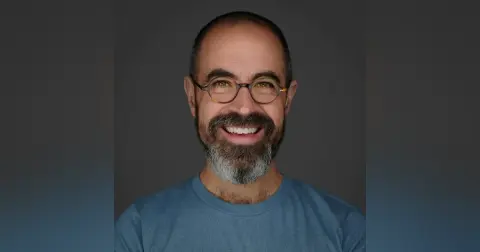
 Kevin Masse is the founder and owner of Small State Provisions (IG: @SmallState), a Connecticut bakery and café built around one simple idea: create a place where people want to gather. In this conversation, Kevin shares how a career in marketing, advertising, and food media shaped his approach to hospitality, why thoughtful design and local sourcing matter, and how he's navigating the transition from hands-on baker to visionary leader as the business grows. Listen to hear practical insights on building community, creating memorable guest experiences, and scaling without losing what makes a business special.
A few more resources:
- If you're new to Hospitality Daily, start here.
- You can send me a message here with questions, comments, or guest suggestions
- If you want to get my summary and actionable insights from each episode delivered to your inbox each day, subscribe here for free.
- Follow Hospitality Daily and join the conversation on YouTube, LinkedIn, and Instagram.
- If you want to advertise on Hospitality Daily, here are the ways we can work together.
If you found this episode interesting or helpful, send it to someone on your team so you can turn the ideas into action and benefit your business and the people you serve!
Music for this show is produced by Clay Bassford of Bespoke Sound: Music Identity Design for Hospitality Brands
Josiah: Thanks for making time to talk today, Kevin. I have found myself in this beautiful part of the country last year and again this year. This is the hotspot in this whole area, a place to gather, a place to have some incredible coffee, some incredible baked goods. I want to hear the story behind it, but I want to hear your story. Tell our listeners a little bit about yourself and the space that we are sitting in.
Kevin: Yeah, absolutely. I'm Kevin Masse, owner and founder of Small State Provisions here in Avon, Connecticut, with our satellite location in West Hartford, Connecticut. Currently we're sitting inside what's going to become our event space, hopefully in a few months. This space will be all about gatherings and bringing people together, whether that's chef dinners, community events, lecture series, things like that. Small State Provisions is a bakery and cafe focused on organic sourdough bread, something that started out of my house in 2019. Just 2019, so not that many years ago.
Josiah: We just walked over from the bakery. It smells incredible in there. There's a line out the door. Every time I come here, it's clear this is the hot spot. Your neighbors in the community love this place, and I'm so interested to hear the story of how, in a few short years, you went from baking in your home to this. I want to hear about that journey, but I also want to hear the lead-up to this. Is there an early memory of hospitality or food that was formative in your life and maybe in some way led to you creating this?
Kevin: Yeah, absolutely. I grew up in an Italian-American family. My grandmother was always cooking, my parents were always cooking. I think the first time I cooked dinner for the family I was probably 13, and that was always something I wanted to do. I came of age in the golden era of Food Network, when food TV was actually an educational platform. I used to watch that with my grandmother all the time. Rachael Ray was big, Emeril Lagasse, Mario Batali, all those older names now. I wanted to go into culinary from high school, and my parents were fortunately helping me pay for school. So they said, "Instead of going to culinary school, why don't you go to business school first, do a traditional degree and work. Then down the road, if you ever decide to go into hospitality or food, you can pursue that avenue." So I was in marketing and advertising for a little over a decade prior to opening the space. I worked in advertising for over a decade in New York. It was fine, I learned a lot. I knew immediately I was not a desk person. I didn't like being in the grind of office culture. I moved up very quickly, I think because I'm a driven person, and I was able to pivot my career a few times within that sector. When I first started in marketing, it was traditional brand marketing, think 1-800 numbers on TV ads, and we'd do all the tracking. Then search became a thing, social became a thing, and I was able to move into food media. I worked for a company called The Feed Feed, a crowdsourced food publication, where I was head of global community engagement and partnerships for a couple of years. Then I went to Bake from Scratch magazine, where I headed up all their content partnerships. I was able to take my love for food, I was always cooking and baking at home, and fuse that into the advertising side. I did that for three or four years while I was building all of this in the background.
Josiah: That's fascinating, and I love talking with people who see different dimensions of the broader world of hospitality from a marketing lens or a community engagement lens. We'll get into what you're doing now, but I'm curious. You had this love of food and the culinary world, but in your role you saw it from so many different angles. What surprised you or stood out about the broader culinary world? What was it like working in that environment?
Kevin: For me it was great because I loved being creative and working with some of the best brands out there, and it gave me a way to tap into my love for cooking and food without necessarily having to be the one on the ground doing it. I wasn't doing the photography, I was helping set the stage for what the photography would become, or working with influencers to develop recipes. At Bake from Scratch, I worked with the test kitchen to develop recipes for some of our brand partners, and we did some really cool stuff. When I was there we did a program with Bob's Red Mill where I created basically a baking academy, a different module every month. Our test kitchen came up with the modules, and there was print marketing that went with it, a whole section in the magazine tied to that module. It was a cool way to see something in the food space come together while touching so many different facets.
Josiah: That's so cool, and I feel like that is how you bring a brand to life. That ability to move beyond marketing just being advertising, it's a component of communication, but that immersive sense of how do we educate, how do we engage people. And you worked with a lot of influencers too. I imagine that was a wild experience.
Kevin: It was. It was during, what year would that have been, 2016, 2017. Instagram and the social media world were still growing, so it was kind of the Wild West of just trying to figure this out, before all the algorithms changed and Instagram took a lot of control back. But it was a lot of fun. To back up a little, we moved from New York City to Hartford in 2016, because my husband's a professor at Trinity College, so that brought us here about ten years ago. When I stepped back from my full-time role at Horizon Media and joined The Feed Feed, I went contract, part-time. Then I went full-time with them, then to Bake from Scratch, where I was contract, part-time again. That flexibility let me do the work I needed to excel at, but also have time to pursue other things, which is how all of this started.
Josiah: Incredible. Let's pick up there, because I want to get into the origin of Small State. You referenced this briefly earlier, you have a little more capacity in your life, and you have this interest. What do you do next to start on this journey to building Small State?
Kevin: I started making bread in our home kitchen in 2019. I was one of the first cottage food licenses issued by the town of West Hartford. It's kind of a convoluted system, the state allows it, but then each town has to ratify and approve whether they're going to allow the cottage food industry. I was one of those first licenses, and I started baking out of our home, a couple loaves of bread a week, nothing serious. A couple months before that, earlier in 2019, my friend Terri Walters, who lives right around the corner and is a cookbook author, taught me how to make sourdough. So I'd had some practice with her, and then I just started doing it, maybe a dozen loaves for the first few months, every week. Then the pandemic hit in 2020, and I was faced with this decision: do you keep going or do you stop? I decided to keep going. A couple of things: it kept me busy, everybody was tied up at home, so it kept me busy to bake. All of our proceeds from the bread were going to an organization I used to sit on the board of, called Healing Meals Community Project, so that was a give-back piece we had going. And I just started delivering bread everywhere, which was great. Every day I had probably a dozen to 25 deliveries to do.
Josiah: I bet that's a great way to build relationships too, you talk about starter from somebody around the corner, and then you're delivering bread. It's interesting to me because you were running global community engagement from a digital marketing, social media perspective, and then you really focused a lot of time and energy on a local community, building those relationships. What did that transition feel like?
Kevin: It was a lot of fun. I've met a lot of great people through this, a lot of our friends have come through the bakery. For me it's always been about how do you connect people. When we lived in New York, we had our neighborhoods, our coffee shops, everybody's always out walking, you see the same people over and over. Here it felt very different because it's a car town. So what I really wanted to do was create a space where people could come together and be present with each other. That was really what drove the whole thing.
Josiah: How did you think about the physical space? Because again, every time I come here there's a line out the door, people clearly get in their car and drive for this. We're recording in a space that's under development, but if I think about the bakery, what were you looking for? How did you think about configuring that space to be a gathering space?
Kevin: When I walked into that space, all the windows were what captured me. I wanted a lot of natural light. It was one big room when I took it over, it had been a production kitchen for another bakery before us, and I just knew the light was the biggest piece. I loved that we had a beautiful view of Avon Mountain, that we're tucked here in the woods, the space just resonated with me. I walked in and immediately knew this was the space. Then I figured out how we'd lay it out. It's not perfect, there are things I don't love about the layout, but we did the best we could and made it work. I think we're a little out of production space now, which makes it challenging.
Josiah: I'll tell you some of the things I enjoy about the bakery space, that view of Avon Mountain, the chairs out front, great seating inside, a back area with picnic tables. It can get toasty and warm here in the summer, so depending on where the sun is, you have some shade covering. You can be outdoors in the shade with a larger group, you and your partner out front, at the sides. I feel like you've thought about all those different seating situations. It's not a massive space, this bakery, but you have all these different places to sit.
Kevin: We do. And it was an evolution. The seats outside were just front seats we had, because we didn't have the courtyard space in between until last summer. So we always had the seats out front, and then we took over the courtyard, which ties into the space we're currently in. It's been an evolution for us, because seating is our biggest constraint. We don't have a ton of it in our current space.
Josiah: But you made the most of it. And you've said before you want to create a space where people don't just come and buy, but they come and linger for a while, maybe meet up with friends. I do think there's a lot of value to that. From what you were describing earlier, this larger space under construction sounds like you're just doubling down on that.
Kevin: We are. Yeah, we are.
Josiah: There are so many different elements of community. One is what you were telling me the other day about how you're sourcing ingredients from the area. I wonder if you could talk about how you do that, why you do that. It feels relevant as a baker, but it's also how you think about community. It feels like a piece of that.
Kevin: Absolutely. When I was baking out of my house, I was doing everything with King Arthur Flour. I had one customer who was also a yoga student, somebody I did yoga with, I was a yoga teacher in my prior life as well, and she had been recovering from cancer, and her dietitian had said she should really be eating everything organic. So I was making a couple loaves of bread for her every week that were organic, and then I thought, well, if it's that important, we should probably make everything organic. The organization I was on the board of, Healing Meals, is a meal-delivery organization that delivers organic meals to families facing acute health crises. They're a dual-mission organization where youth volunteers cook alongside adults to prepare these meals every week, and they're 100% organic too, because there's that food-is-medicine approach. So I really felt like, okay, we should make that decision to be organic from the get-go, because then as I build out the business, I've already got that accounted for. It was actually quite interesting, because when I was small and doing this just out of my house, I was getting my flour from Restaurant Depot, I could just drive down and grab a couple bags. But when I wanted to switch to organic, I couldn't just get 50-pound bags of organic flour, and I couldn't afford to buy the small bags. So I tapped into a distributor out in Saratoga, and they were great, we still work with them to this day. I would need three or four bags of flour, sometimes maybe two, and they would send those on another bakery's deliveries. I'd meet the driver, throw those bags in the back of my car, and take them home. We've evolved from that. All of our grains have always stayed 100% organic. We use all organic sugars, we look for non-GMO dairy products. Some of these things are just very hard to do 100% organic, but I think about the core things, all of our fruit is organic, all of our produce is organic. We try to source as close to home as possible, so we work with a great organization called Meyer's Produce, out of Massachusetts, a woman-owned business that taps into local farms in New England, so we can get a lot of great produce from them. All of our eggs are organic, free-range, and come from a farm in upstate New York. And our biggest shift that we just did: we have one flour that's still coming organic from another distributor, but 90 to 95 percent of our flour now is grown in the Hudson Valley and milled in Holyoke, Massachusetts. So we're really bringing it closer to home, and it's all regenerative organic, which is really phenomenal.
Josiah: It's amazing hearing you describe that. You were sharing a little bit the other day when I was in here, you have a whole array of incredible baked goods, and the blueberry scone, for example, is one I especially love. But hearing the story behind it makes you feel more connected to the area, and all the thought that goes into it has so much potential for immersing people into this area. So the last question I have: what's on your mind moving forward? You've created an amazing bakery, made this the gathering place for the community, and you're building an incredible large space. What's on your mind for taking this concept and expanding it?
Kevin: I'm in this process right now, I'm straddling two pieces. I'm straddling this business on one side, which is producing all of these things, running a cafe, and still doing production. I love still being tapped into the actual thing that sparked all of this, which is baking. I'm at this spot where I'm still doing that a couple days a week, still running the cafe, still doing, we have almost 40 people on our roster right now, so it's also a big organization.
Josiah: You're a very engaged leader. Before our recording, I saw you there, you're not sitting in an office, you were there with your teams at each of the different areas, behind the scenes, baking and creating things.
Kevin: Yeah, and it's fun, it keeps me connected to that part of the business. But right now, as it grows, I'm faced with this: how do I take that leap from being the on-the-ground visionary, the person developing and doing things like our blueberry scones, which have been on the menu since almost day one? We used to do a seasonal scone, but then we went to blueberry, and that was a recipe I developed when we first opened, it's one of our number-one selling things. So you're not alone in loving that blueberry scone. From somebody who's doing that on the ground versus somebody who's talking to my pastry chef and saying, "This is what my vision is," and giving people the framework to work within, so that ultimately I'm setting the vision for the business. What does that look like when somebody walks in, somebody like you, coming from across the country, and can immediately see our point of view, whether that's the grain we're using or a product we're making? That's becoming my job now: to set that strategy and really focus on building the business. I want a business that's sustainable, that's profitable, I'm not in this to not be profitable. But I also want a business that takes care of its employees, that focuses on the products we sell and the ingredients we use. So now it's about how do we set that structure for long-term success, whether I'm in the building or not, because I can't always be here, which is what I'm learning quickly.
Josiah: I think it's cool how you're wearing these different hats simultaneously. You're going through growth and change, and there's exciting things ahead, but you're still spending time baking and coaching with your teams. It's awesome to see you doing it all.
Kevin: Eventually I'll get out of the 3 a.m. shifts, but I like them. Mornings are the best, I think, that's when you really get to connect to the craft of baking, which starts a lot of times in the middle of the night.
Josiah: Amazing. Kevin, thanks for making time to chat.
Kevin: Yeah, of course. Thank you. Good to see you.